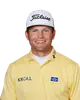











iron
AddedTitleist T100
What's In The Bag
Tour Equipment Data
What the tour actually plays, and how it lines up with what the amateur game is paying attention to.
294
Players
2,949
Items
45
Brands
15
Categories
Find a Player
Browse All Players →Freshest Bag
The most recently recorded setup on tour
 🇺🇸 Joel Dahmen
Joel Dahmen's bag was last recorded Oct 2026 with 2 removed, 2 swapped across 2 slots.
Driver
PING G440 LST
9 degrees · Mitsubishi Diamana TB 60 TX
3-Wood
PING G430 Max
15 degrees · Project X HZRDUS Black 80 TX
Hybrid
PING Anser
20 degrees · Ping TFC 800
Irons
PXG 0317 CB
4 · True Temper Dynamic Gold Tour Issue Onyx X100
Irons
PXG 0211 ST
5-PW · True Temper Dynamic Gold Tour Issue Onyx X100
Wedges
Titleist Vokey Design SM10
50-08F, 54-10S @55, 60-04T · True Temper Dynamic Gold Tour Issue X100
Putter
Hanna Golf Prototype
Swapped
Ball
Titleist Pro V1x
Grip
SuperStroke S-Tech
Out of the bag
Removed
Grip
Golf Pride Tour Velvet
Out of the bag
Removed
Recent Bag Updates
The last six players to change equipment
wedge
RemovedTitleist Vokey Design WedgeWorks Prototype
5-wood
AddedPING G440 Max
iron
RemovedCallaway Apex Ai200
3-wood
Callaway Paradym Ai Smoke Triple Diamond → TaylorMade Qi4D
+1 more slot

grip
AddedGolf Pride Tour Velvet Align
wedge
AddedTitleist Vokey Design SM11
driver
AddedTitleist GTS4
ball
AddedTitleist Pro V1
putter
AddedScotty Cameron Phantom 7 Prototype
5-wood
AddedTitleist GTS3
+3 more slots
ball
AddedTitleist Pro V1x
7-wood
AddedTaylorMade Qi10
driver
AddedTitleist GTS4
iron
AddedTitleist 620 MB
wedge
AddedTitleist Vokey Design SM11
grip
AddedGolf Pride Tour Velvet
+3 more slots
ball
AddedTitleist Pro V1x
wedge
AddedTitleist Vokey Design SM11
iron
AddedPING Blueprint S
utility-iron
AddedTitleist T250
3-wood
AddedPING G440 Max
grip
AddedGolf Pride Tour Velvet
+3 more slots

wedge
AddedTitleist Vokey Design WedgeWorks
grip
PING PP58 → Golf Pride V55 Cord
+4 more slots
Most-Used Brand by Category
Player count across current bags
Drivers







Fairway Woods

Hybrids


7
ADAdams
2
3.0%
Irons


Wedges


Putters





8
HAHanna Golf
1
0.5%
Balls



165 of 181 active bags in dataset
Grips





6
GRGrip Master
2
1.0%
175 of 181 active bags in dataset
Shafts







Top Model Per Category
Most-played specific model across all tracked players
Spec Notes
Computed from current bag data
9.3°
Avg Driver Loft
Across 187 drivers with parsed loft data
6.0°
Lowest Driver Loft
The flattest driver currently in play on tour
146 vs 36
3-Wood vs Mini-Driver
146 players carry a traditional 3-wood; 36 carry a mini-driver
74
Players with 7-Wood+
74 players carry a 7-wood or higher on tour this season
Brand Momentum
Tour usage changes
Brand
1M3M6M12M
Change in ranked players carrying the brand vs. their bags 1, 3, 6 and 12 months ago. Fill intensity is the size of the move; a dot means no change. Counts only players tracked in both windows, so new additions do not read as gains.
Tour Usage vs. Amateur Attention
Current tour usage vs. the August 2026 DORMIED Index score. Same brands, measured two ways.
Brands above the dashed line draw more amateur attention than their tour usage. Below: pro favorites the amateur game underrates. Dot size = player count. Click any dot to view brand page.
What This Data Is
The current equipment setup of 294 professional golfers, refreshed weekly and recorded at the item level: driver, fairway woods, hybrids, irons, wedges, putter, ball and grips, with brand, model, shaft and loft where available. Tour-usage percentages are calculated on the 181 bags updated within the last 12 months, which is why a leaderboard note cites a smaller denominator than the player count above: an older bag stays on its player page but does not count as evidence of what the tour plays now.
This is equipment in play, not equipment sold. A brand here means a tour professional chose it in competition, which is a different signal from market share or endorsement spend. Some of the most tour-popular brands barely register with amateurs, and that gap is what this page exists to show.
Reading the Tour Usage vs. Amateur Attention Chart
Two independent signals, plotted against each other. X is tour usage: the share of tracked players carrying at least one product from that brand. Y is amateur attention: global search interest for August 2026 from the DORMIED Index, scaled so the most-searched brand on this chart scores 100. The scale is set only by brands found in tour bags, so a lifestyle or content brand topping the full Index cannot compress every equipment brand's position. Hover a dot for its full Index score and rank.
The dashed line is a reference, not a regression. It runs from zero to the most-used brand on tour at 100, marking where attention would sit if it tracked tour usage exactly. Above it are brands commanding more attention than their tour presence suggests, usually names with strong retail reach. Below it are pro favorites the amateur game has not caught up with.
How the Tour-Usage-to-DI Join Works
Each equipment brand is mapped to its DORMIED Index entry. Not all have one, particularly grip and shaft makers that do not compete in the retail categories the Index tracks. Those brands still appear in the leaderboards but are excluded from the chart, which needs both figures to plot: 10 of 37 brands in ranked bags currently lack a mapping and render as plain text rather than links.
The Index measures search interest, not sentiment or purchase intent. A low score means a brand is niche or regional rather than disliked. For equipment especially, the distance between tour presence and public awareness can be large, and that distance is often where the market is moving before the mainstream notices.
Trending




Latest


Features