A Costco golf ball scoring 84 out of 100 in independent lab testing, with zero defects across 36 samples, is the kind of result that quietly rewires how a category thinks about pricing.
What Did MyGolfSpy Ball Lab Find in the Kirkland Ball?
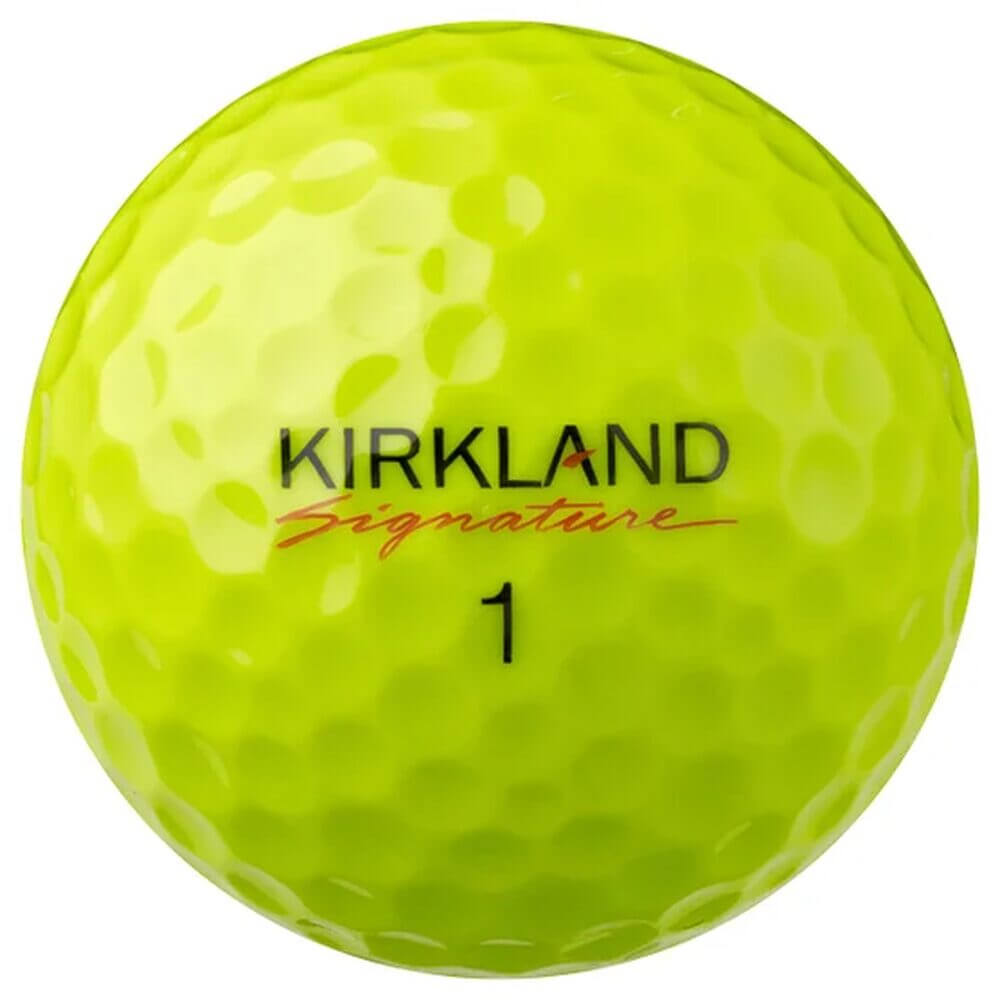
MyGolfSpy's Ball Lab just published its teardown of the 2025 Kirkland Performance + v3.0 Yellow, and the numbers land in a place that should make a few brand managers in Carlsbad open a spreadsheet. Zero defective balls. Compression consistency in the top quartile of the entire Ball Lab database. A final grade of B, held back from B+ only by diameter consistency (C) and compression symmetry (C+). Price at the register: $39.99 for two dozen. That's $1.67 a ball for a three-piece urethane made at SM Global in China, the same factory that produces balls for Snell and Vice.
The context matters. A Pro V1 sleeve runs about $4.50 a ball. A Chrome Tour, similar. Bridgestone and Callaway sit in the same neighborhood. Kirkland is offering a urethane cover, a 91-compression core, and a defect rate of nothing at roughly a third of that price. It is not a Pro V1. Ball Lab is careful to note the diameter and symmetry soft spots, and the ball runs physically larger and lighter than the urethane norm, which will matter to the sort of golfer who cares about matching a ball to a driver head speed. But for the recreational player who buys a dozen at Costco on the way to a Saturday round, the value math is not close.
How Does Kirkland Golf Sell Without Any Marketing?
What's interesting is that Kirkland doesn't market. There's no tour seeding program, no ambassador roster, no Instagram grid, no capsule collab with a streetwear brand nobody has heard of. The ball exists on a shelf next to rotisserie chickens and 48-packs of paper towels. And yet it keeps showing up in independent testing with results that are, at worst, competitive with balls that spend eight figures a year telling you they're better. The DORMIED Index has Kirkland ranked 124th globally, down 17 percent month-over-month, which is exactly what you'd expect from a brand that generates zero press cycles and lets the product do the arguing. The ranking is a marketing-visibility artifact. The ball is the story.
The broader read: the premium ball category has been operating on the assumption that most golfers will pay a 200 percent premium for the tour validation, the branding, and the six percent of performance that separates a top-tier urethane from a competent one. Kirkland is the ongoing evidence that a real slice of the market has stopped buying that assumption. Snell built a business on it. Vice built a business on it. Maxfli's Tour line at Dick's is built on it. Kirkland just happens to have Costco's distribution and a membership base that already trusts the label to deliver 80 percent of the name-brand experience at 40 percent of the cost. That's a difficult flywheel to compete against with a marketing budget.
What Would Raise the Kirkland Performance Plus v3.0 Grade?
What to watch: whether Titleist, Callaway, or Bridgestone ever acknowledges the Kirkland the way TaylorMade eventually acknowledged the DTC iron brands. So far, the answer has been to ignore it and hope the serious golfer stays loyal. That works until the serious golfer's regular foursome starts playing Kirklands and shooting the same scores. The next version of this ball, and there will be one, is the one worth paying attention to. If SM Global tightens the diameter tolerance and the symmetry number climbs a grade, the B becomes an A-, and the entire premium ball pricing structure has a harder conversation to have with itself.