Limited-edition golf bags usually mean a new colorway, a serial number stamped on a logo plate, and a 30% markup for the privilege. The Sun Mountain Hometown is the rare exception: a limited run that actually earns the label through materials, construction, and a real numbered ceiling at 1,776 units.
Why Waxed Canvas on a Premium Stand Bag?
The bag dropped quietly, which is itself worth noting. Sun Mountain has spent the last decade building the most boring resume in the category: the C-130 cart bag, the 2.5+ stand bag, the H2NO line. Reliable, functional, the choice of golfers who do not post their gear on Instagram. The Hometown is the first time in a while the brand has built something designed to be looked at as much as carried.
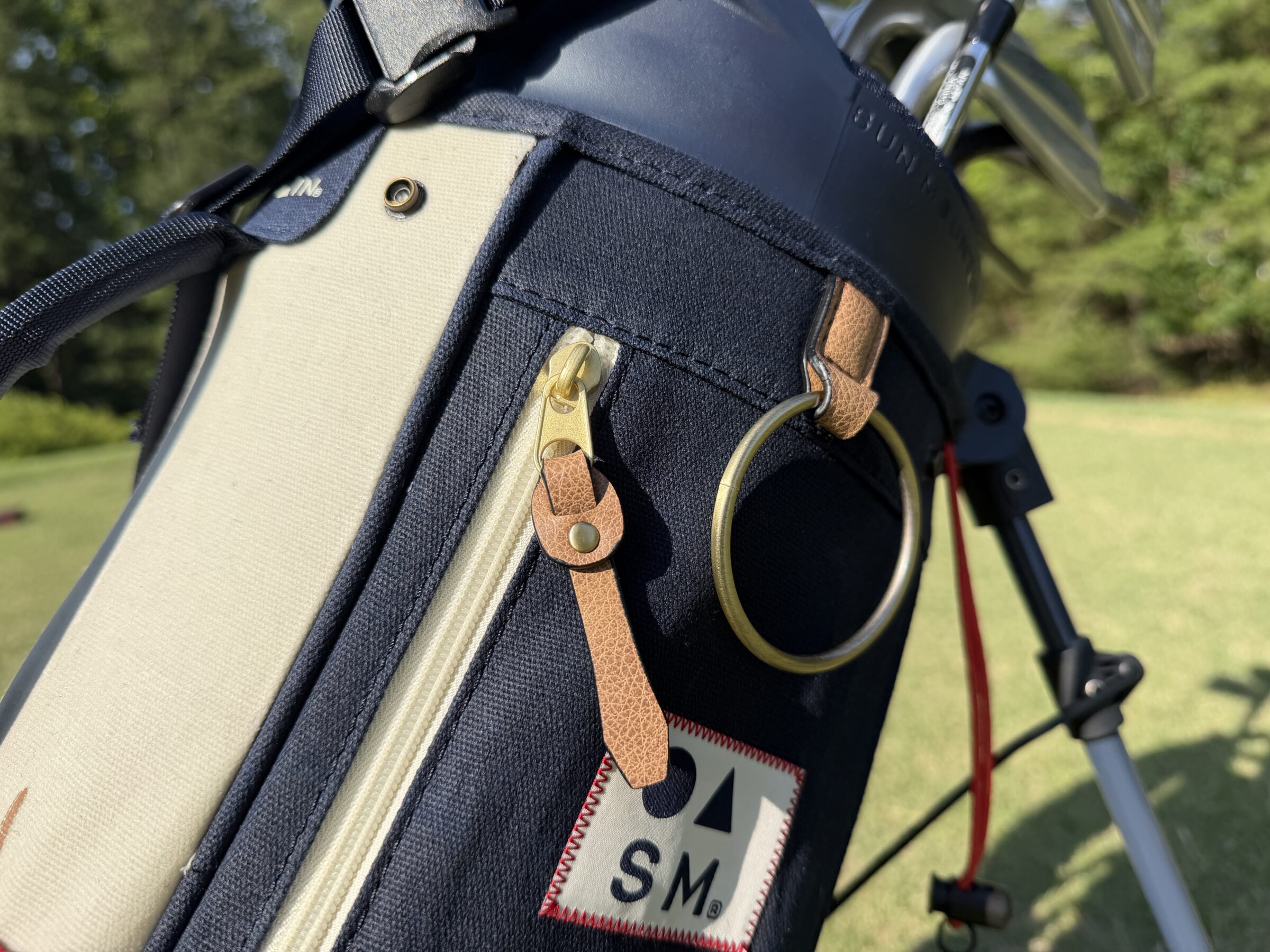
The spec sheet is where this gets interesting. Waxed canvas as a primary fabric is a material choice borrowed from heritage workwear, the Filson and Barbour world, not the technical synthetics that have defined premium golf bags for the last ten years. Brass hardware over the now-standard matte black. Pebbled leather accents instead of branded TPU. Full-length dividers that are actually sewn at the base, which sounds like a basic ask until you check what your current bag is doing down there. This is a different design language than what Vessel and Stitch have been running, and it lands closer to what Jones has been doing in the carry-bag segment, but with more structure and a real stand system.
How Does Sun Mountain Compare to Vessel and Stitch?
The competitive context matters here. The premium stand bag category has effectively become a three-way race between Vessel, Stitch, and Sun Mountain, with Jones operating in a slightly different lane and Ghost Golf nibbling at the edges. Vessel built its brand on synthetic leather and tour visibility. Stitch went hard on color and direct-to-consumer storytelling. Sun Mountain has been the quiet incumbent, leaning on wholesale relationships and a green-grass distribution network that the DTC brands have spent years trying to build. The Hometown is the brand finally answering the question of what a Sun Mountain premium-lifestyle bag looks like when the design brief is not just "better than the 2.5+."
The 1,776 unit count is also a tell. That number is small enough to sell through without a discount cycle, which is the trap Vessel has occasionally fallen into with its more ambitious capsule drops. It is also too small to require a real wholesale rollout, meaning Sun Mountain can keep this close to direct channels and selected premium retailers without disrupting its broader green-grass business. That is the kind of distribution discipline most of the upstart bag brands have not yet figured out, because they do not have a broader green-grass business to protect.
What Does the Hometown Drop Do for Sun Mountain?
What the Hometown does not solve is the brand visibility problem. Sun Mountain sits at #58 in the DORMIED Index with flat month-over-month movement, which roughly tracks the brand's cultural footprint: respected, present, rarely talked about. A 1,776-unit drop is not going to change that ranking. It is also probably not designed to. This reads like a brand exercise, a way to remind the market that Sun Mountain can build at the top of the category when it wants to, not a volume play meant to reposition the entire portfolio.
The question is whether this becomes an annual thing. Vessel has trained the premium-bag customer to expect drops. Stitch has trained them to expect collabs. Sun Mountain has trained them to expect nothing, which is both the brand's biggest weakness and its strangest competitive advantage. If the Hometown sells through quickly and a second waxed-canvas drop appears next spring, Sun Mountain will have quietly built itself a lifestyle sub-line without ever holding a launch event. That would be entirely on brand.