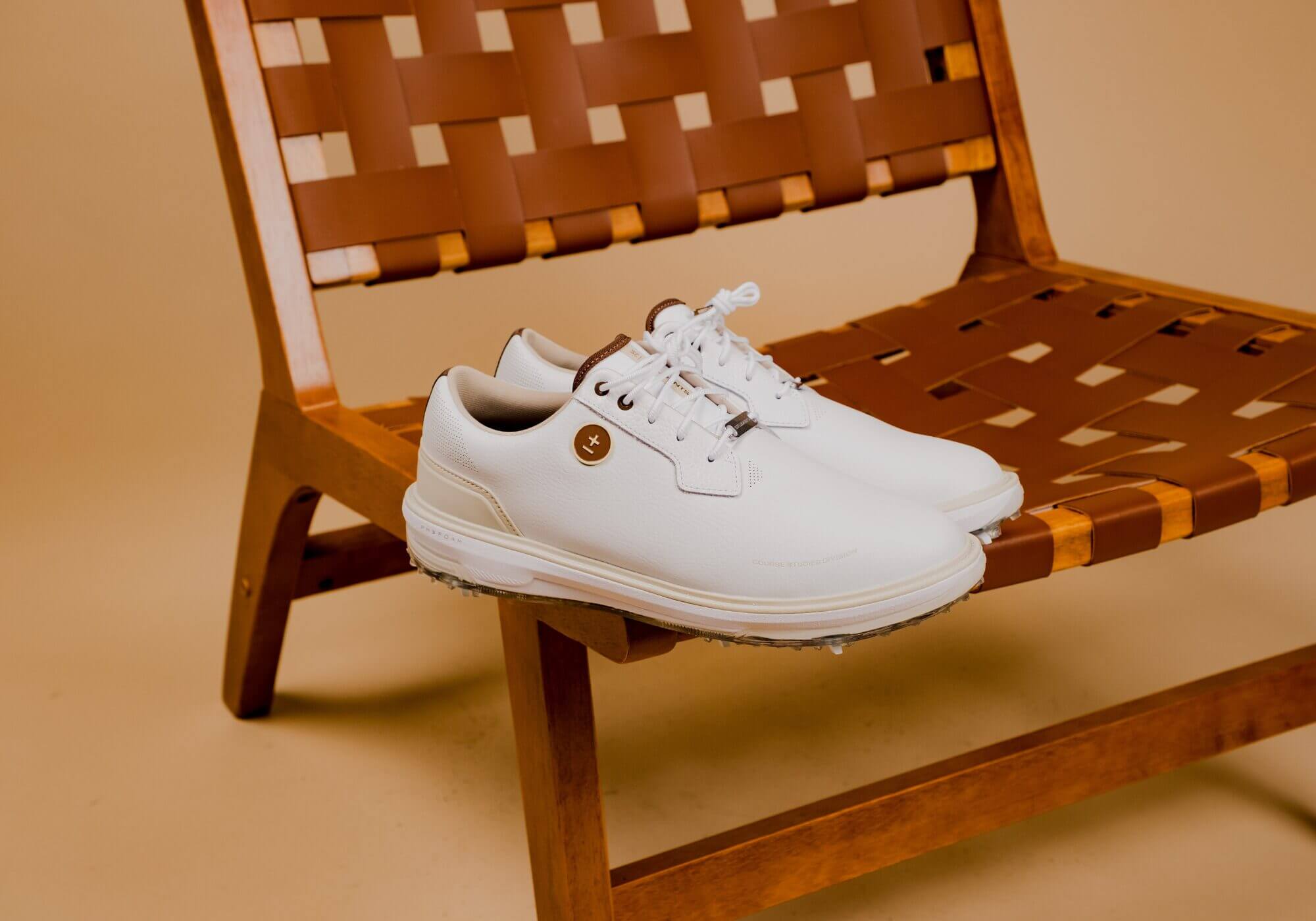
Most golf footwear collabs are a colorway with a partner's logo stitched where the brand mark used to be. The Students x PAYNTR Golf collection, out today, includes a shoe with a magnetic port molded into it so you can swap ball markers in and out. That is a tooling decision, not a graphics decision, and the distinction is the whole story.
What Shoes Are in the Students x Payntr Collection?
The collection runs two models. The Students by PAYNTR PT carries the magnetic, removable ball marker, pitched as a way to collect markers from courses that matter to you and rotate them like watch straps. The Students by PAYNTR WT goes the other direction entirely: premium faux stingray leather with textured detailing, sourced conceptually from aquariums and tide pools. Both ship inside a collector's box styled as an old field manual called The Field Guide to Golf, leaning on the collab's central conceit that golf is a subject you study rather than a game you own.
The reason the marker port matters more than the stingray does is economic. Footwear collabs in golf stay superficial because molds are expensive and minimum order quantities on new tooling are brutal for a brand doing limited drops. Changing an upper is cheap. Changing hardware is not. Payntr, which came up through cricket footwear before turning its plate geometry loose on golf, has always been more of an engineering shop than a graphics shop, and this is the first time that's shown up in a lifestyle collaboration rather than a performance model. The company spent development budget on a small-batch drop with a partner label most green grass buyers have never heard of. That is either confidence or impatience, and the answer will be visible in whether the port migrates to the mainline PT next season.
How Could Payntr Golf Turn Markers Into an Accessory Business?
If it does, Payntr has quietly invented an accessory business. Swappable markers are razor-and-blade logic dressed up as sentimentality, the same trick Apple ran with watch bands and sneaker brands run with lace packs. More interesting is the channel implication. Course-branded ball markers are already the highest-margin trinket in any pro shop, and a shoe that turns them into a collectible with a display slot gives clubs a reason to stock Payntr accessories without committing shelf space to a full footwear run. That is a way into green grass through the side door, which matters for a brand that has never had the sales force to fight FootJoy and adidas for wall space.
The WT is a different exercise. Faux stingray in golf is a Puma-in-2013 move updated with better materials, and it will divide a room faster than a slow group on a Saturday. That's the point. Nobody mistakes it for another white leather saddle, and in a category currently drowning in retro cordovan and tour-issue white, being polarizing has commercial value. Whether the field guide packaging reads as thoughtful or as an English seminar depends entirely on how much you enjoy being told golf is a lifelong study.
Has the Collab Changed Payntr Golf's Standing Yet?
What the drop has not done yet is move the needle on Payntr's standing. The brand sits 24th of 215 in the Apparel and Footwear category with a Dormied Index score just over 16, flat month over month despite a collab cadence that suggests a marketing team working weekends. Volume of drops is not the same as brand gravity, and Payntr's problem has never been product. It is that the people who own a pair rave about them and the people who don't have never seen them on a rack.
The magnetic marker is the first thing Payntr has made that a competitor will want to copy, which is the clearest signal yet that the brand is done being golf's best-kept secret and is trying to own a feature outright. Watch for whether it appears on a non-collab model by spring. If it does, this was a strategy. If it doesn't, it was a very well-made souvenir.