Adam R. covers apparel, accessories, and golf culture for DORMIED. He has been tracking brand drops and collaborations since 2018.
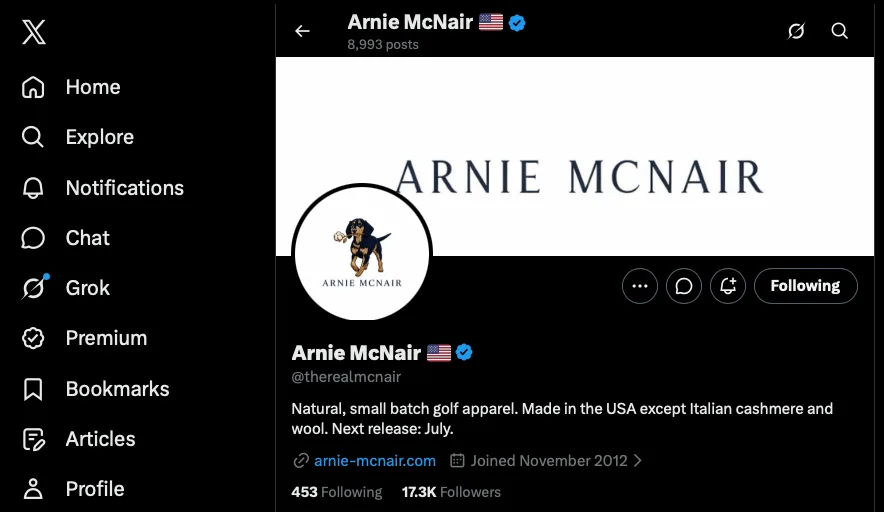
Who is Arnie McNair? Strictly speaking, nobody. Arnie McNair does not exist. The name is a pseudonym for an anonymous country club golfer from Minnesota who started posting on Golf Twitter (now X) in late 2024, built a following inside the platform's so-called Burnerverse, and turned it into one of the most talked-about new apparel brands in golf without ever showing his face. The brand that carries the fake name is very real: officially launched January 24, 2026, it sells American-made, natural-fiber golf clothing exclusively through arnie-mcnair.com in small seasonal batches, and its $105 Arnie Polo has become the shirt a certain kind of golfer will wait six weeks for. This is the story of how a man with no name built a genuine cult brand, what the clothes actually are, and why the anonymity is not a gimmick but the entire business model.
In one sentence: Arnie McNair is an American golf apparel brand launched in January 2026 by an anonymous Minnesota golfer, selling made-to-order, natural-fiber clothing produced almost entirely in the USA, positioned as a deliberate rejection of the synthetic, logo-heavy direction of modern golf wear.
How Is Arnie McNair Trending on the DORMIED Index?
DORMIED tracks brand search interest across 10 global markets every month. Arnie McNair's line is what a fast early riser looks like in data form.
| Metric | Value |
|---|---|
| Global DORMIED Index rank | 119 of 215 |
| Month-over-month change | +24.1% |
| Three-month change | -13.7% |
| Monthly global searches | 3,600 |
| Brand age | About 7 months |
Source: DORMIED Index, July 2026 snapshot.
Read those numbers honestly and two things are true at once. Arnie McNair is small: rank 119, a fraction of the search volume of a Malbon or a Random Golf Club. And Arnie McNair got big fast, then settled into a rhythm. It reached rank 108 back in April, one of the quickest standing starts in the Index, and the three-month line has since turned negative at 13.7 percent down. The month-over-month reading, up 24.1 percent, is the more useful number. The pattern is not a warning sign; it is the shape of the business. A made-to-order brand that sells in limited seasonal windows spikes when a drop opens and cools while the Army, as the brand calls its buyers, waits for the next one. Read the monthly line for the pulse and the three-month line for the season.
How Did Arnie McNair Start in the Burnerverse?
Every good golf brand has an origin story. Arnie McNair's begins in the strangest corner of golf media: the anonymous account ecosystem on X that regulars call the Burnerverse, where pseudonymous country club members trade takes, gossip, and inside jokes about the private-club world.
Sometime in late 2024, an account called Arnie McNair started posting. The voice was distinct: a traditionalist's disgust at what golf apparel had become, delivered with enough wit that people kept sharing it. The complaints had a villain, which always helps. Arnie called it Big Polyester, the industrial complex of synthetic fabrics, oversized logos, and trend-chasing design that had turned golf shirts into billboards made of plastic. The account argued that golf clothing had lost its way, that natural fibers had been abandoned for marketing reasons rather than performance ones, and that somebody ought to do something about it.
Then the account did something about it. What started as commentary turned into conviction, conviction turned into samples, and samples turned into a company. By the time the brand officially launched on January 24, 2026, the audience was already waiting, and the first drops sold through on the strength of a following that had been built entirely on posts. Within a year of the account's first tweets, an anonymous man in Minnesota had pre-orders for clothing almost nobody had touched.
The reach compounded fast. Chad Mumm, the executive producer of Netflix's Full Swing and co-founder of Pro Shop, posted publicly about pre-ordering The Polo and having dinner with Arnie in Los Angeles. The brand has since welcomed PGA Tour veteran Tim Herron, a fellow Minnesotan, into what it calls the family. For a five-month-old company with no visible paid marketing and no visible founder, that is a remarkable roster of believers.
Where Is Arnie McNair Clothing Made?
Strip away the mystique and the product is deliberately old-fashioned, which is precisely the pitch. Unlike most modern golf apparel brands, nearly every Arnie McNair garment is manufactured in the United States using American-grown cotton wherever possible.
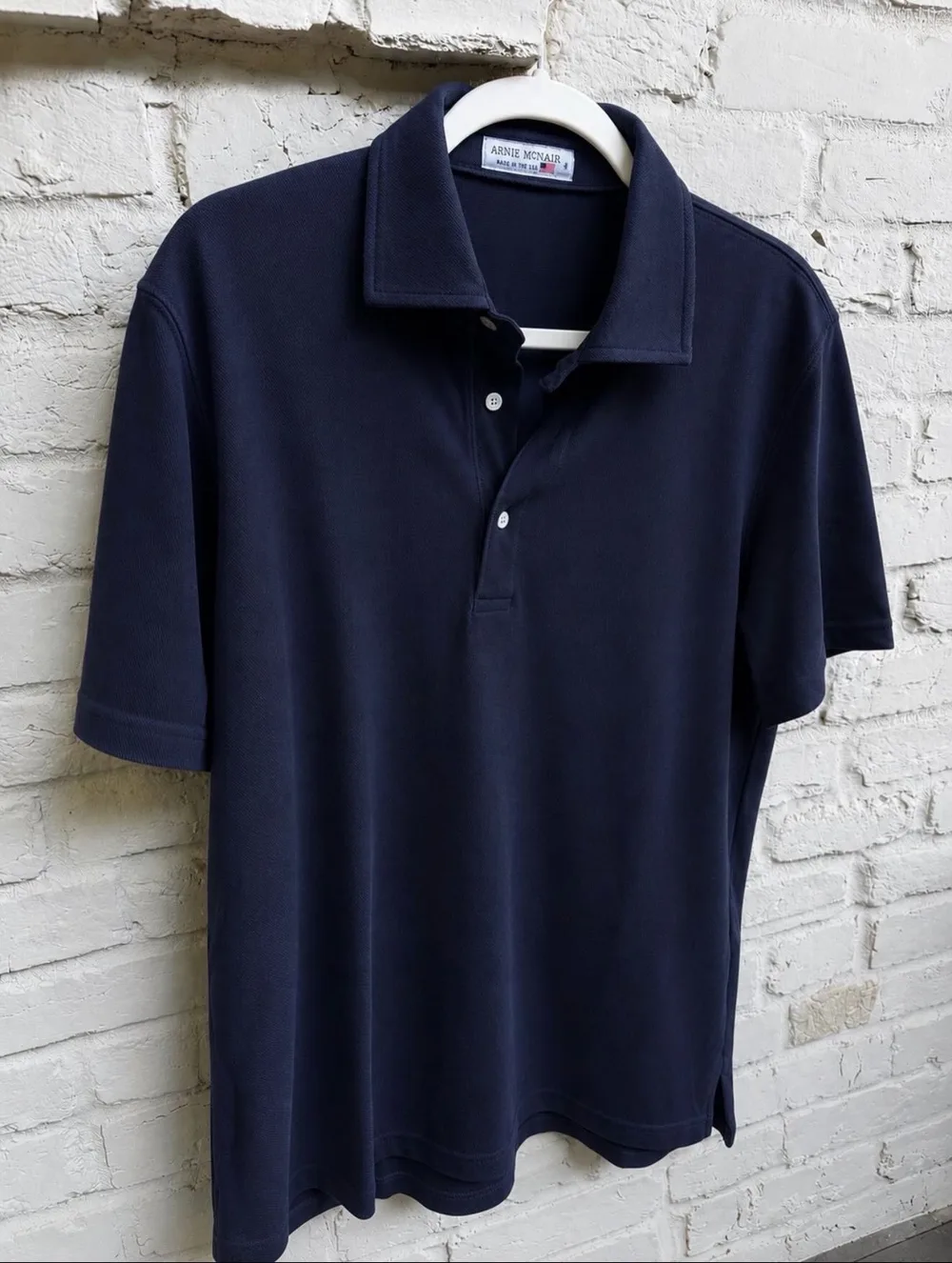
Arnie McNair makes traditional golf clothing from natural fibers: American-grown Supima cotton, cotton twill, and cashmere sourced from Italy, the one exception to an otherwise domestic supply chain that the brand labels honestly rather than hiding. Almost everything is produced in the United States. There are no visible logos, on the theory that golf clothing is not a billboard and good design speaks quietly. The proportions are classic: tailored but not tight, refined but not restrictive.
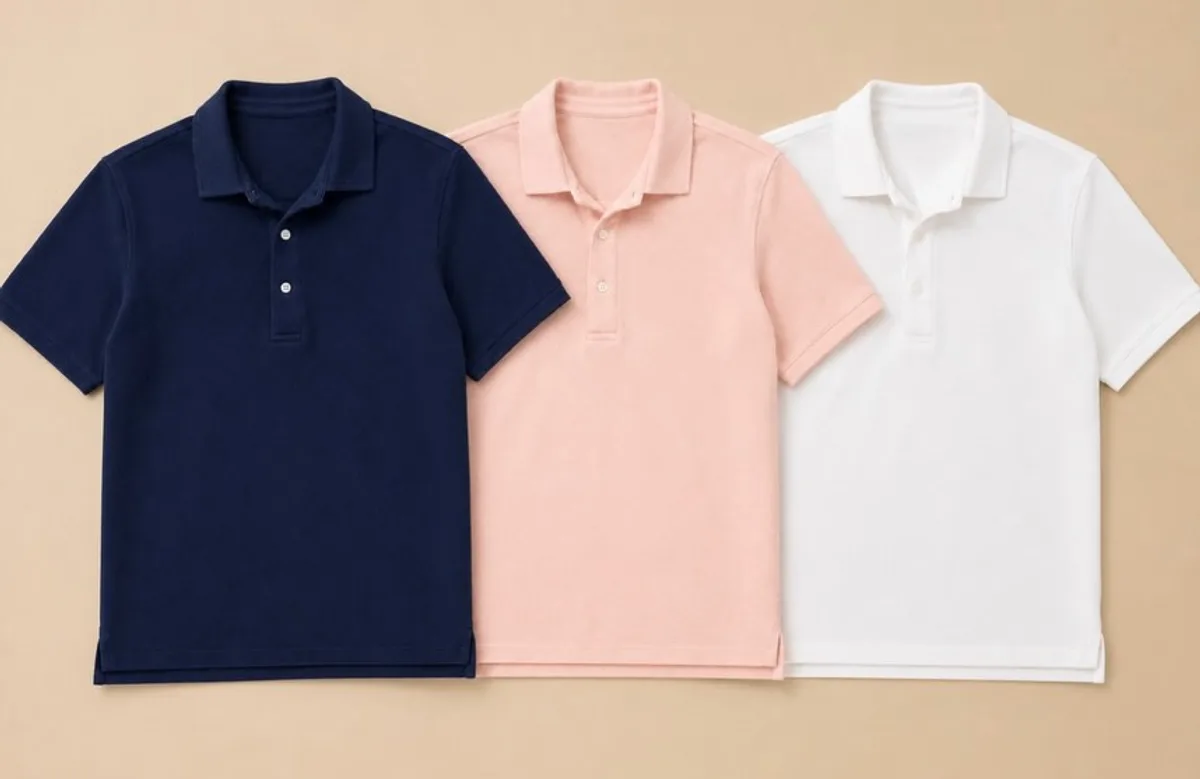
The flagship is the Arnie Polo at $105, a price that positions the brand above the mass market but below the luxury houses, and squarely in "buy fewer, better things" territory. Much of that price reflects the brand's manufacturing choices: American-grown Supima cotton, domestic production, and small made-to-order production runs that cost significantly more than mass-produced synthetic polos. The catalog has grown to include sweaters, twill pieces, and accessories, all released the same way: small seasonal batches, sold in limited order windows, made to order with a four-to-six week lead time. When a window closes, production runs are batched and the waiting begins. Availability is intentionally restricted; subscribers get notice of each release, and sold-out items stay sold out.
That model is the opposite of everything modern DTC apparel is built on, and it is a large part of the appeal. Scarcity is not manufactured through hype-drop theatrics; it is a byproduct of how the clothes are actually made. The brand describes it as deliberate work, done the right way, and the four-to-six week wait functions as a filter: the customer who orders an Arnie McNair polo has opted into the whole philosophy.
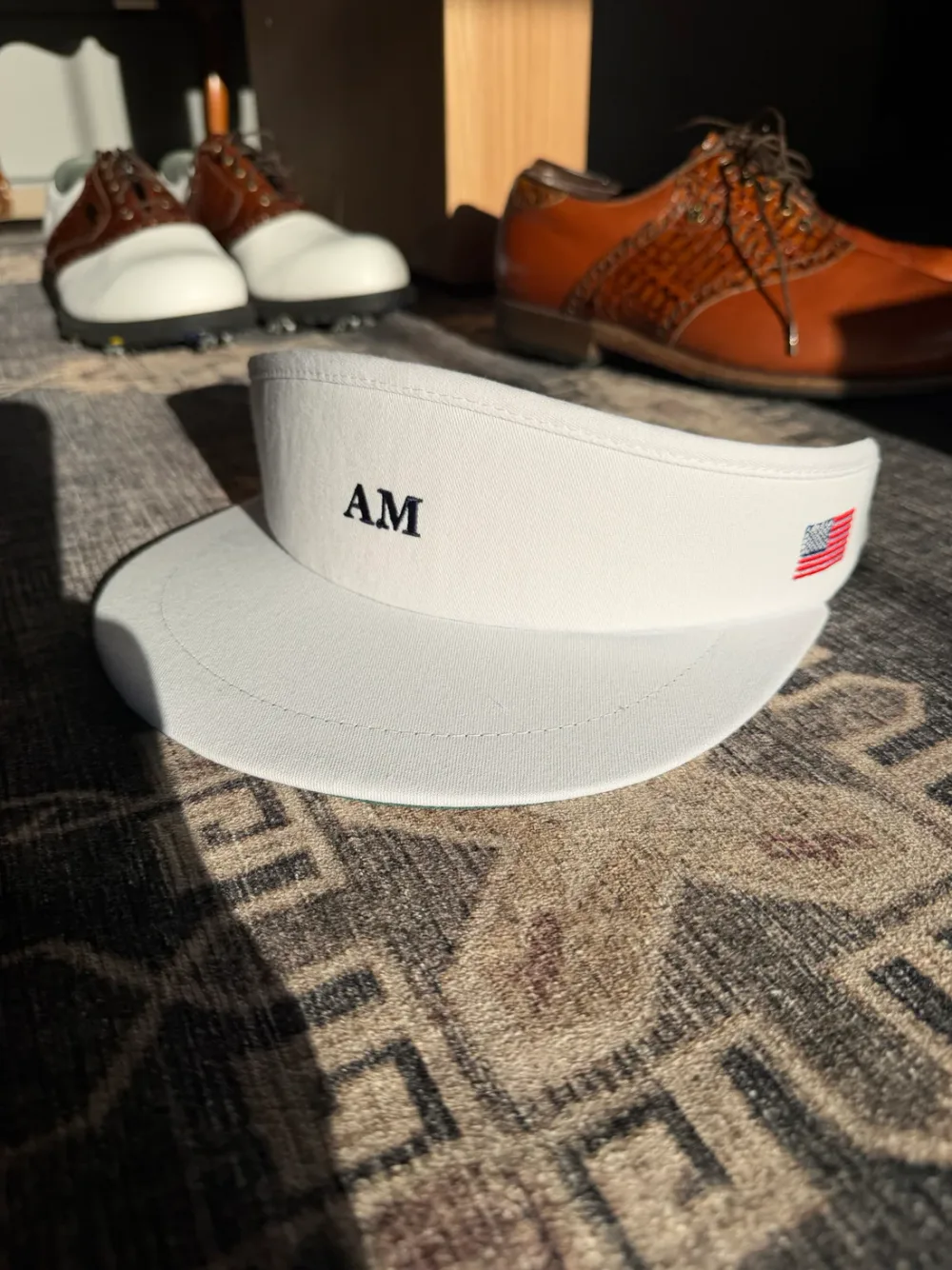
One more detail matters, and it is the most personal one. Pieces marked AM are dedicated to Arnie's brother, a United States Marine who passed away in 2004, and proceeds from those items go to Stop Soldier Suicide. The brand says plainly that this is not marketing, and there is no reason to doubt it. It is the one place where the anonymous founder's real life shows through the pseudonym.
Why Does Arnie McNair Stay Anonymous?
The obvious question is why a founder with a growing brand would stay hidden, and the obvious answer, publicity stunt, is the wrong one.
The anonymity solves real problems. The founder is, by his own description, a member at a country club in Minnesota, embedded in exactly the world his account spent a year skewering. A named founder is a member who can be found, pressured, and made awkward at his own club. A pseudonym lets the commentary stay sharp. It also keeps the brand about the argument rather than the person: Arnie McNair the account built an audience on a point of view about golf clothing, and Arnie McNair the brand inherits that point of view undiluted by a founder's face, bio, and personal brand.
There is precedent for this working in golf. Country Club Confidential built a real media business on anonymous founders, and Random Golf Club built a community brand where the founder's persona mattered less than the philosophy. Arnie McNair belongs to the same family: brands where the idea is the asset. The difference is that Arnie McNair extended the logic to commerce. You cannot buy the founder's story because there is no founder to point at. You can only buy the shirt, which is, the brand would argue, exactly how it should be.
The bet has costs. Anonymous founders cannot do trunk shows, cannot glad-hand pro shop buyers, cannot sit on industry panels. Every conventional growth channel that runs through a founder's face is closed. What is left is the product and the voice, and five months in, those two things built a following fast and put its polo on the backs of golfers who talk about it unprompted. When the Georgia Cotton Commission sent the brand a letter of appreciation for championing American cotton during a difficult period for the industry, Arnie posted that he did not care if he ever made a dime because moments like that made it worth it. Whether that stays true as the Army grows is the interesting question.
What Does Arnie McNair Show About Golf Brands?
DORMIED exists to read brand momentum, and Arnie McNair is a nearly pure case study in how attention converts to commerce in golf now. No retail presence, no tour validation in the traditional sense, no paid acquisition anyone can detect. Just a voice, a villain, a product that matches the argument, and a distribution model that turns patience into loyalty. The search data says the formula worked fast: a standing start in January, a peak at rank 108 by April, and monthly interest up 24.1 percent again in July after a spring cool-down.
The open question is scale. Made-to-order batch production and intentional scarcity build cult brands; they do not build big ones, and the founder has been explicit that independence, no trends, no private equity, no shortcuts, is the point. Golf has watched this movie before with brands that chose to stay small and brands that chose to cash in, and the Burnerverse will be watching which ending Arnie picks. For now, the most interesting new brand in golf apparel is run by a man who does not exist, and the joke lands because the clothes are real.
What Do People Ask About Arnie McNair?
Who is Arnie McNair?
Arnie McNair is the pseudonym of an anonymous country club golfer from Minnesota who founded the golf apparel brand of the same name. He built an audience posting on golf X starting in late 2024 and launched the brand officially on January 24, 2026. His real identity has never been disclosed, by design.
Is Arnie McNair a real brand?
Yes. Arnie McNair is a real American golf apparel company selling made-to-order clothing through its website in limited seasonal order windows. The founder has said the anonymity reflects both the brand's philosophy and his preference to keep the focus on the products rather than himself.
What does Arnie McNair sell?
Traditional golf clothing made from natural fibers: polos, sweaters, and twill pieces built from American-grown Supima cotton, cotton twill, and Italian cashmere, with no visible logos. The flagship Arnie Polo retails at $105.
Where is Arnie McNair clothing made?
Almost entirely in the United States. The brand prioritizes American manufacturing and American-grown cotton, with Italian cashmere as the labeled exception where the craftsmanship cannot be sourced domestically.
How do you buy Arnie McNair clothing?
Through the brand's website during limited seasonal order windows. Pieces are made to order in small batches with a typical four-to-six week lead time, and subscribers to the brand's email list get notice of each release. Sold-out items are not restocked.
Why is the Arnie McNair founder anonymous?
The founder has said the brand matters more than the person behind it, and the anonymity lets the brand's traditionalist critique of modern golf apparel stand on its own. It also fits the brand's origin in golf X's anonymous-account culture, where the founder built his following before the company existed.
What does the AM marking on Arnie McNair pieces mean?
Pieces marked AM are dedicated to the founder's brother, a United States Marine who passed away in 2004. Proceeds from AM-marked items go to Stop Soldier Suicide.
Is Arnie McNair growing?
By DORMIED's tracking, it grew fast and has since cooled. Arnie McNair ranks 119th of the 215 brands DORMIED tracks as of July 2026, up four places on the month with search interest up 24.1 percent, but the three-month trend is down 13.7 percent after peaking at rank 108 in April. It remains small in absolute terms.
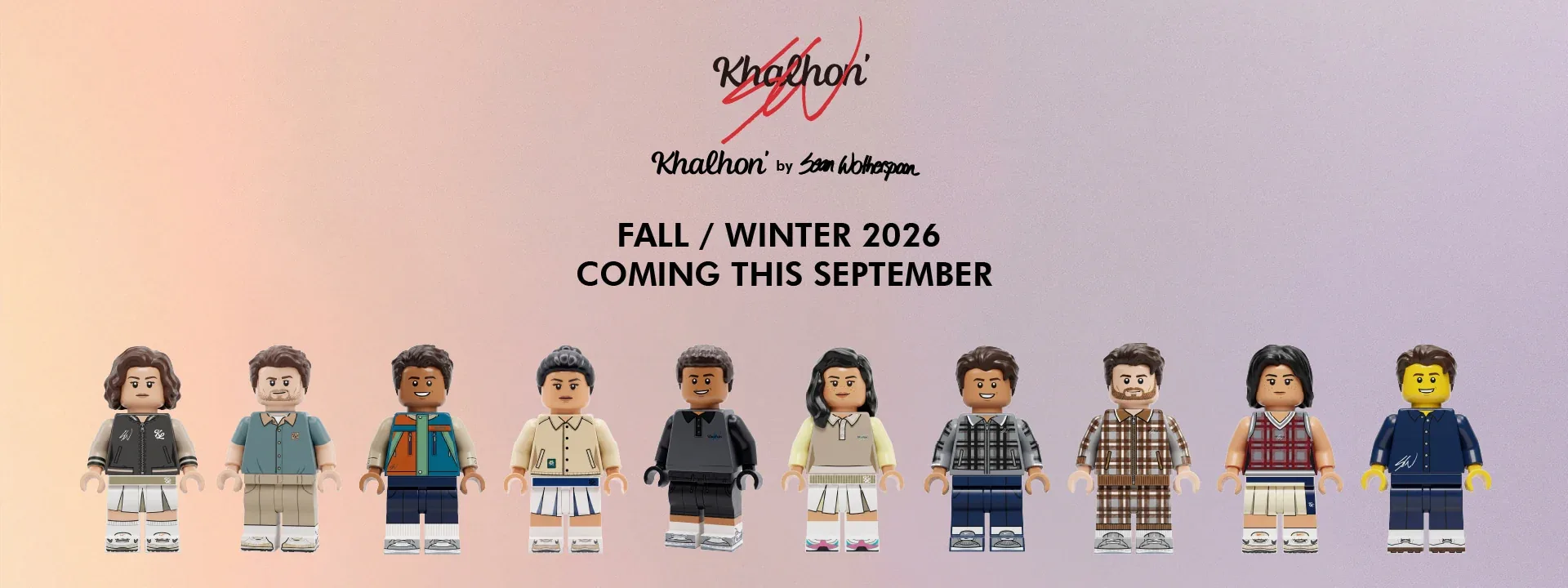
See the full range and current prices in Arnie McNair Clothing: Every Piece and Price. Track the brand's monthly movement on the Arnie McNair brand page and the full market on the DORMIED Index. Related culture-brand coverage: What Is Random Golf Club? and Confidential Sources, our feature on golf's other famous anonymous founders. More independent apparel: What Is Fantl Sport? from New Zealand and What Is Khalhon? from Seoul.