Every private club is sitting on a library it will never publish.
The stories are everywhere if you know where to stand: told in the locker room and at the card table, over the third cocktail and in the parking lot after a round. The good ones tend to begin the same way. Twenty years ago, there was a member here. What follows is the part no club would ever print. The affair. The fistfight at the member-guest. The assistant pro who caught a thief and got run off for it. These stories move by word of mouth from one club to the next, pick up a little embroidery with each retelling, and then, because nobody ever writes them down, they vanish.
Two years ago, somebody decided to catch them.
The result is Country Club Confidential, a weekly newsletter written by two people who will not tell you their names. It publishes one story every Thursday at ten a.m. Pacific. It has, at last count, just under thirty-three hundred subscribers. By the conventional metrics of digital media, those are not numbers that should command anyone's attention. By the metric that actually matters, they may be among the most valuable subscribers in golf. The newsletter has since spawned a print magazine, a slate of major-championship contests, and a list of brand partners who have figured out something the clubs themselves keep forgetting: that golf is at least as much about culture and community as it is about who broke eighty.
We spend most of our days at DORMIED tracking the business of golf brands, which means we spend a lot of time watching how attention in this game gets won and lost. CCC is one of the more interesting case studies we have come across, precisely because almost everything about how it was built runs against the prevailing advice. So we asked the founders to walk us through it. They answered at length, on the one condition they have insisted on from the beginning, which is that they remain anonymous.
How Did Country Club Confidential Begin?
The idea did not arrive fully formed. It arrived as a disagreement about a single phrase.
One of the two founders, the one who writes every word of the newsletter, had a partner who had read some of that writing and wanted to build something around what he kept calling "club culture." For a while that founder did not understand the assignment. "I thought he meant golf stories," CCC told us. "Someone telling you about their round. What happened on the 14th hole." Which can be interesting. Usually isn't.
Then the partner clarified. He did not mean rounds. He meant the stories people tell in the clubhouse, the ones that start with twenty years ago there was a member here and travel from club to club until they fade out because no one ever recorded them. When that founder finally understood, the name arrived, and the name did the rest. Country Club Confidential. It told you exactly what the thing was. The stories would be confidential. The names would change, the clubs would go unidentified, and none of that would cost the story anything. If anything, it added something. Strip out the identifying details and you do not weaken the tale, you turn it into a game, especially for the reader who has a private suspicion about which club, and which member, you might be describing.
The raw material, the founders understood, was effectively infinite. "When you put several hundred members together," CCC said, "your type-A's, your legacy money, your new money, in a private environment where they think they're among their own kind, you get chaos. You get bad behavior. You get stories." Nobody was cataloging any of it. That struck them as an opportunity, and not only a creative one. What they saw was the beginning of an intellectual-property library: a body of stories, told in a single consistent voice, that the whole world could eventually hear. The clubs had been generating the inventory for a century. CCC would simply be the first to keep the books.
Why Does Country Club Confidential Stay Anonymous?
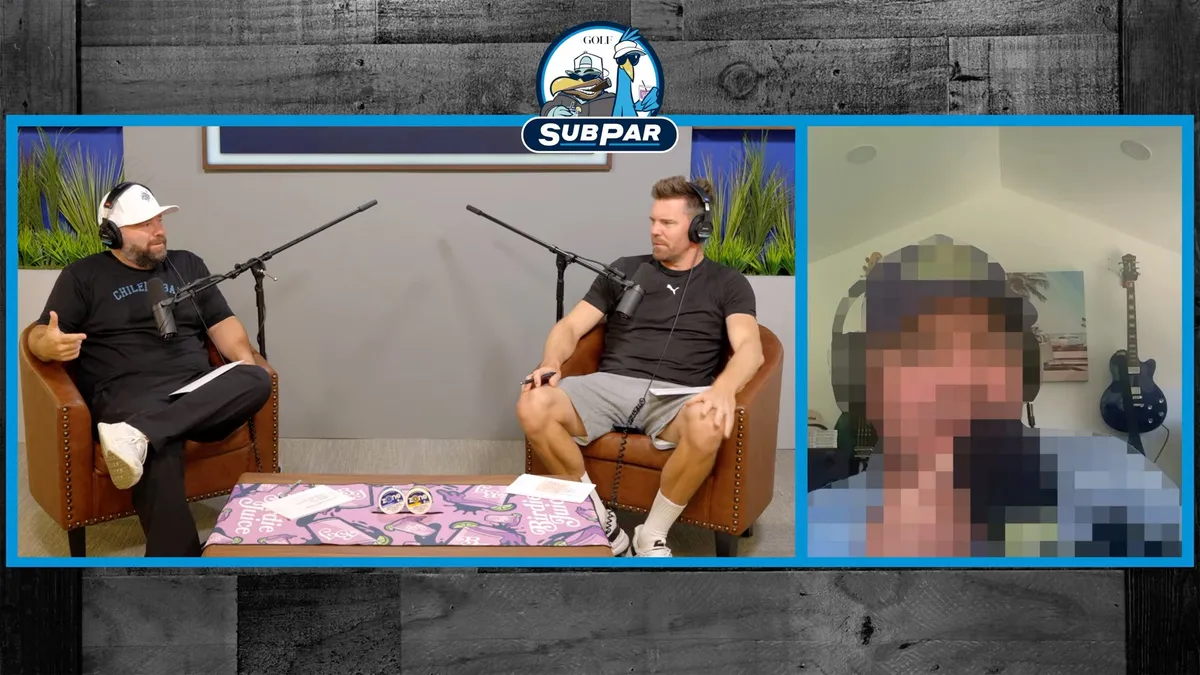
Anonymity, for CCC, was never a marketing gimmick bolted on after the fact. It was the logic of the product taken to its conclusion. "If we're not going to name the clubs and we're not going to name the members," one founder reasoned, "why would we name ourselves?"
They have had fun with it. They have appeared on podcasts with their faces blurred. They talk, a little cryptically, about ideas for what the mask might let them do down the line. There may eventually be a right moment to take it off. For now, the calculation is simple, and a touch deflating to anyone hoping for a reveal. "Some guy in Connecticut doesn't need to know who's behind CCC," one founder said. "That's far less important than what's inside it."
There is also a more practical reason, which is that Country Club Confidential is not a large operation pretending to be small. It is a small operation, full stop. One person writes every story and every word of the surrounding content. The other handles the business: brand relationships, partnerships, the machinery of turning a newsletter into a company. They have recently added an intern, a film-school graduate, who has been a help. That is the entire masthead. In a creator economy that treats the founder's face as the central asset, CCC decided its face was a liability it would rather not carry, and the anonymity has bought it room to operate that a more exposed outfit would never have.
What Number Does Country Club Confidential Care About?
Here is where CCC's choices look, on paper, the most eccentric, and where they may in fact be the most sophisticated.
The founders built the company on email, not social, and they did it on purpose. Their reasoning starts with a single statistic. Country Club Confidential has run open rates of 65 to 70 percent since the beginning. In an industry where a 20 percent open rate is considered healthy, that is not an incremental edge. It is a different category of business.
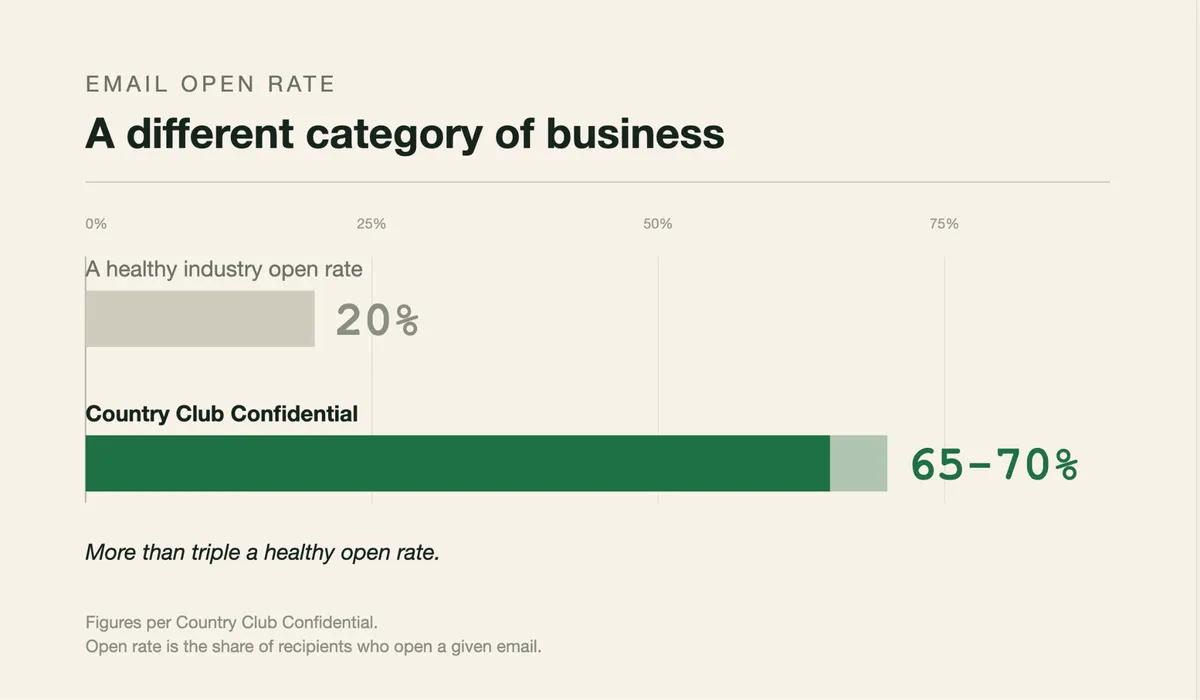
Most newsletters optimize, whether they admit it or not, for the size of the list, because the size of the list is the number you can put in a pitch deck. CCC optimized for the only number that actually compounds, which is whether anyone opens the thing at all. "We could go drop fifty thousand dollars on subscriber acquisition and have twenty-five thousand new names on the list," CCC said. "But those aren't our readers." Every name on the CCC list opted in. Nobody was bought, swept up, or bundled in. That produces a particular kind of reader, and it shows.
What email buys, in the founders' telling, is attention, the one resource the rest of the internet is busy setting on fire. "When someone reads a CCC story, we have them for three to five minutes," they said. "When someone scrolls past content on Instagram or X, we have them for ten seconds before they're onto the next five hundred things." Critics call the newsletter model old-fashioned. CCC considers that a feature, and the open rate suggests they are right. An open rate like that is not a marketing achievement. It is a product achievement, and the two are constantly mistaken for each other.
How Did Country Club Confidential Grow?
For all the philosophy, the growth itself came down to a handful of discrete moments, and the most important of them happened in a parking lot.
CCC launched in September, two years ago, with roughly two hundred subscribers, which is to say two hundred friends. Everything since has been organic. No paid acquisition, no ads. The first real bump came when the Southern California Golf Association ran a piece on them in its magazine, a print publication with north of a hundred thousand readers; CCC picked up a few hundred subscribers in the window that followed. A nice result, and a quiet preview of a pattern the founders had not yet clocked: that the analog channels kept outperforming the digital ones.
The pattern announced itself with the magazine. Early on, CCC printed a single physical issue, a giant tabloid-format thing, five hundred copies, the print bill covered by a partner who believed in what they were doing. They thought of it as a credibility play, a tangible object to prove the newsletter was real. It turned out to be the best business card they would ever own.
The founder happened to be at an event where Colt Knost, of the Subpar podcast and PGA Tour Radio, was in attendance. There were copies of the magazine in the car. The founder ran out, grabbed a few, and handed one over. Knost started reading it on the spot, and liked it enough to talk about it on his radio show the next morning. A friend called from Colorado to report that he had just heard Country Club Confidential being discussed on the radio. The Subpar appearance followed from there, and that one nearly doubled the subscriber base.
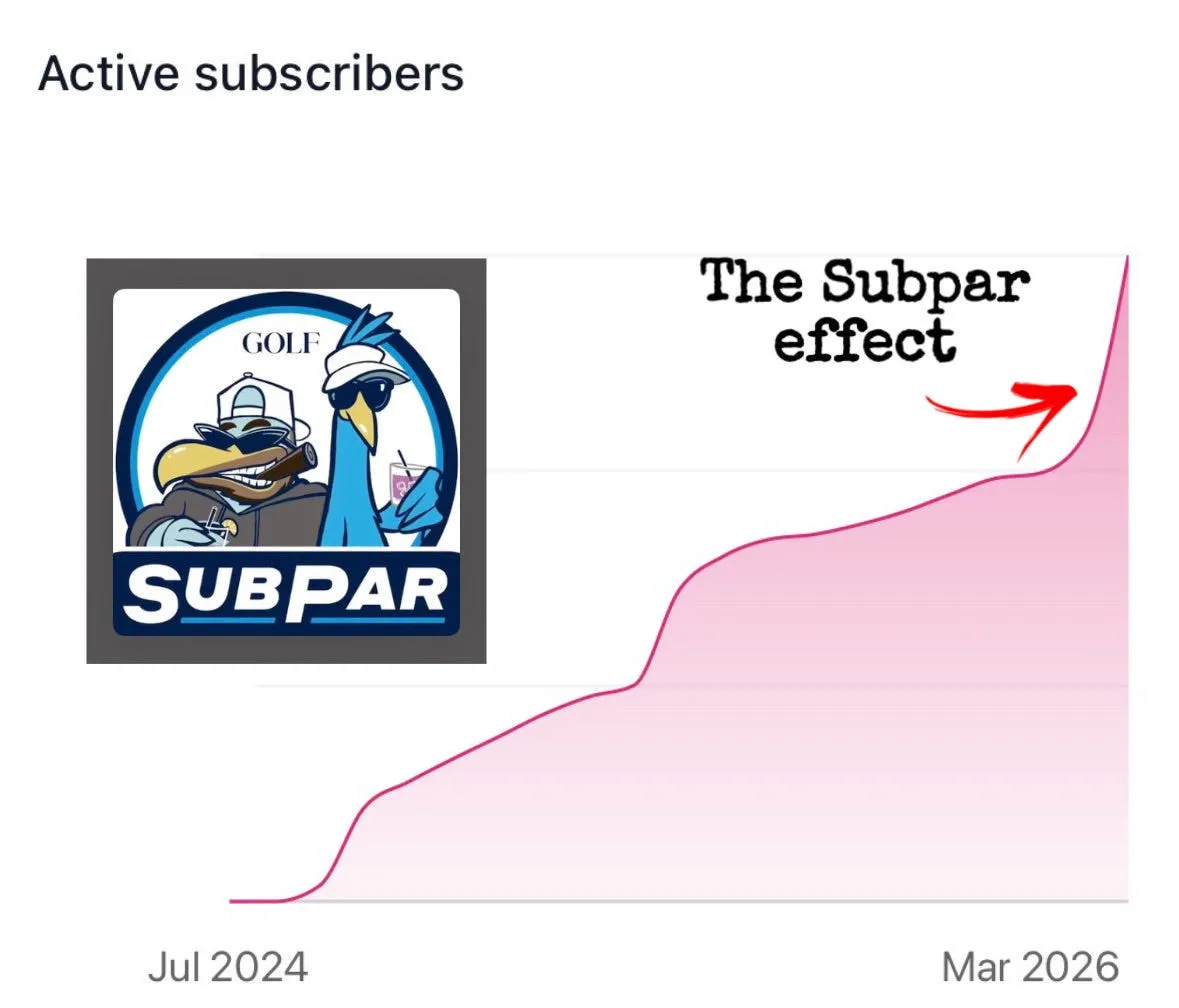
None of it happens without the object in the trunk. "Handing someone a tabloid-sized magazine is a different experience than sending them a link," CCC said. It is the sort of lesson that sounds obvious in hindsight and is almost impossible to plan for in advance. CCC now sits just under thirty-three hundred subscribers, adding a few a day, the slow way.
What Was Country Club Confidential's Most Expensive Lesson?

Not everything worked, and the thing that did not work is, as usual, the most instructive part of the story.
Six to nine months in, CCC produced a podcast-style video series, and it spared no expense. The actor Joe Mantegna read stories. The Sklar Brothers hosted alongside comedians including Matt Walsh and James Davis. Three episodes went up on YouTube, with an audio version as well. The production was genuinely good. It looked the part.
It drew about two thousand views.
A sponsor meant they recouped some of the cost, but it was expensive and the return did not support doing it again. What the series gave them instead was clarity. "Our voice doesn't travel well when you strip out the format it was built for," CCC said. That is a sharper diagnosis than it first appears. CCC had assumed the writing was the intellectual property and the newsletter was merely its current container, so it tried pouring the same material into a glossier vessel: celebrities, comedians, high production. What it discovered was that the format was not the packaging. The format was the product. The intimacy of a story landing in your inbox on a Thursday morning, in one consistent voice, was not a delivery mechanism for the thing. It was the thing. "We are a publication," CCC said. "Our stories are the core. Everything else has to serve that, not the other way around." Two thousand views is a steep price for a single sentence, but it is a good sentence, and they have run the company by it ever since.
How Does Country Club Confidential Tell a Story?
This is the part where a feature is obligated to ask the uncomfortable question, so here it is: how true are these stories, exactly?
The honest answer is that CCC is not pretending to be The Wall Street Journal, and understanding the genre it actually belongs to is the key to understanding the whole enterprise. In the early days, every story came from the founders' own network: things they had heard over the years, things they had witnessed. They launched with about ten concepts solid enough to build into real pieces. Now there is a submission tab on the website, and readers use it. Not everything that comes in is usable, but the quality has climbed as the voice has sharpened. "Early on I don't think people fully understood what a CCC story was," they said. "Now they do."
As for what happens to a story once it arrives, the founders are unusually candid. You can generally tell when someone has invented a submission, CCC said, and those get cut. The creative license is exercised elsewhere, on structure. A real story is sometimes vivid and complete in every way except that it has no ending, because real life rarely supplies one on deadline. In those cases, CCC writes the ending in. "When it's based on a true story, you take certain liberties." And when a source needs the club or the region protected, the whole tale will sometimes get relocated to another part of the country entirely.
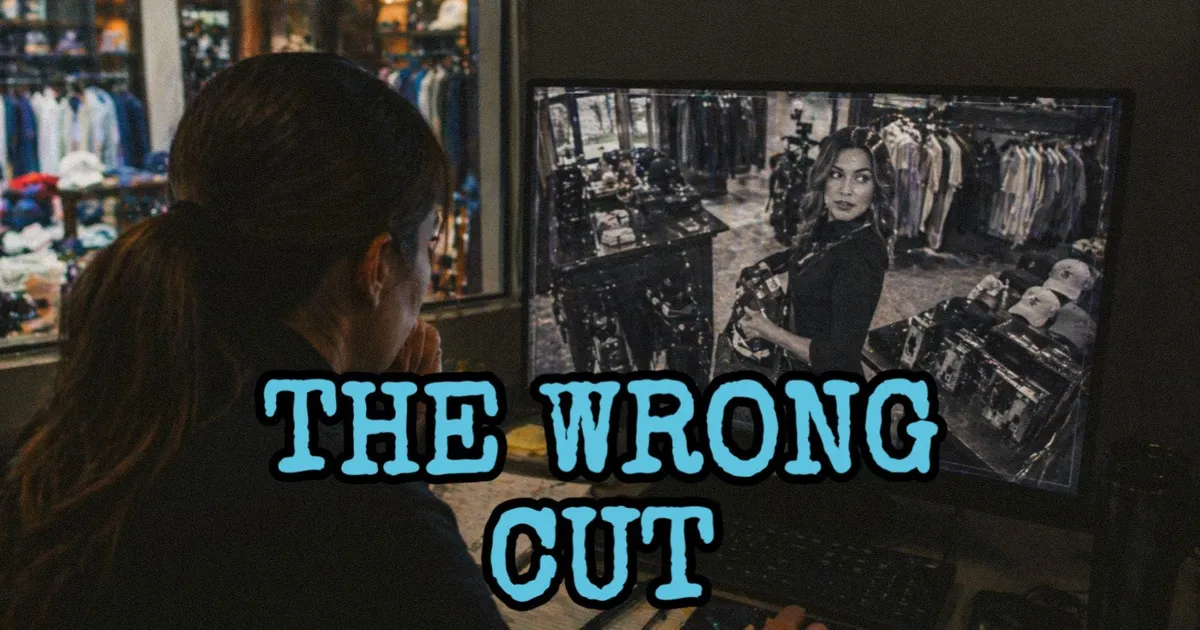
A purist would call some of that fiction. The founders would call it the difference between a story and an anecdote, and the distinction is not a dodge. CCC operates in an older tradition than journalism, the tradition of the tale told well, the kind of story that is true the way a fable is true even after the particulars have been sanded down for the telling. The founders place themselves, accurately, somewhere between The Onion and the gossip column you cannot put down. One story, "The Wrong Cut," about a club hairdresser who ran a thriving side business in stolen pro-shop merchandise and the young assistant pro who exposed her and paid for it with her job, works precisely because you cannot tell, and do not especially care, where the reporting ends and the shaping begins. The anonymity, conveniently, dissolves the obvious objection. If no one is named, there is no one to protect, and no reputation left on the table to ruin.
What Is the Hardest Part of Running Country Club Confidential?
Ask the founders what has been hardest, and the answer is not a strategic dilemma or a growth ceiling. It is a recurring Wednesday night.
The newsletter goes out every Thursday at ten a.m. Pacific, which means that every Wednesday, week after week, a story has to be finished. Some weeks, that story remains unwritten until late into the night, with the deadline closing in and the founder staring at a blank page. This is not a full-time job for either founder. There is, as yet, no financial reward to speak of. "That's the grind nobody talks about," CCC said, and it is the truest thing in any of their answers, the unglamorous engine underneath everything else.
The early fantasy, the one nearly everyone who starts something like this entertains, was that the subscriber count would vault into the thousands within a few months. It did not. "These things take time," CCC said, with the flatness of someone who has fully absorbed the lesson. The second lesson was harder to accept and more useful: you do not get to build the thing you imagined. The magazine, the live-event interest, a budding consulting angle, none of those were on the original map. They showed up because the founders kept going and stayed open to whatever the work turned up.
What Comes Next for Country Club Confidential?
Several new arms of the business are taking shape, and most of them, true to form, were not planned.
A club recently reached out, having correctly guessed that CCC was Southern California-based, about hosting a live event: an evening for its members that was not another wine dinner. The founders are eyeing something late this year, and if it works, it could become a touring show, an entirely unanticipated branch of the company. They are also set to present to a group inside the private-club world, employees and managers, on how to write a newsletter people actually want to read. The clubs' own weekly communications are, by broad consensus, readable only under duress, and CCC has accumulated real expertise in the opposite. A consulting lane may open up there. The major-championship pools have become a reliable engagement engine, too: only a minority of readers play, but the ones who do are deeply invested, competing for prizes the business side has assembled through its brand relationships. And the newsletter's own next chapter is a paid model, designed to turn subscriber revenue back into growth.
The larger ambition is simpler than any single venture. The founders want CCC to be the place anyone goes who belongs to a private club, or wants to, or merely wonders what goes on behind the gates, and wants the answer delivered as a story. A little of The Onion, a little of the magazine you sneak into the cart at the checkout line, narrated by someone who has spent real time inside these places but did not grow up in one. The orientation matters to them. "We're punching up, not down," CCC said. The premise, in the end, is almost tender in its cynicism: the one percent have petty problems too. Sometimes pettier than everyone else's. And those stories, the founders are betting, deserve to be told.
There is one more thing CCC said, almost in passing, that lingers.
Asked about lessons, the founder admitted to a feeling that has nothing to do with strategy. If CCC ever reaches some final chapter, part of the relief will be giving the Wednesday nights back. But a larger part will miss them. The weekly story has become a genuine creative outlet, the kind a person does not expect to find and then cannot quite imagine surrendering. For an operation built on other people's secrets, it is a revealing one of their own.
Which brings it back to the library no club will ever publish. CCC's whole wager is that the oral tradition of private golf was never trivial, that the pettiness was always the point, and that the stories told over the third cocktail were worth more than the people telling them realized. The clubs have spent a century generating that material and letting it evaporate at the gate. Somebody finally decided it was worth writing down. The proof that the bet was correct is not the subscriber count, which is still modest, or the magazine, or the podcast cameos. It is the two in three people who, every Thursday morning, stop what they are doing and open the email. They are not there because anyone made them. They are there because, it turns out, the stories were always worth keeping.
Adam and Travis
DORMIED