
Cannibalization is a word brand managers use in meetings and never in press releases. FootJoy just built a shoe that lives on the edge of it.
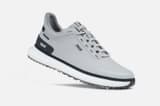
The company quietly rolled out the Vanguard, a $130 model that borrows the Premiere Series silhouette almost line for line and undercuts it by nearly a hundred bucks. Same rounded toe. Same Laser Street Last. Same clean, dressed-up profile that made the Premiere the default choice for anyone who wanted their golf shoe to look like a lifestyle sneaker. What's different is under the surface: a synthetic upper instead of full-grain leather, a one-year waterproof warranty instead of two, Pulsar LP cleats without the FastTwist 3.0 system, and DuraMax rubber cushioning in place of the OrthoLite EcoPlush footbed.
This is a textbook takedown, and FootJoy knows exactly what it's doing. The Premiere Series has become the most-copied shoe in the category, with everyone from G/FORE to Cuater to smaller boutique labels chasing the same clean-toe, leather-look aesthetic. The problem for FootJoy is that a $225 to $285 price band leaves a lot of room underneath for competitors to grab first-time buyers with something that looks close enough. The Vanguard closes that door. If you want the Premiere silhouette at Skechers Go Golf money, FootJoy would prefer you buy it from them.
The construction tradeoffs are honest, at least. Synthetic uppers don't break in like leather and won't develop the same patina, which matters to the customer buying a $260 shoe and doesn't matter at all to the customer buying a $130 one. The bigger tell is the outsole: dropping FastTwist 3.0 means Vanguard buyers can't easily swap cleats with the same hardware ecosystem, which quietly reinforces that this is a shoe designed to be replaced, not maintained. That's not a criticism. That's just what a $130 golf shoe is in 2026.
What makes this interesting from a brand standpoint is the timing. FootJoy's global rank sat at #5 heading into June, but the month-over-month trend is down 18.5%, which suggests the Premiere Series alone isn't carrying the conversation the way it did in 2024. Adding a budget entry point at the exact moment competitors are pricing into the $150 to $180 range is a defensive move dressed up as a product launch. The Vanguard isn't there to sell to the guy already spending $260. It's there to keep the guy shopping True Linkswear and Cuater from ever putting a non-FJ shoe in his cart.
The risk, and there is one, is that the Vanguard is too good a lookalike. If the synthetic upper holds up reasonably well through a season, and if the Pulsar LP cleats give the average weekend player enough grip, some meaningful percentage of Premiere buyers will look at both boxes on the shelf and pick the cheaper one. That's the tension every takedown model creates: it grows the category but it can also flatten the margin on the flagship. FootJoy's answer, apparently, is that they'd rather cannibalize themselves than let anyone else do it for them.
Watch what happens to the Premiere Series refresh cycle over the next twelve months. If FootJoy responds by pushing the Premiere further upmarket, with more limited colorways, tour-exclusive materials, or a legitimate luxury collab, it confirms the Vanguard was the first move in a two-tier strategy. If the Premiere Series stays exactly where it is, the Vanguard will eat it from below faster than anyone at FootJoy is willing to admit in a press release.