Grip marketing has spent the last decade selling torque control, spin reduction, and micro-textured performance zones. Golf Pride's latest CP release is selling something else: how the club feels in your hands when you're eight holes in and starting to squeeze.
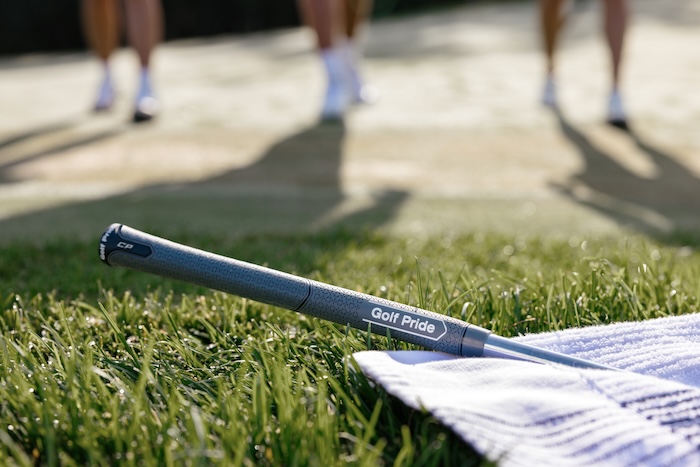
The new CP, launching globally August 4 in standard with midsize to follow, extends the ultra-soft CP collection with a redesigned taper profile, dual-zone tack differentiation, and cushioned impact dampening. The pitch is comfort, not distance. That is a quieter positioning than most grip launches attempt, and it says something about where Golf Pride sees the recreational market heading.
The technical details are worth pausing on. The localized tack zones split the grip into two functional halves: maximum tack under the glove hand for security, reduced tack under the trail hand to promote a lighter hold. That is a real construction choice, not a marketing overlay, and it aligns with what teaching pros have been preaching for twenty years about grip pressure differentials. The reduced taper, meanwhile, is Golf Pride finally acknowledging what oversize and jumbo converts have been saying for years: a fatter lower hand quiets the wrists and drops tension. The category has been trending this direction since the arm-lock putter grip normalized larger profiles. Golf Pride is now bringing that logic to full-swing grips at scale.
What is interesting about the CP push is how it positions Golf Pride against itself. The MCC and Tour Velvet lines have carried the brand's tour credibility for decades. Those grips sell performance. The CP collection is Golf Pride's admission that the recreational player, the one buying a regrip every three years at their local shop, is not making decisions based on what Rory has on his 7-iron. That player wants their hands to stop hurting on the back nine. Building a whole sub-line around that customer, and then quietly noting tour usage in 2026 majors as validation, is a smarter segmentation strategy than the brand gets credit for.
Golf Pride's structural advantage remains its market share. More than 80% of top-ranked professionals play their grips, and that trickles through every regripping conversation at every green-grass shop in the country. The brand does not need to win the marketing war because it already won the distribution war decades ago. Its DORMIED Index position at #32 reflects a company that generates less press cycle noise than smaller challengers like Lamkin's Sonar Tour or the boutique cord specialists, but converts far more actual grip sales. This is a brand that operates on plumbing, not fireworks.
The competitive question is whether comfort-first grips create real category expansion or just cannibalize existing Golf Pride SKUs. Lamkin has been pushing similar softness narratives with the Sonar+ line. Winn owns the polymer comfort space at the entry-price tier. Golf Pride entering the softness conversation with the weight of its tour validation behind it could squeeze Winn's positioning more than it threatens Lamkin's tour ambitions.
Watch what happens at the retail counter this fall. If club fitters start defaulting to CP as the recommendation for players over 50 or for anyone mentioning hand fatigue, Golf Pride will have quietly built a second flagship line without touching its tour-facing marketing. That is the kind of move a category leader makes when it stops worrying about defending share and starts worrying about growing the pie.