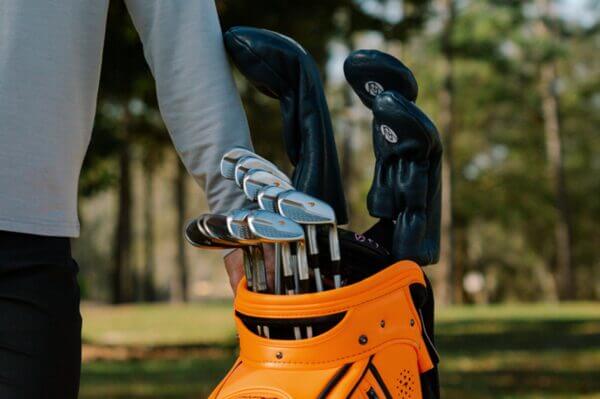
McLaren Golf's debut launched with two MIM-forged iron sets at $375 per club, a former COBRA product development head running R&D, and designers pulled from Titleist, Wilson, and Callaway. The supercar jokes write themselves. The talent migration is the actual story.
What Are McLaren Golf's MIM Irons and Who Built Them?
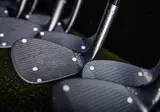
The lineup is two MIM'd iron sets: the blade-style Series 1 and the more forgiving Series 3, with tungsten weighting, a carbon fiber bonnet, and a dual-camber sole. Ryan Badgero, formerly of COBRA, leads product. Justin Rose signed as the staff anchor and has reportedly been in the development loop for close to a year. The launch price puts the irons north of PXG's original 0311 GEN1 numbers from 2015, which is the closest direct precedent for a luxury-positioned, non-traditional OEM trying to enter through the top of the market.
MIM at this scale is the technical claim worth tracking. Mizuno has used MIM in wedges for years. Cobra's King Tour irons leaned on it. But a full MIM iron lineup, marketed on the process itself, is closer to what PXG attempted before pivoting to forged. The metallurgy claim is real, the tolerances are tighter than casting, and the cost structure is closer to forging than the marketing implies. Whether the average buyer can feel the difference at impact is the same question that has dogged every premium iron launch since the original Miura MB-001 hit U.S. distribution.
Why Is Callaway Losing Designers to McLaren Golf?
The Callaway angle deserves more attention than it is getting. Callaway sits at #3 globally this month with a 22 percent month-over-month move on the DORMIED Index, driven largely by Chrome Tour ball momentum and the Elyte iron rollout. A brand that healthy should not be losing designers to a startup. The fact that McLaren pulled talent from Carlsbad, along with Titleist and Wilson, suggests the engineering side of the major OEMs has internal frustration that the org charts do not show. When a 30-year-old golf company can poach mid-career product engineers with a Formula 1 logo and an open R&D brief, the incumbents have a retention problem that future product cycles will surface.
The Justin Rose deal is the validation play and the risk vector at the same time. Rose has switched iron setups more than any other top-25 player of his generation, including the well-documented Honma stretch from 2019 to 2022 that ended quietly. His T65 at the McLaren debut event means nothing in isolation. His willingness to publicly iterate on the irons in-season means everything. McLaren is treating Rose as a development partner, not a billboard, which is the right structural decision. It is also the same one Honma made, and that partnership did not produce a category breakthrough either.
Why Have Luxury Brands Failed With Premium Golf Irons?
The price ceiling is the real test. At $375 per iron, McLaren is selling to roughly the same buyer pool as PXG's premium lines, Miura, and the top of the Srixon ZX Pro tier. That pool is finite, brand-loyal, and increasingly served by fitter-led channels like Club Champion that McLaren has no presence in yet. The luxury automotive crossover has worked for watches and apparel. It has never worked in golf equipment. Lamborghini tried with a putter line in the early 2010s. Bentley sold a bag. Aston Martin licensed a Hopkins wedge. None of them produced a sustainable golf business.
McLaren is doing more than any of those predecessors by hiring real product people and engineering its own platform. That is the differentiator and the burden. The next 18 months will tell whether the talent they pulled from Callaway, Titleist, and Wilson can deliver a second-generation product that justifies the price, or whether this becomes another logo on a thrift store iron in 2046. The hires suggest they are serious. The category history suggests serious is not enough.