Travis covers equipment, shafts, and the DORMIED Index data for DORMIED. He is the data co-founder and has been tracking the golf brand market since 2018.
Vice golf balls are tour-level urethane balls sold direct to consumers at roughly half the price of Titleist or Callaway, and the question most people are really asking is which one to buy, whether they are any good, and how they can be that cheap. The short answers: the lineup runs from the four-piece Pro Plus for fast swingers down to the two-piece Drive for distance, with the Pro, Pro Air, and Tour filling the middle; independent robot testing rates the premium models competitive with balls costing nearly double; and the low price comes from cutting out the pro-shop markup entirely. What makes Vice worth a real look in 2026 is the momentum behind all of it. By DORMIED's tracking, Vice is now the ninth-ranked brand in all of golf and the fastest-rising ball brand in the game by search interest. This is the full ball lineup, the customization and color program the brand is built on, and the data behind the climb.
In one sentence: Vice Golf is a Munich-based direct-to-consumer brand whose cast-urethane golf balls, led by the Pro Plus, Pro, Pro Air, and Tour, deliver premium performance at roughly half the price of the major brands, and Vice currently ranks ninth in the world on the DORMIED Index.
How Is Vice Golf Trending on the DORMIED Index?
DORMIED tracks brand interest across 10 global markets every month and scores it as the DORMIED Index (DI). Vice's numbers are the kind that usually belong to a brand three times its size.
| Metric | Value |
|---|---|
| Global DORMIED Index rank | 9th |
| DI score | 30.1 |
| Three-month change | +95.4% |
| Monthly global searches | 90,500 |
| Rank movement (month over month) | up one spot |
Source: DORMIED Index, May 2026 snapshot. The DI score measures brand interest, momentum, and market presence across 10 global markets.
Ninth in the world is the headline. Vice now sits inside the top ten brands in golf by interest, ahead of equipment names with decades more history and many times the marketing budget. The three-month change is the part that explains how it got there: interest in Vice nearly doubled in a single quarter, a 95.4% climb that is among the steepest in the Index. A brand does not move like that on golf balls alone, and Vice's recent surge has been driven by aggressive expansion into clubs and putters. But the balls are the foundation, and the foundation is what the brand is still best known for.
Where Did Vice Golf Come From?
Vice was founded in Munich on December 12, 2012 (12-12-12), by Ingo Düllmann and Rainer Stöckl, two German lawyers who, by the brand's own telling, met surfing the Eisbach river wave in the middle of the city. They built it as the first direct-to-consumer golf ball brand: no pro-shop markup, no distributor margin, just the ball shipped from the manufacturer to the buyer. The pitch was simple and it has not changed. A premium cast-urethane ball, engineered in Germany, at roughly half the price of the established names, sold cheapest when you buy in volume.
The model worked because the value proposition was real. Independent reviewers have consistently found Vice's premium balls competitive with balls costing nearly twice as much. The brand expanded from Germany across Europe and entered the United States in 2015. In May 2022, the private equity firm Oakley Capital took a majority position to accelerate growth and product diversification, and the brand's revenue reached roughly $79.7 million in 2026.
The part of the story most golfers miss is the data. Vice's broader expansion runs through a merger with HIO, continental Europe's largest brand-agnostic club fitter, which had spent more than a decade capturing launch-monitor data from every customer fitting it ran. That fitting database, built on everyday golfers rather than tour pros, is what Vice now uses to design products. It is the reason the brand can credibly claim its balls are tuned for the player who actually buys them.
Which Vice Golf Balls Are in the Lineup?
Vice keeps the ball range deliberately focused. Five models do the core work, each mapped to a swing-speed or playing profile, plus two junior balls, with a wide rotation of colors and finishes layered on top.
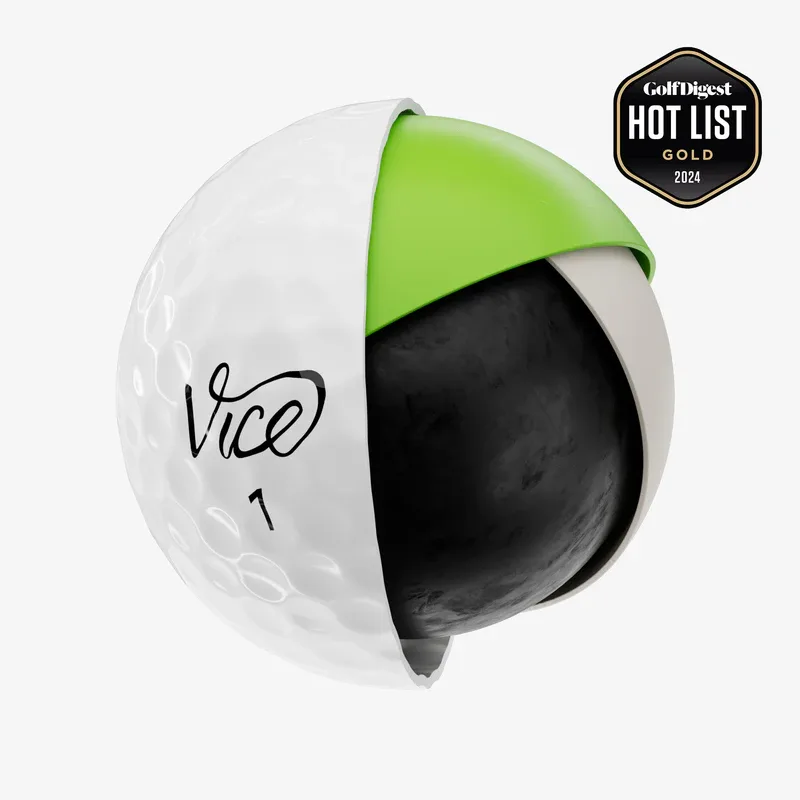
Vice Pro Plus: the fast-swing flagship
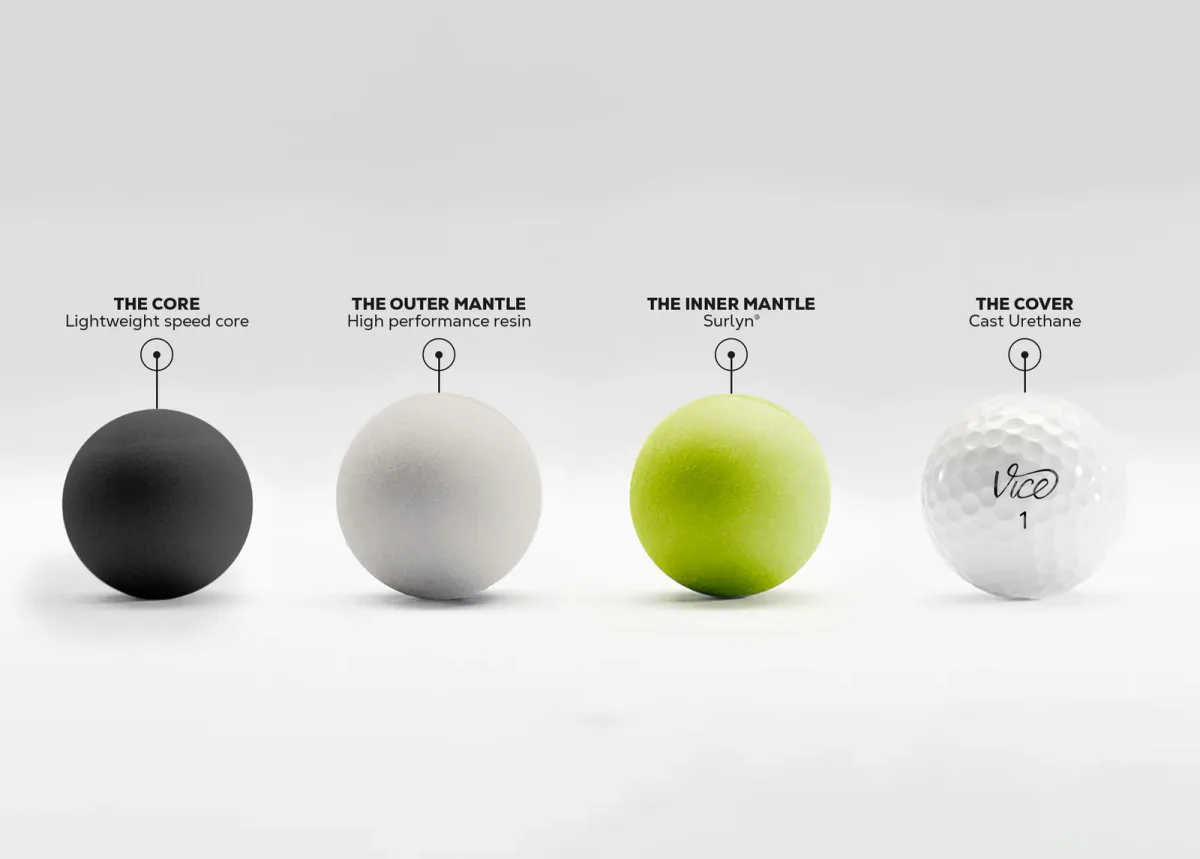
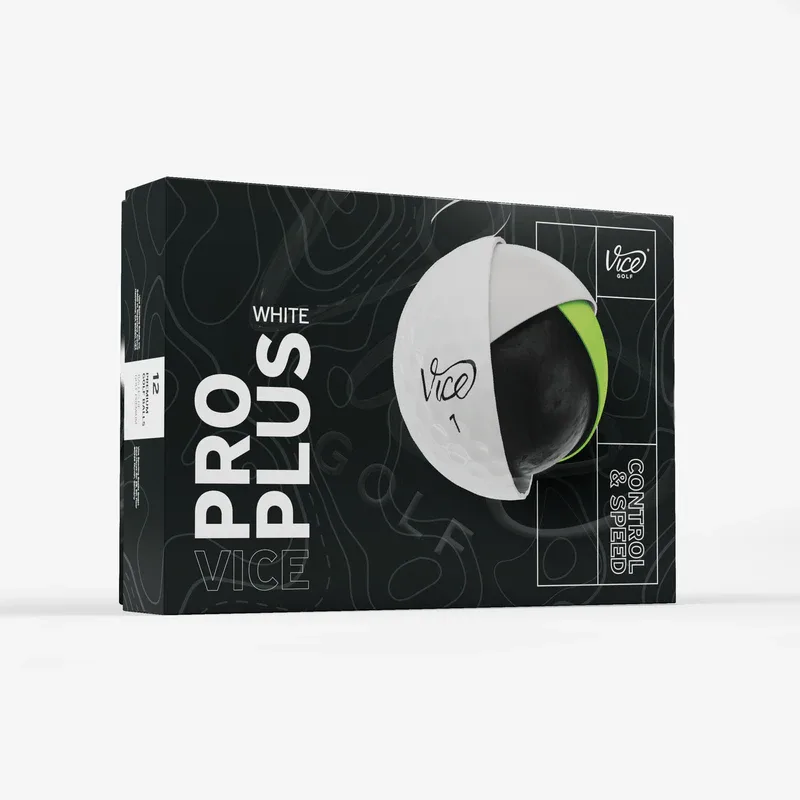
The Pro Plus is the four-piece, cast-urethane flagship, built for swing speeds above 110 mph. It carries a compression rating of 100 and generates the highest backspin in the Vice lineup, the trait fast swingers want for greenside control. Independent robot testing found it the fastest and longest ball Vice makes, with its real strength showing up on approach and around the greens. If you have the speed to compress it, the Pro Plus is the ball Vice built for you.
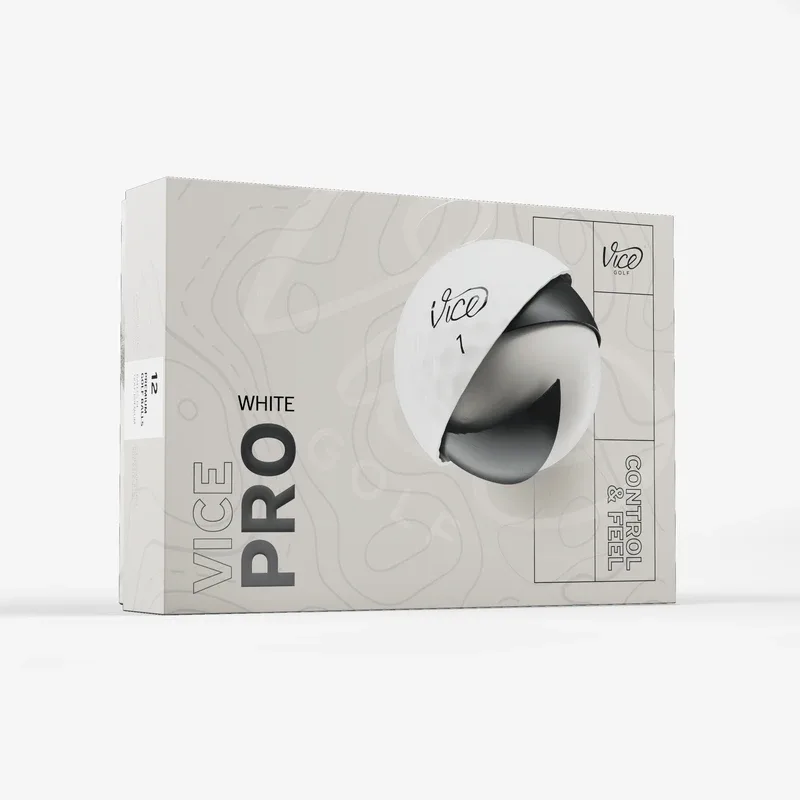
Vice Pro: the all-around tour ball
The Pro is the three-piece, cast-urethane model for medium to high swing speeds, roughly 95 to 110 mph, with a compression rating of 90. It is engineered for slightly lower spin off the driver and long irons than the Pro Plus, producing a flatter, longer trajectory on full shots while keeping the urethane cover's greenside bite. For most competent players, the Pro is the natural Vice ball, and reviewers regularly rate it among the better three-piece tour-level balls available at any price. It is the closest thing in the range to a traditional Pro V1-style tour ball.
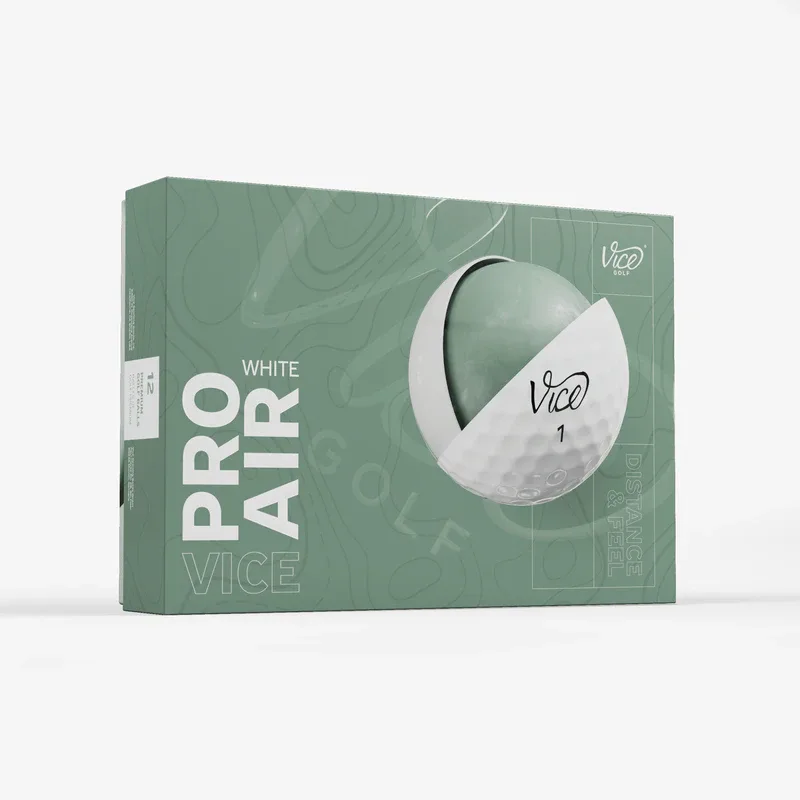
Vice Pro Air: the soft, high-launch urethane
The Pro Air is the newest of the three-piece cast-urethane balls and Vice's answer for players who want a urethane cover with a softer feel and an easier, higher launch. It is the lowest-spinning of the Pro family, which suits golfers chasing easy distance and a high ball flight rather than maximum greenside spin. The Pro Air replaced the older Pro Soft in the lineup and is the urethane option for moderate swing speeds that still want a premium cover.
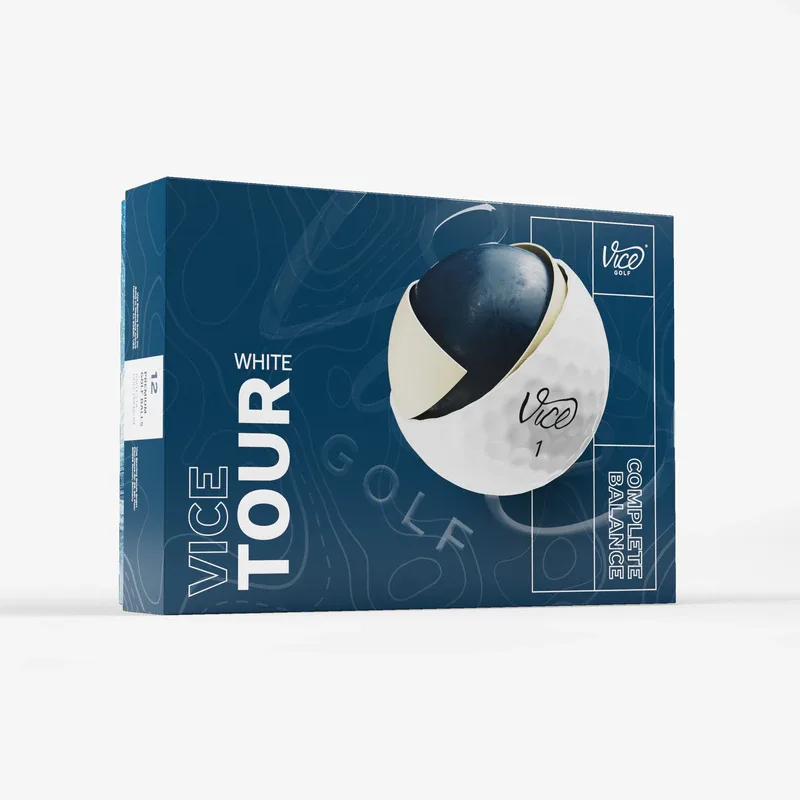
Vice Tour: the Surlyn all-rounder
The Tour is the three-piece, Surlyn-covered "all-rounder," sitting between the premium urethane balls and the two-piece Drive. It delivers a premium feel and a balanced mix of distance and control at a lower price than the cast-urethane models, with a durable cover that holds up to abuse. For golfers who want most of the performance of a tour ball without the tour-ball price, the Tour is the value sweet spot of the range.
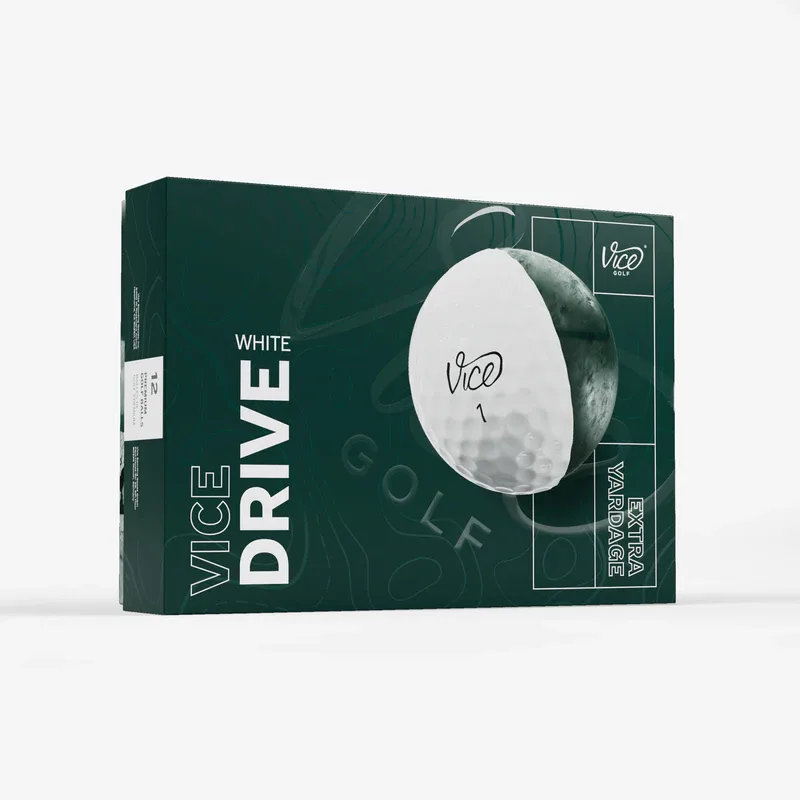
Vice Drive: the two-piece distance ball
The Drive is the two-piece, Surlyn-covered distance ball, the entry point to the range and by far the cheapest. It is built for beginners and high-handicappers who want maximum distance and lower spin off the tee, the combination that tends to find more fairways. It is not a tour ball and is not pretending to be one. It is a fun, fast, durable ball at a price that makes losing one painless.
Vice Pro Junior and Tour Junior: the kids' line
Vice also makes two balls specifically for juniors. The Pro Junior is the cast-urethane Pro re-engineered for younger players for maximum carry, and the Tour Junior is a softer, confidence-inspiring ball built for fun. Both are a rarity in golf: genuine performance balls sized and tuned for kids rather than cut-down adult products.
Can You Customize Vice Golf Balls?
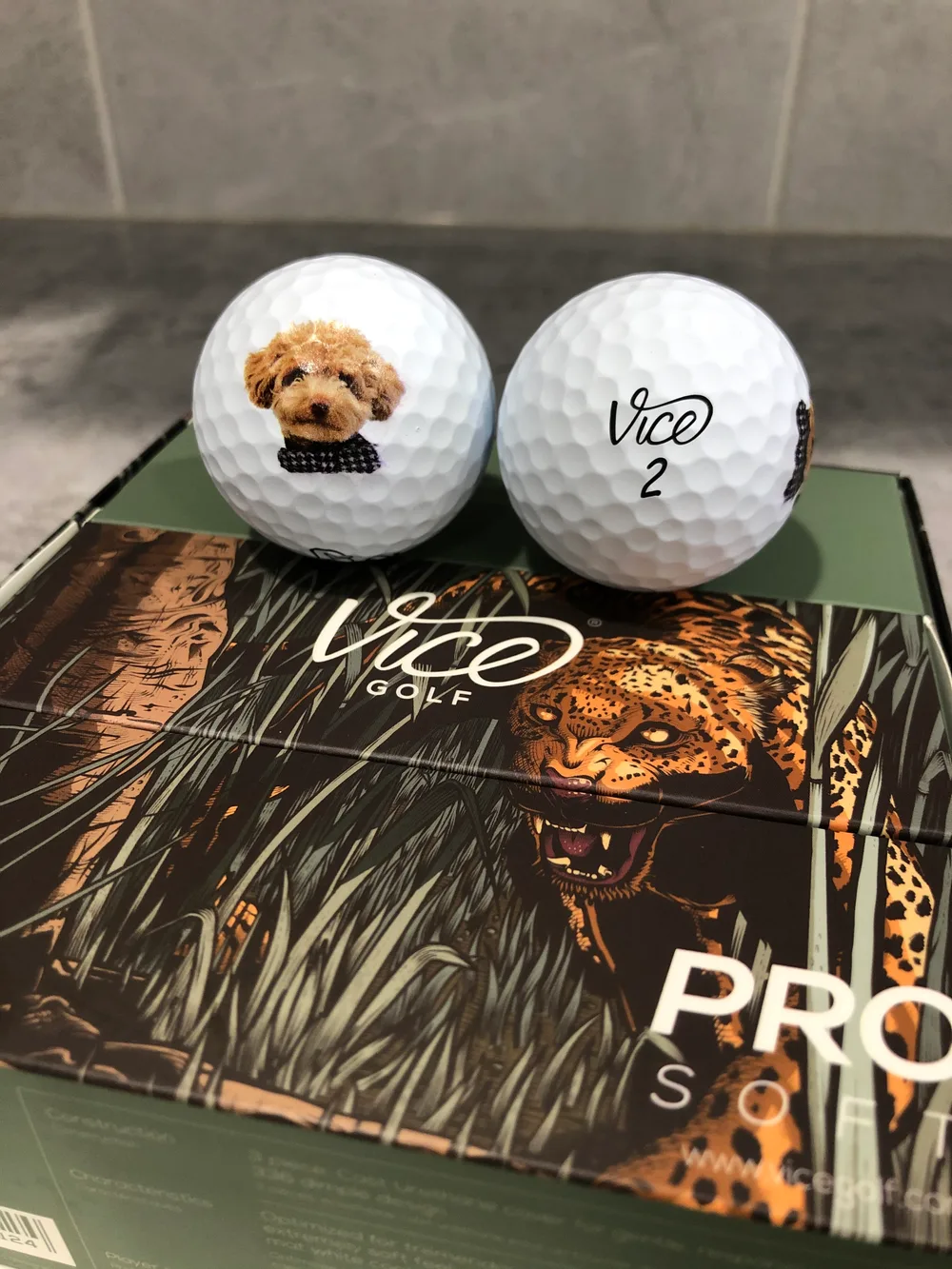
Customization is not a side feature for Vice; it is central to how the brand sells. From a single dozen, golfers can personalize Vice balls with custom text, a logo, or an image of their choice, printed on the ball and shipped to the door within a few business days. It is the kind of thing the major brands gate behind high minimums or corporate-order channels, and Vice opened it to the individual buyer from the start.
That has made Vice a default for a specific set of buyers: golfers who want their name or initials on the ball, groups ordering for a member-guest or a charity scramble, companies doing branded balls for outings, and anyone who wants a personal logo without a five-hundred-ball minimum. I have done it myself, a dozen with my dog's face printed on them, and I can report that they are now scattered across ponds and fescue on courses throughout the region, which is its own kind of testament to the format. The brand leans into it hard, frequently running promotions on personalization and club paint-fill, and the low base price means a personalized dozen still lands well under what a plain premium dozen costs elsewhere. If you have ever wanted your own logo on a tour-quality ball without a corporate budget, Vice is the brand that made that normal.
What Colors and Special Editions Do Vice Golf Balls Come In?
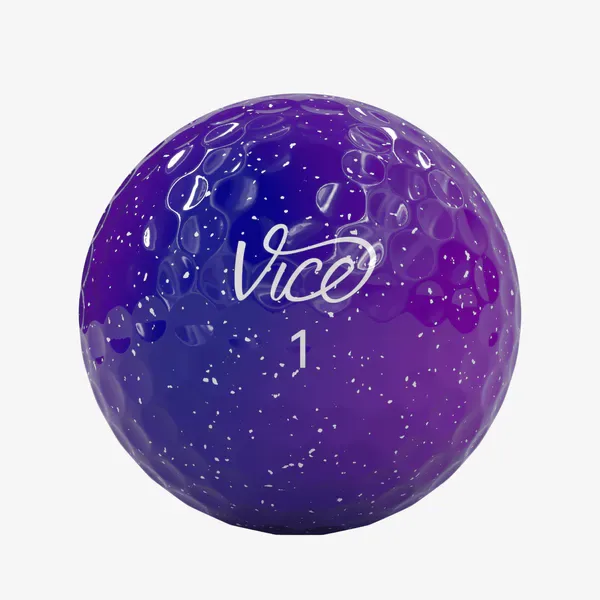
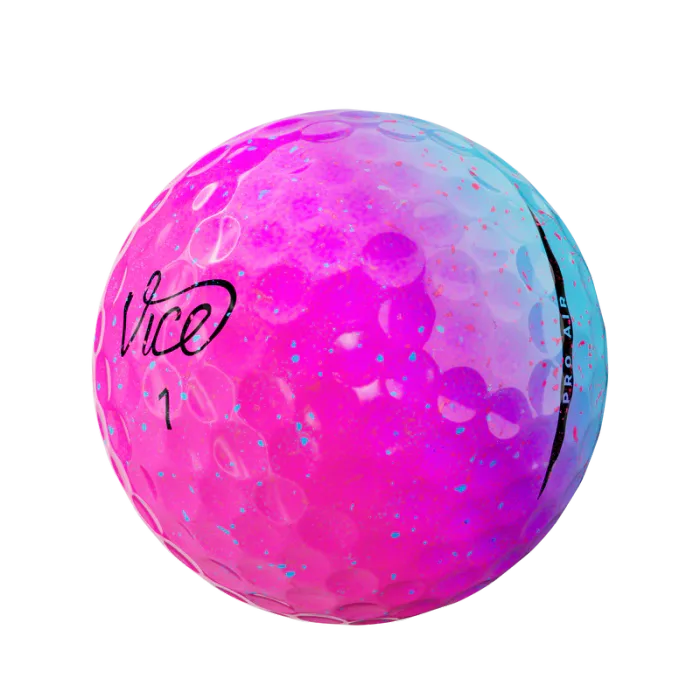
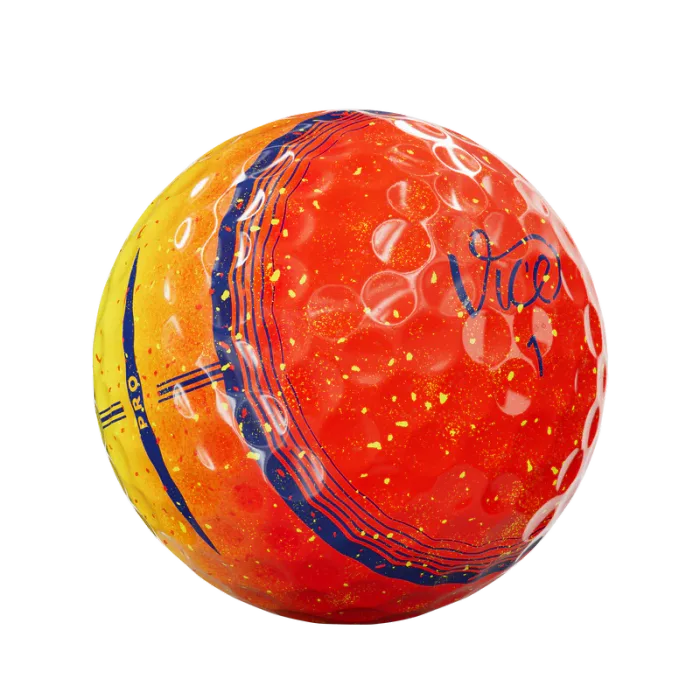
The other thing Vice is known for is refusing to make the golf ball boring. Where the major brands offer white and, grudgingly, yellow, Vice runs a full spectrum: balls in black, blue, gold, gray, green, orange, pink, purple, and red, alongside the standard white. The brand's Shade and Drip lines turn the ball itself into the design, with gradient fades and paint-splatter finishes that have become a recognizable part of Vice's identity on the course.
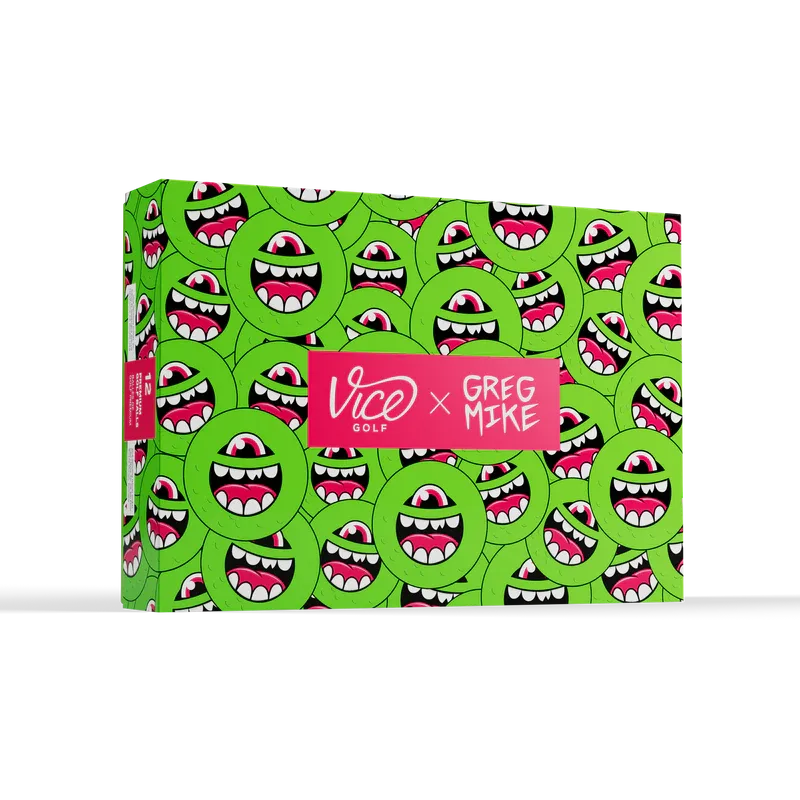
On top of the standard colorways sits a constant rotation of limited and special editions. Recent drops have included the Fastball and Tour Jet special editions, the Cotton Candy Pro Air, and collaboration balls like the Greg Mike Loudmouf and Smiley designs, the kind of artist-driven release that pulls in buyers who would never otherwise think about which golf ball they play. Vice also runs its Tracer alignment system across much of the range, a dual-color graphic that doubles as an aim line off the tee and a feedback tool on the greens.
This is not just marketing decoration. The colors and the collabs are a real part of why Vice keeps gaining attention, and they show up in the search data. A white tour ball is a commodity. A limited Greg Mike drip ball with your initials on it is a thing people post, talk about, and come back to buy. Vice understood early that for a large slice of golfers, the ball is an expression of taste as much as a piece of equipment, and it built a business on the half of the market the incumbents ignored.
How Do Vice Golf Balls Compare on Price?
Price is the entire reason Vice exists, so it belongs in any honest look at the balls. The premium Vice models sell for meaningfully less than the equivalent balls from the major brands, and the gap widens further with Vice's volume discount, which rewards buying in larger quantities. The brand's whole bet, going back to 2012, is that a golfer who tries a Vice urethane ball will not find enough of a performance gap to justify paying nearly double for the name on the side. The independent test results suggest that bet largely holds for the Pro and Pro Plus in particular.
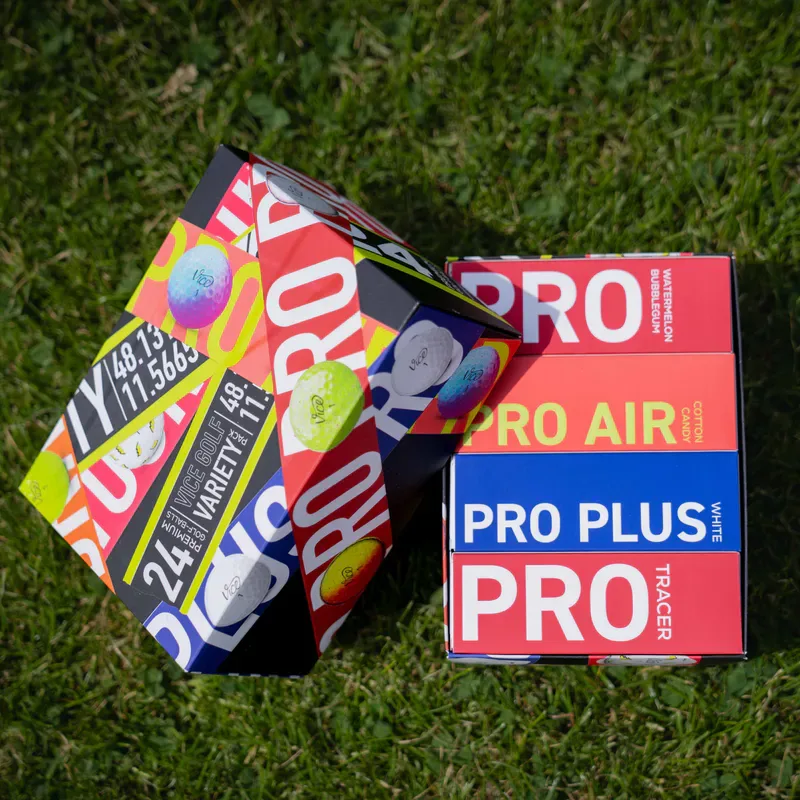
For golfers who are skeptical about committing to a large order from a brand they have not played, Vice's answer is the sampler approach: a variety pack with several models so you can test the range before buying in volume. It is a direct-to-consumer solution to a direct-to-consumer problem, and it is part of why the brand's average order size skews toward the discount tier.
Why Is Vice Golf Climbing the DORMIED Index?
The balls explain the brand. They do not, on their own, explain a 95.4% three-month surge in interest. That climb has been powered by Vice doing to other equipment categories exactly what it did to the ball: undercutting established players on price while matching them on performance claims.
The clearest recent example is putters. In early 2026 Vice launched its Zero Twist line, the VGP03ZT blade at $200 and the VGP04ZT mallet at $240, bringing zero-torque putter technology to price points that undercut the category leaders by hundreds of dollars. Golf Digest covered it as Vice's twist on zero-torque technology at game-changing prices, and MyGolfSpy called the launch a bigger deal than expected from the brand that conquered direct-to-consumer golf balls. Vice also moved deeper into irons, marketing its VGI03 blade as a single-piece forged option potentially playable for eight to ten handicappers, and refreshed its wedge line.
Each of those launches followed the ball playbook: premium construction, a fraction of the established price, sold direct. Together they took a brand known for one product and turned it into a full-bag proposition, and the search data captured the shift. That is the through line of the entire Vice story. The ball proved the model. Everything since has been the model applied to the rest of the bag.
What Do People Ask About Vice Golf?
Are Vice golf balls any good?
Yes. Independent robot testing has consistently found Vice's premium balls, particularly the Pro and Pro Plus, competitive with tour balls from the major brands that cost nearly twice as much. Vice uses a cast-urethane cover on its premium models, the same cover construction used by the leading premium balls.
What is the best Vice golf ball?
It depends on your game. The Pro Plus is the flagship for fast swingers above 110 mph, the Pro is the all-around tour ball for 95 to 110 mph, the Pro Air is the softer high-launch urethane option, the Tour is the Surlyn-covered value all-rounder, and the two-piece Drive is the distance ball for beginners and high-handicappers.
Which Vice ball is most like a Pro V1?
The Vice Pro is the closest comparison to a three-piece tour ball like the Pro V1, with a cast-urethane cover and balanced spin for medium to high swing speeds. Faster swingers chasing maximum greenside spin would look at the four-piece Pro Plus instead.
How are Vice golf balls so cheap?
Vice sells direct to consumers, cutting out the pro-shop and distributor markup that the major brands build into their pricing. The savings are passed to the buyer, and Vice's volume-discount model offers the lowest per-ball price when you buy in larger quantities.
Can you customize Vice golf balls?
Yes. Vice lets you personalize balls with custom text, a logo, or an image from as little as a single dozen, shipped within a few business days. It is one of the brand's signature features and a major reason groups, companies, and individual golfers choose Vice.
What colors do Vice golf balls come in?
Vice offers a full color range including black, blue, gold, gray, green, orange, pink, purple, red, and white, along with its Shade gradient and Drip splatter finishes and a steady rotation of limited and special-edition and collaboration designs.
Where are Vice golf balls made?
Vice is a German company, founded and headquartered in Munich, and its balls are designed and engineered in Germany. The brand sells primarily through its own website along with selected retailers and pro shops.
Is Vice a good brand?
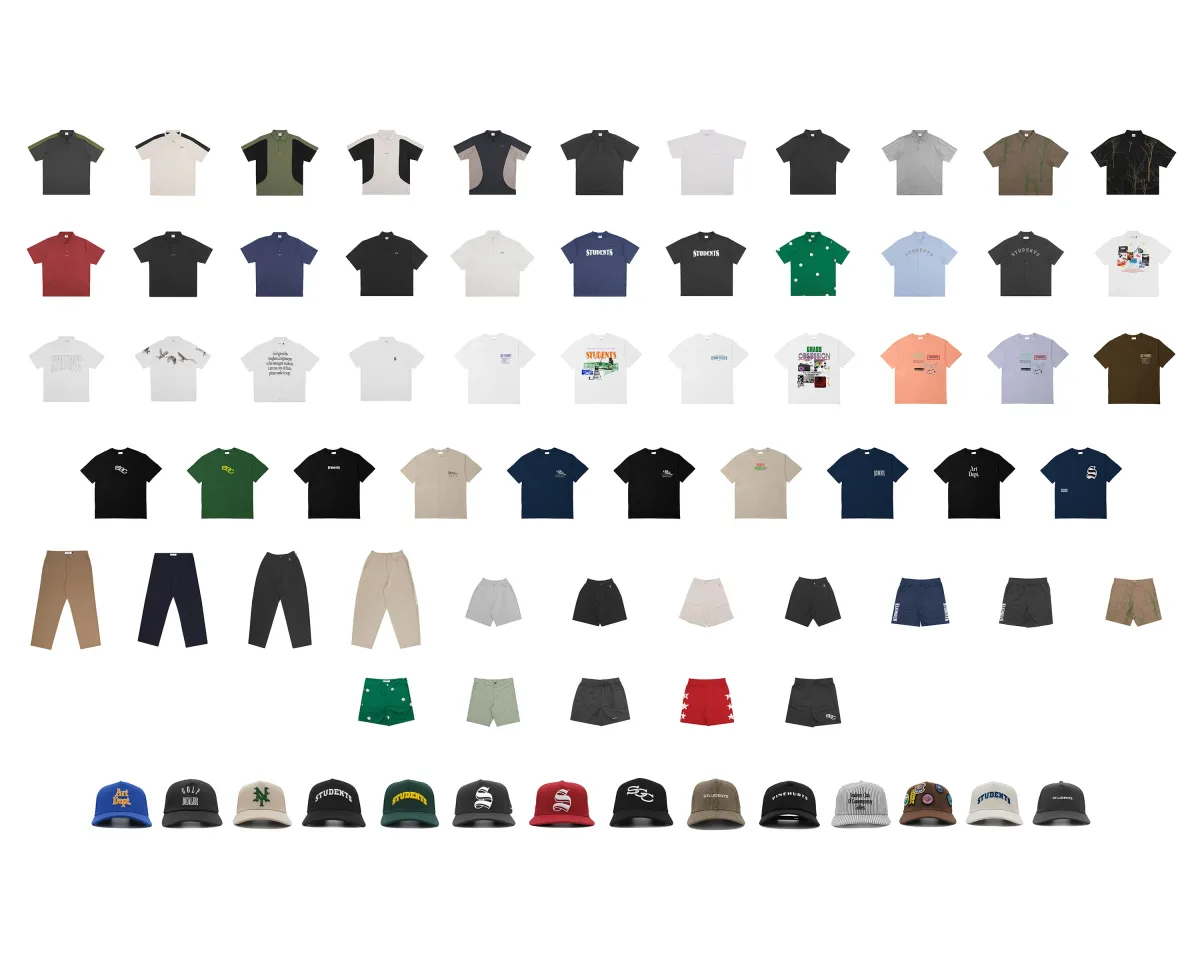
By DORMIED's tracking, Vice is currently the ninth-ranked brand in all of golf and the fastest-rising ball brand by search interest, up 95.4% over three months. It has grown from a single-product ball brand into a full-bag company with balls, clubs, putters, apparel, and accessories.
More on golf brand momentum at the DORMIED Index, where Vice currently ranks ninth. For Vice's full trajectory and monthly movement, see the Vice Golf brand page. Related coverage: Top Irons on Tour 2026.