The thing slowing zero-torque adoption was never the physics. It was the address position. Golfers who spent thirty years looking down at a conventional hosel and a familiar offset picked up a lie-angle-balanced putter, saw a shaft leaning somewhere unfamiliar, and put it back on the rack. The performance data on those putters is real. The conversion friction is also real, and it is the gap every competitor in the premium putter category has been staring at for two years.
What Is the Evnroll EZPZ Reverse Torque Putter?
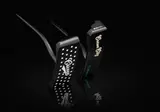
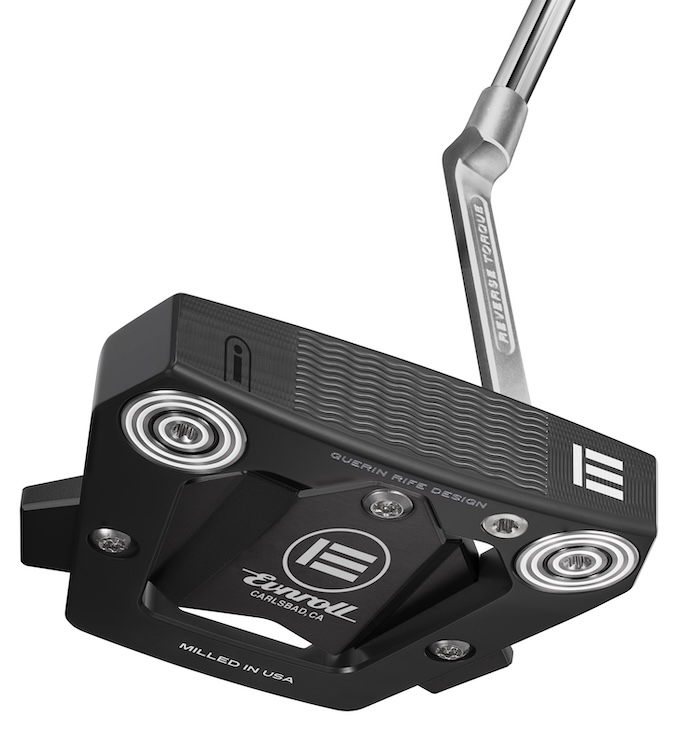
Evnroll is going after that gap. The EZPZ Reverse Torque Putter, announced this week out of Carlsbad, arrives August 15, 2026, at $449 in right-hand 33, 34, 35 and 38-inch Tour Spec builds, with left-hand models pushed to Winter 2026. It ships stock with UST Mamiya's ALL-IN multi-material putter shaft and carries SweetFace 2.0, the variable-groove face milling that has been Evnroll's entire identity since 2016.
The mechanism is the interesting part. Where a zero-torque design runs the shaft axis through or near the head's center of gravity to eliminate the rotational moment, Evnroll does the opposite: a patent-pending inward-leaning hosel puts the shaft slightly toe-ward of the center of mass, leaving roughly 60 percent of the head mass below the shaft axis on the heel side. The heel gets more momentum, face rotation slows, and the head still looks like a putter. Guerin Rife's claim is that the face stays square to the target line up to twice as long as a traditional model. That is a manufacturer number without a published protocol attached, and the honest read is that the mechanism is plausible while the magnitude waits on independent testing. Nobody should buy this on the 2X figure alone.
Why Is a Reverse Torque Putter a Harder Sell?
Rife has a habit of being early and then watching the category absorb the idea. He built the cavity-back mallet thirty-five years ago and put grooves on putter faces before the rest of the industry decided grooves belonged there. Evnroll's variable-groove face is now the reference point every roll-consistency claim gets measured against, and Rife did not capture much of the resulting market. The risk here is structural and it is not engineering. Zero torque won retail because it is two words a fitter can deliver in one breath and a consumer can repeat to a friend. Reverse torque requires the customer to first learn the concept it is arguing against, then unlearn part of it. That is a harder sentence to say across a fitting bay counter, and putter categories are won at the counter.
Which is where the business case gets more interesting than the marketing one. Evnroll sits at 118th of 215 brands in DORMIED's global rankings, flat month over month, which is roughly where a small Carlsbad milling operation without tour saturation or big-box shelf depth should sit. Counter-positioning is the cheapest share-of-voice lever available to a brand that size. You do not need a media budget to get written about if you are the company publicly disagreeing with the category's loudest trend. The stock UST Mamiya ALL-IN shaft is the quieter tell: most OEMs treat a premium multi-material putter shaft as an upcharge or a custom-order line item. Putting it in the box at $449 is Evnroll pricing against zero-torque flagships on spec rather than on discount, which is the correct call for a brand whose entire equity is milled-in-California craftsmanship.
Which Number Decides If the Evnroll EZPZ Works?
The number to watch is not launch-week coverage. It is how many independent fitting studios stock the EZPZ next to the lie-angle-balanced models by spring, because that head-to-head bay comparison is the only place this argument gets settled in front of a buyer. The left-hand delay to Winter 2026 costs Evnroll roughly a tenth of the addressable market during the window when the technology story is newest. If the square-zone claim survives third-party testing, expect the larger OEMs to have their own heel-biased mass distribution in market within eighteen months, and expect Rife to be right again without owning it.