
In the fall of 2000 at the Invensys Classic, 47 players put the original Pro V1 in play in one week, the largest single-week equipment shift in PGA Tour history. That happened because the technology was discontinuous: a solid-core, multi-component ball that made wound balata obsolete overnight. Nothing in the ball category has been discontinuous since. So Titleist has spent the last two decades building a rollout that does the work the technology no longer does on its own.
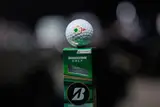
The next generation Pro V1 and Pro V1x began their global validation phase this week at the Baycurrent Classic at Yokohama Country Club, with reps from both the PGA Tour and Japan Golf Tour staffs working players through the switch. These are the 15th generation Pro V1 and 13th generation Pro V1x, scheduled for retail in 2027. On-course testing started at the Arnold Palmer Invitational in March, where Adam Scott, Ryan Gerard, Jordan Spieth and Harris English hit final candidates during Tuesday practice rounds and gave shot-by-shot feedback.
Why Is Titleist Starting the Pro V1 Rollout in Japan?
The venue choice is not incidental. Japan is Acushnet's second-largest reported region and one of the few golf markets where premium ball pricing holds without discounting pressure. Launching a validation phase at a co-sanctioned event in Yokohama puts the new model in front of Japan Golf Tour players and Japanese golf media at the same moment it reaches the American tour staff, which compresses what used to be a sequential rollout into a simultaneous one.
It also reflects something about how Titleist defines its tour operation. Robert MacIntyre first hit the new ball during a Tuesday session at Harbour Town, then booked time at the Titleist Performance Centre at Woburn with rep Liam McDougall before putting it in play at the Dunhill Links and finishing T6. Doug Ghim tested the new Pro V1x at the Titleist Performance Institute in Oceanside and played 54 holes at the Bank of Utah Championship in 22 under. Neal Shipley switched at the Biltmore Championship and shot a career-best 62 en route to a T3. Three continents, three fitting touchpoints, one ball.
What Does a Titleist Tour Validation Phase Actually Do?
Strip away the R&D language and the validation phase is a distribution of proof. Over the next several months, every WITB report, every tour-count graphic and every winner's bag from Japan to the DP World Tour will carry the new model before a single dozen reaches a pro shop. By the time the retail launch arrives, the marketing argument is already built, and it is built out of tournament results rather than claims about dimple counts.
That matters because the ball category has quietly gotten competitive. Callaway's Chrome Tour generation produced real, measurable gains and took tour count. Bridgestone has spent a decade building a fitting argument around swing speed. Srixon's Z-Star has credible short-game data. What none of them has is 70 percent of the field and a rep network dense enough to run a prototype session on a Tuesday at Bay Hill, Harbour Town and Yokohama in the same season. Titleist's moat is not the urethane cover. It is the switching friction that comes from being the ball every validation cycle is measured against.
Can Anyone Else Build the Pro V1 Switching Friction?
Not quickly, and probably not at all at the current cost of entry. A 75-person ball R&D group with dedicated aerodynamics, analytical chemistry and intellectual property functions is a capital commitment that only makes sense at Titleist's volume. The company's position at third globally in brand strength, flat month over month, reflects a brand that does not need to move so much as hold.
The risk in that posture is familiar. Incremental generational gains plus a flawless rollout machine works until a competitor finds something discontinuous, which is exactly what Titleist did to Spalding and Wilson in 2000. For now, the thing to watch is not what the 2027 Pro V1 does on a launch monitor. It is how many tour switches Titleist can bank before the retail date, because that number is the product launch.