A company whose first product was a magnetic towel is now in the performance footwear business, which tells you less about towels than it does about how footwear actually gets made.
What Is the Ghost Golf Reaper SL by Payntr Golf?
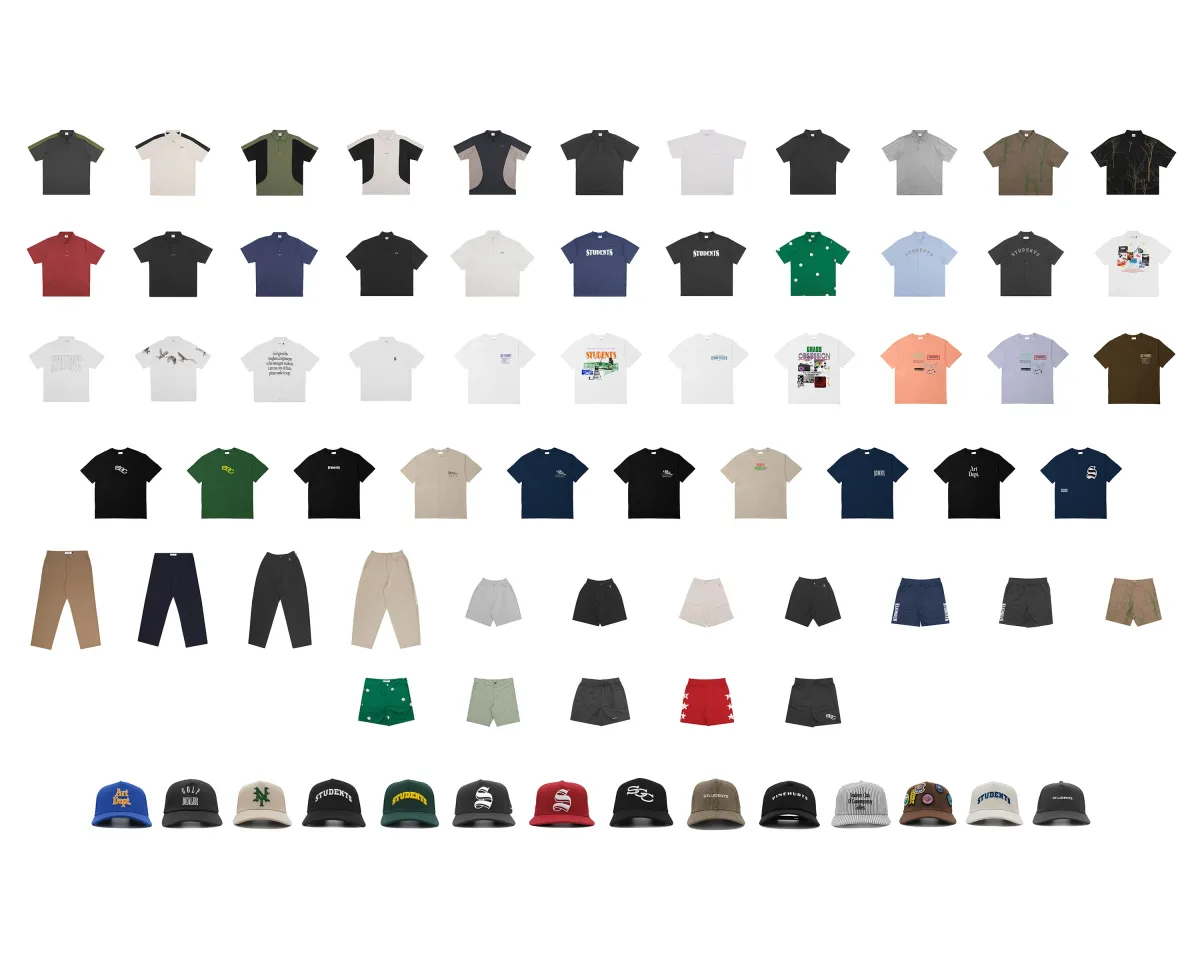
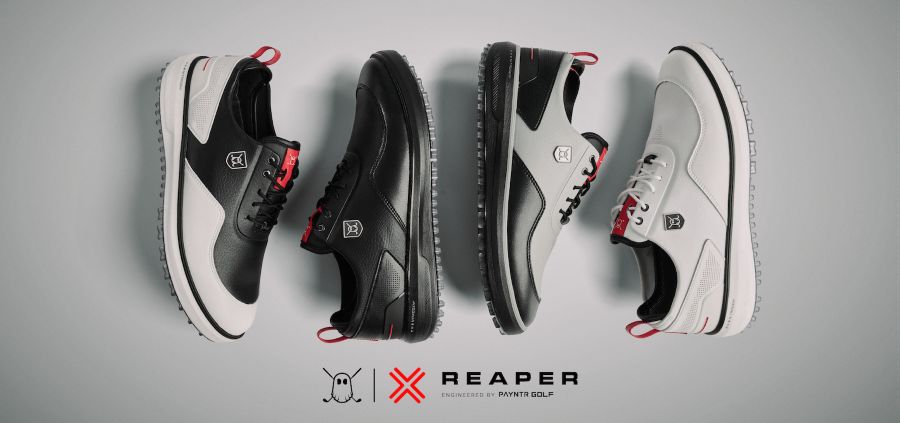
Ghost Golf and Payntr Golf launch the Ghost Golf Reaper SL by Payntr Golf on August 14 at $200. Four colorways, tied to Ghost's existing bag and accessory palette. The spec sheet is Payntr's: Clarino Trivela microfiber upper, a waterproof breathable membrane with a sealed bottom gasket, Ariaprene tongue and bootie, PMXNITROGEN+ midsole, Ortholite footbed, PMXSpeed propulsion plate and a TPU outsole with three-dimensional traction. The styling is Ghost's. Andy Nala, Ghost's founder, was explicit about the division of labor: the collaboration was about bringing Ghost's identity to a platform Payntr had already built.
That division matters more than the colorways. Footwear is the one apparel-adjacent category a small golf brand cannot bootstrap. Bags can be sourced. Polos can be cut and sewn at modest minimums. A waterproof spiked shoe requires lasts, injection tooling, a membrane supplier, a bonding process that survives 18 holes in wet grass, and minimum order quantities that make a first run a six-figure bet before a single pair sells. Every accessory brand that has tried to sprint into footwear on its own has either shipped a canvas sneaker with a rubber nub outsole or shipped nothing. Renting a proven platform is the footwear equivalent of a house-brand shaft: same tooling, different paint, and nobody has to explain why the eyelets tore out.
Why Does Payntr Golf Keep Building Collaboration Shoes?
What Payntr gets is more interesting than what Ghost gets. The Portland brand, founded by three sports footwear veterans including David Paynter, has spent its existence trying to be the credible alternative to the FootJoy and Nike duopoly without the marketing budget to buy awareness. Collabs are the cheap version of awareness, and Payntr has been running them consistently. Ghost sells through Dick's and Golf Galaxy in addition to its own site, which means Payntr tooling now walks into big-box footwear walls under someone else's logo. Sitting at 24th globally and flat month over month, Payntr's problem has never been product. It has been getting seen.
The risk sits in the same place as the opportunity. A brand that keeps lending its midsole to other people's aesthetics eventually gets read as a supplier rather than a label, and suppliers do not command $200 at retail on their own name. Payntr's leadership talks about collaborations as evolution, and Michael Glancy's description of the process is the tell: Ghost pushed the materials and finishes, Payntr held the performance line. That is a healthy working relationship and also a description of contract manufacturing with better credits. The line between the two is whether the Payntr logo stays legible on the shoe or gradually becomes a footnote on the tongue.
Does the Ghost Golf Reaper SL Justify $200?
On the product itself, $200 is not a soft-entry price. It lands directly on top of the FootJoy Pro/SL Carbon and Nike Air Zoom Victory Tour, shoes with a decade of course-level trust behind them. The materials list justifies it on paper, and Clarino Trivela with a sealed gasket is a genuinely better waterproofing setup than most of what shows up at this price. Whether the four colorways justify the buy depends entirely on whether Ghost's customer wants a shoe that matches their bag badly enough to leave a shoe they already know.
Watch what Payntr does with the next one. If the following collab comes from a brand with even broader distribution and Payntr's own line stays flat, the company has quietly picked a business model, and it is the platform business, not the brand business. There is real money in being the tooling everyone borrows. There is just less of it in the part of the shoe people can see.