An AI face optimizer only does what its objective function tells it to do. Point it at peak ball speed and it will find peak ball speed, along with the variance that comes with a face engineered to behave differently in every square millimeter. Callaway has been running that playbook since the Epic Flash in 2019, the first commercially released driver face designed by machine learning rather than by an engineer's iteration. Seven years later, the fingerprints are all over the iron lineup.
How Did Callaway's 2026 Irons Score in Most Wanted Testing?
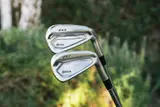
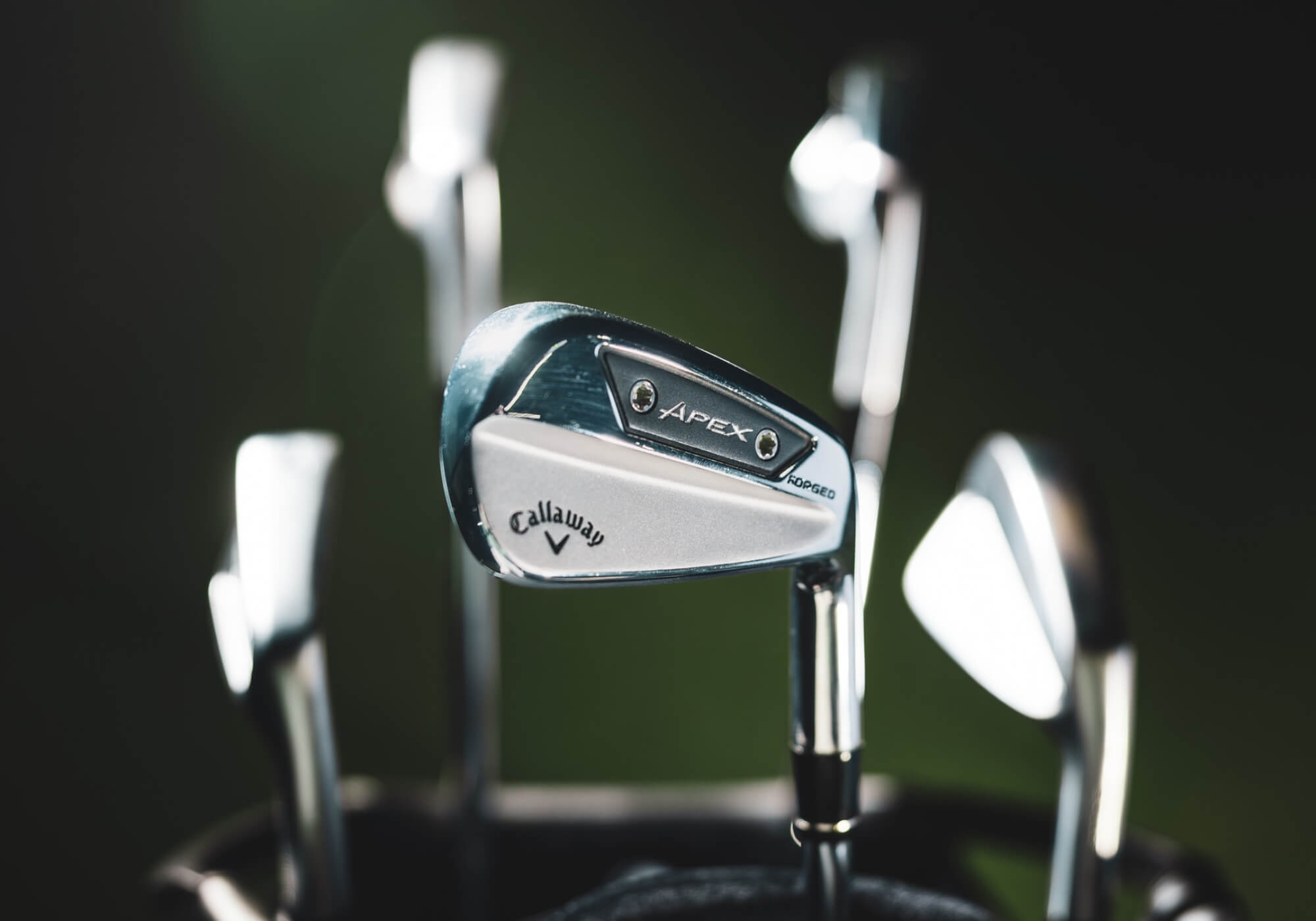
MyGolfSpy's 2026 Most Wanted iron testing has Callaway leading or near-leading distance in every category it entered, and winning none of them outright. The Apex Ai 150 was the longest player's iron of the year with a 9.8 distance score, and finished eighth overall on the back of a 7.9 forgiveness score and what testers described as occasional hot shots. The TI Fusion 250 finished second overall in game improvement with third in both accuracy and distance and an 8.8 forgiveness score. The Quantum Max OS finished second overall in super game improvement with a 9.3 distance score, a 9.2 accuracy score and, again, 8.8 for forgiveness. Four categories, four distance résumés, zero trophies.
That is not an accident and it is not a failure. It is a design brief. Irons are sold in a fitting bay in eight to twelve swings, on a launch monitor screen the customer can read over the fitter's shoulder. Carry distance is the only number in that session a golfer already knows how to interpret. Dispersion requires context, sample size and someone willing to explain why the 7-iron that went 15 yards shorter is the better club. Callaway builds for the room where the transaction happens. Ping built its brand on the opposite premise and spent 40 years being told its irons looked like garage equipment before the market came around. Both are legitimate strategies. Only one of them closes in a single appointment.
Where Are the Gaps in the Callaway Irons 2026 Lineup?
The more interesting detail sits in the player's distance category, where Callaway did not enter a 2026 model at all. The Apex Ai200, third overall in the 2025 test, remains the current answer. For a company that has historically treated annual refresh as a shelf-space defense mechanism, skipping a cycle in arguably the most competitive iron category in golf is a choice worth noting. It either signals confidence that the Ai200 still holds up, which the 2025 data supports, or it signals a lineup that has been reorganized around TI Fusion and Quantum branding and left a seam. Retailers will notice the seam before consumers do.
The honest read on the range of forgiveness scores is that Callaway has compressed its performance identity into a single variable. An 8.8 forgiveness number in a super game improvement iron carrying an OS badge is a mild contradiction in terms. The oversized profile promises the mishit will be rescued; the test says the mishit will be fast. For a 16-handicap buying on the assumption that bigger equals safer, that is a meaningful gap between the shape of the club and the behavior of the club. The TI Fusion 250 is the one model in the lineup without a glaring weakness, and it is also the one carrying the premium price, which is its own kind of message about where Callaway wants the volume.
What Would Signal a Shift in Callaway's Iron Strategy?
Callaway sits fourth of 215 brands in the DORMIED Index at 54.9, flat month over month, which is roughly what a company looks like when it is executing competently and not moving anyone's opinion. The distance story is the most durable brand asset it has, and it is also the reason the overall wins keep going elsewhere. Watch the next player's distance entry. If it arrives with a forgiveness number that starts with a nine, Callaway is recalibrating the objective function. If it arrives with another 9.8 in the distance column, the company has decided the fitting bay is the only room that matters, and it is probably right about the sale and wrong about the scorecard.