Adam R. covers apparel, accessories, and golf culture for DORMIED. He has been tracking brand drops and collaborations since 2018.
Who owns Pins & Aces? Two brothers-in-law from Colorado who are married to Scottish sisters. Nick Mertz and Jon Major started the company in 2018 after Mertz bought a Callaway Epic driver, hated the off-lime-green headcover it came with, and discovered the only alternatives were $150 boutique covers or $30 junk. He wanted one at sixty bucks. Nobody made it. Eight years later that gap has become a $20 million-a-year business in Arvada, Colorado, that sells everything from voodoo doll headcovers to country-club-ready golf bags, and which in December 2024 bought a boutique club manufacturer from a member of the Coors family. Pins & Aces now ranks 29th of the 215-plus brands DORMIED tracks. Here is how a headcover complaint turned into one of the most-searched independent brands in golf.
In one sentence: Pins & Aces is a golfer-owned Colorado apparel and accessories company founded in 2018 by brothers-in-law Nick Mertz and Jon Major, known as "the people's brand" for its irreverent designs and hard price ceilings, which has since expanded into serious golf bags and, through its acquisition of Edel Golf, actual clubs.
Why Is DORMIED Writing About Pins & Aces?
A small confession first, because it is the reason this piece exists.
Pins & Aces was not in the DORMIED Index when we launched. We built the initial brand list the way anyone would, from the names that dominate golf's shelf space and tour bags, and a company selling liquor sticks and Mourning Wood Casket Company hats out of a Denver warehouse did not make the first cut. A reader on Reddit told us we had missed one. They were right, and it was not close.
Pins & Aces now sits at rank 29 globally, ahead of a long list of brands with far more heritage and far bigger marketing budgets. It is a useful reminder that a search-interest index measures what golfers actually care about rather than what the industry thinks they should, and that the people playing the game are frequently ahead of the people covering it.
How Does Pins & Aces Rank on the DORMIED Index?
DORMIED tracks brand search interest across 10 global markets every month. Here is where Pins & Aces stands.
| Metric | Value |
|---|---|
| Global DORMIED Index rank | 29 of 215+ |
| DI score | 11.0 |
| Three-month change | +59.1% |
| Monthly global searches | 27,100 |
| Best rank on record | 25 (May 2024) |
Source: DORMIED Index, June 2026 snapshot.
Rank 29 is the headline, and it is a genuinely high placement for an independent brand with no tour stable and no traditional advertising. For context, Pins & Aces sat at rank 44 when our tracked history begins in March 2023 and has held rank 29 for three consecutive months, with a 59.1 percent climb over the last quarter and a peak of 40,500 monthly searches in April. This is not a brand having a moment. It is a brand that has been compounding for three years.
How Did Pins & Aces Start?
The pre-history is a series of failures, which is usually a good sign.
Mertz and Major had the itch to build something and spent a stretch trying to work out what would sell on Amazon. They tried knife magnets. They tried cigar cases. Nothing took. Then in 2018 Mertz bought that Callaway Epic, looked at the headcover, and went looking for a replacement he actually wanted. What he found was a market split in two: premium covers at around $150, and cheap imports at $30 that fell apart. The middle was empty.
The pair had an unusual qualification for filling it. Mertz had worked with Alex Bard, who would become the company's general manager in 2020, in the mannequin business, which had given both of them real cut-and-sew manufacturing knowledge. A headcover is, structurally, a small piece of soft goods. They knew how to make one and they knew what it should cost.
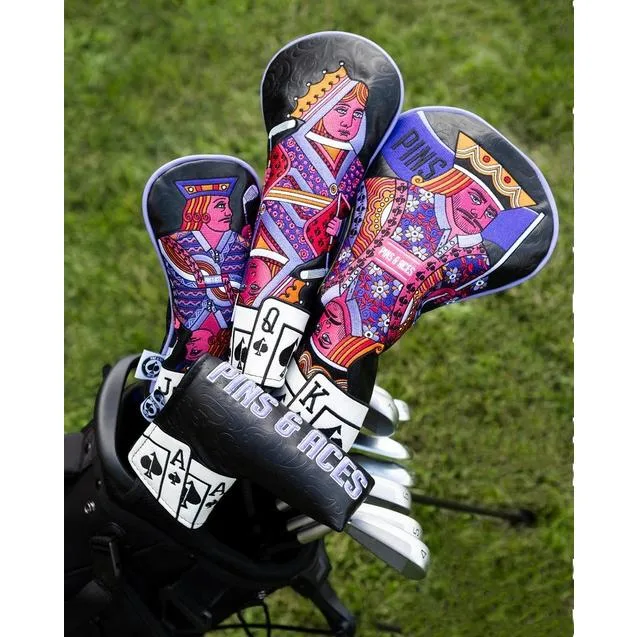
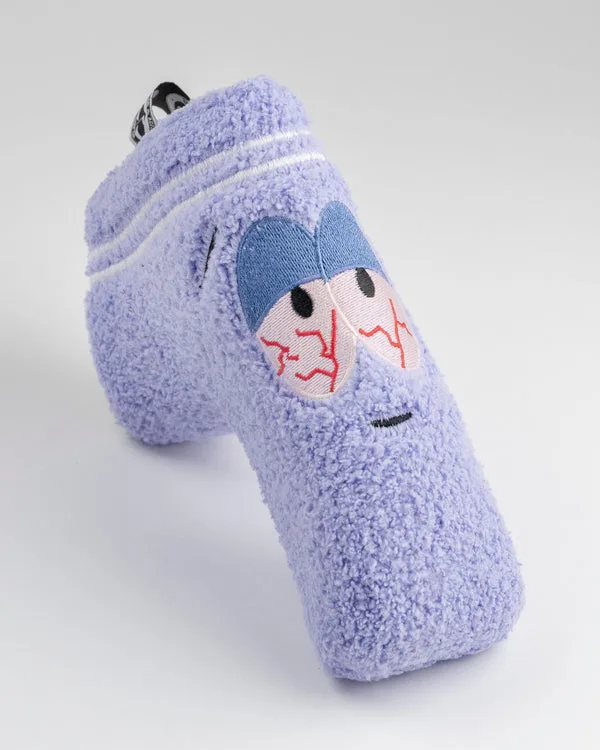
The first hits were Colorado and Texas state flag covers, priced in the gap nobody was serving. They worked immediately. From there the catalog grew into the irreverent stuff the brand is still best known for: voodoo doll driver covers, Teenage Mutant Ninja Turtles polos, the LiquorStick, rope hats reading Mourning Wood Casket Company or Parlay Investment Group: Lose Your Money The Right Way. It was golf apparel for the golfer who is unmistakably there to enjoy himself.
Why Is Pins & Aces Called the People's Brand?
The nickname stuck after the brand's appearances at the Waste Management Phoenix Open, golf's self-styled people's tournament, and it fits the operating philosophy more than the marketing.
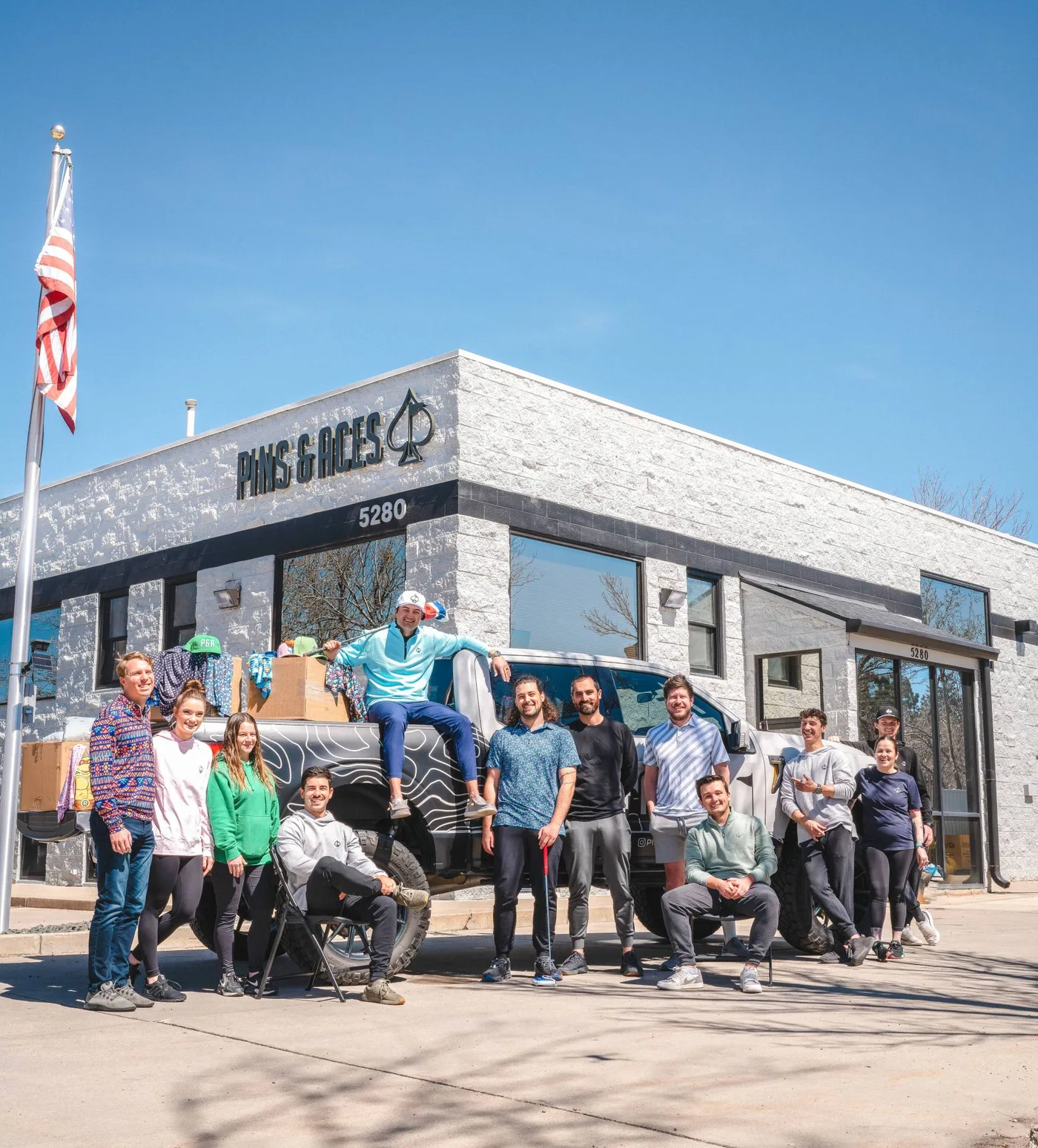
Pins & Aces runs out of a 14,000-square-foot distribution center and small storefront in Arvada, on Denver's northwest side, which it bought in 2022. The address is 5280 Ward Drive, and if you know that Denver is the Mile High City and that a mile is 5,280 feet, you will understand why the founders treat it as a good omen. Thirty-four employees handle packing, shipping, photography, and embroidery in house, and roughly 80 percent of revenue comes direct to consumer online. Revenue splits into rough thirds across apparel, golf bags, and accessories.
That vertical integration exists to protect a specific promise: no polo on the site costs more than $70, and headcovers top out around $65. Major, a former linebacker at the University of Colorado, has framed being the people's brand as the sum of design, price, service, and giveaways rather than a slogan. The savings from a nearly nonexistent advertising budget go into the price rather than into the marketing.
The business has been profitable every year since it started, and did $20 million in revenue in 2024. That is a rare combination in a category full of brands burning capital to buy attention.
What Does Pins & Aces Sell Beyond Headcovers?
The more interesting phase is the current one, because the brand that got famous for novelty has spent two years building products for golfers who care about their handicap.
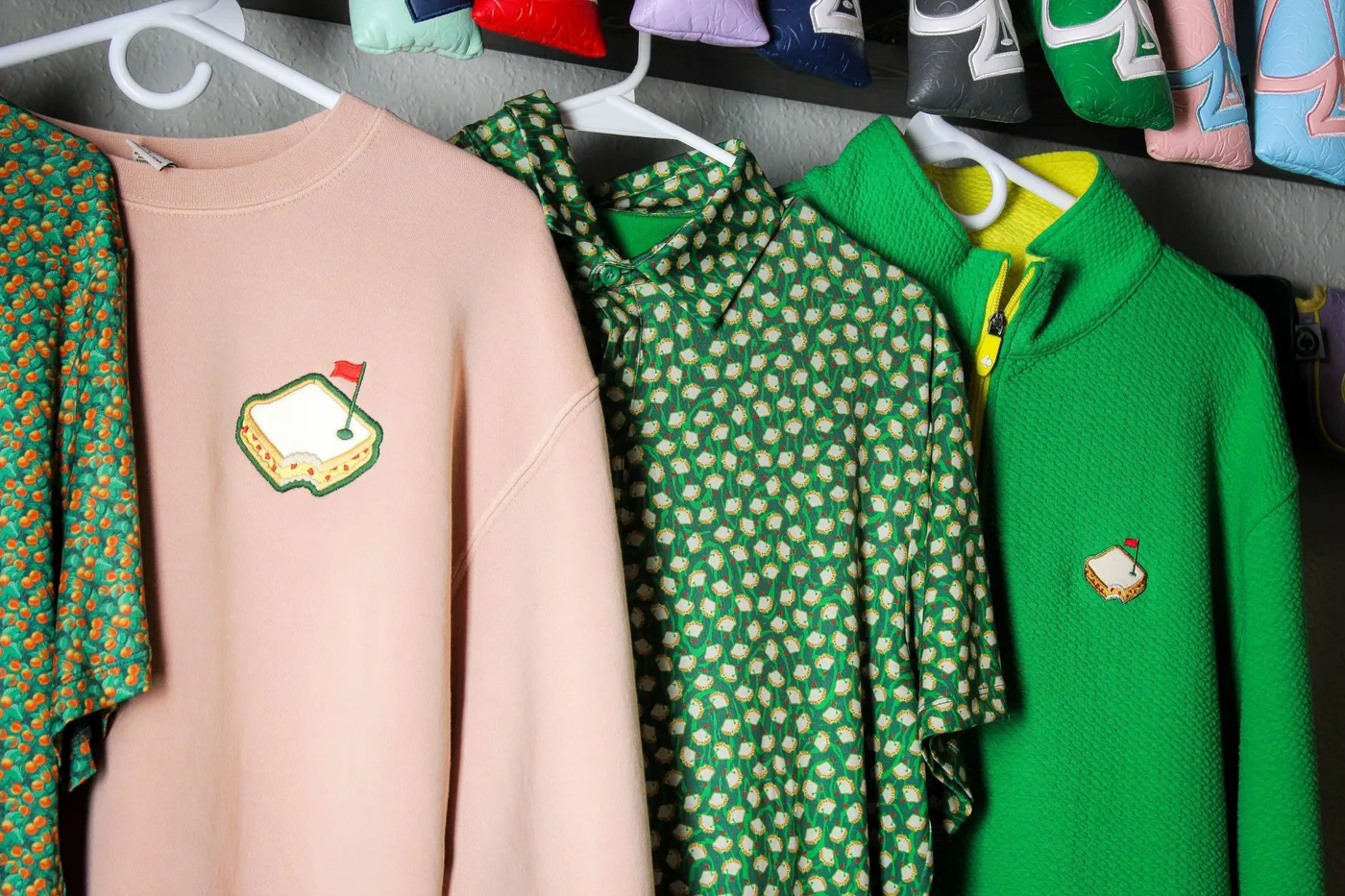
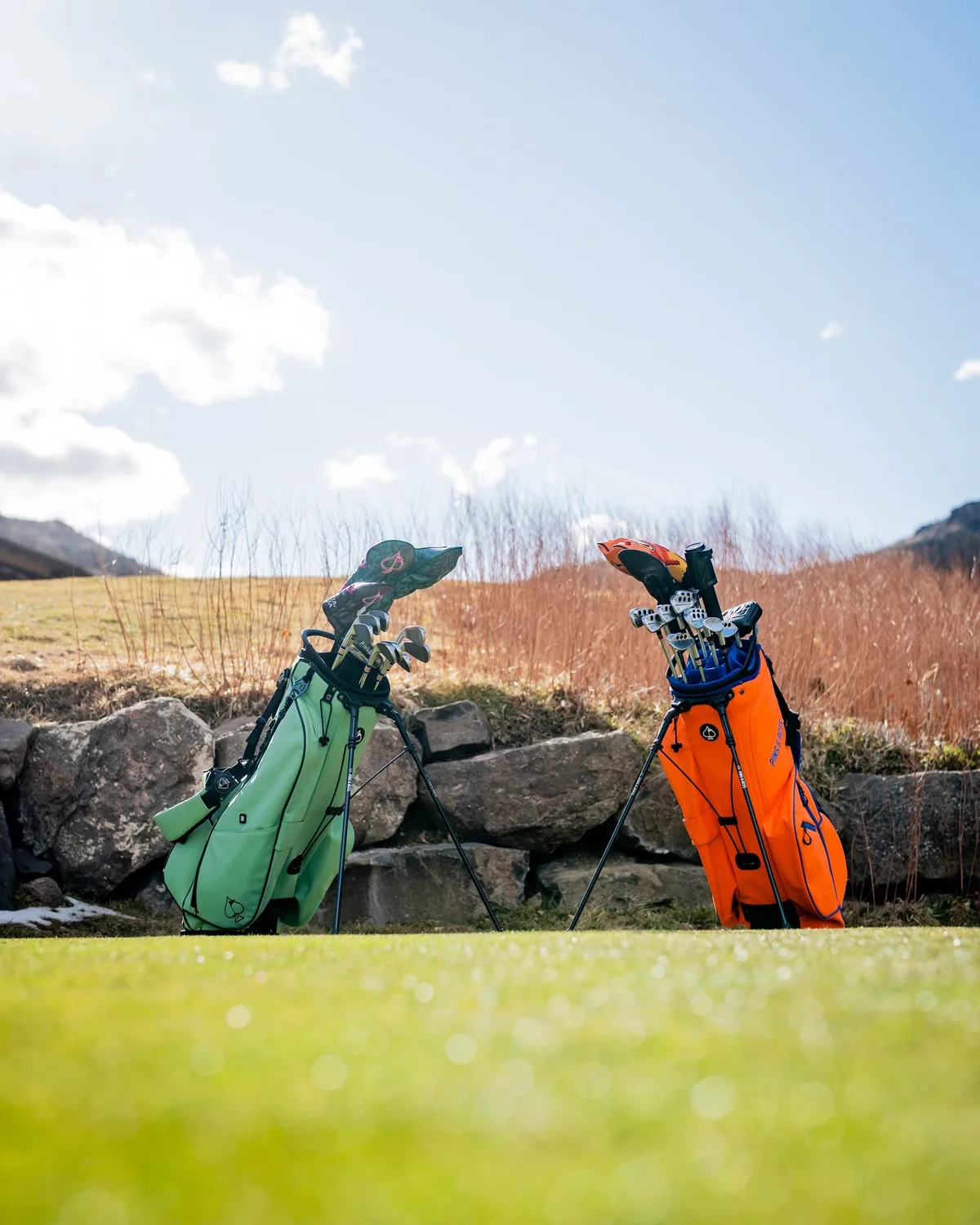
The Player Preferred bags, both cart and stand, arrived in fall 2023 after a first attempt in 2021 that the founders admit did not work. The R&D for the second attempt ran through caddies at Turnberry, which is a fairly serious way to test a golf bag. The stand bag sells at $330 against competitors clustered around $450, and it has become one of the company's best sellers. The Player Preferred polos followed the same logic with the volume turned down: quieter patterns, marketed with the tagline "from bunker to boardroom."
Mertz has been candid that the whacky-brand wave of 2020 and 2021 has crested and that the company is deliberately reaching a broader buyer. He has also been unusually honest about the early product, noting that when customers asked for tighter headcovers or looser polos, the internal reaction was "what do they know," and that in hindsight the products were not as good as they are now. Listening later became the strategy.
Why Did Pins & Aces Acquire Edel Golf?
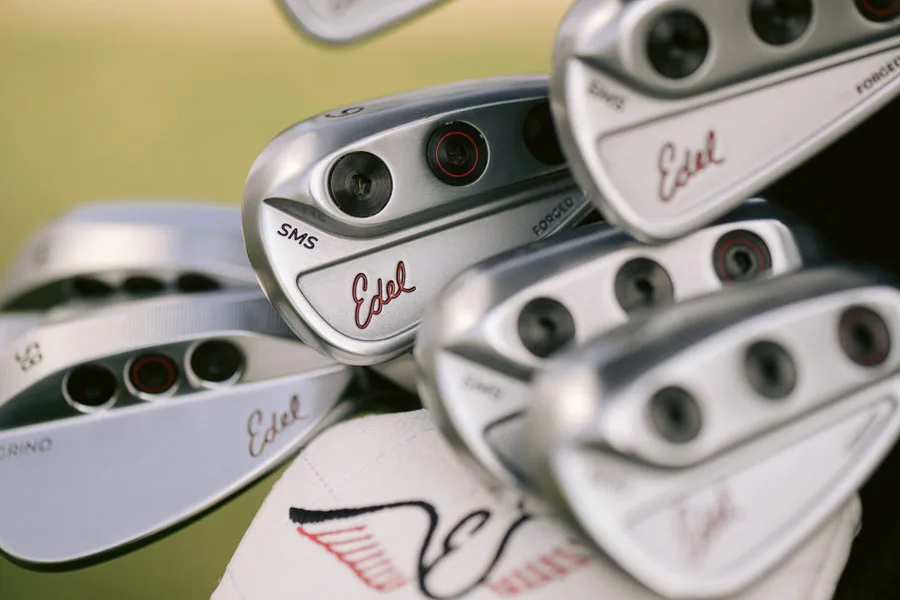
The biggest move came in December 2024, when Pins & Aces announced it had acquired Edel Golf, the Denver-area maker of custom-fit irons, wedges, and putters (pronounced, for the record, like Adele). The deal was rolled out publicly in January 2025 and showcased at the PGA Show in Orlando. Former owner Doug Coors, of the Coors family, stayed on as chairman, Rocky Hansler continued as president, and terms were not disclosed. Edel was doing $5 million to $6 million in revenue against Pins & Aces' $20 million.
The two brands stay deliberately separate, and Mertz's description of why is the sharpest thing anyone has said about either: Pins & Aces is positioned in a rowdy, let's have fun, do not really care what I shoot atmosphere, while Edel is purist and high end, for the player who takes it seriously. The first thing the new owners did was cut Edel's prices, on the theory that the boutique-luxury tier was already spoken for by PXG, TaylorMade, Titleist, and Miura, and that the middle of the pricing curve was the better address.
Here is where our data adds something the coverage has missed. In the Index, Edel Golf currently ranks 131st with a DI score of 0.8 and 1,900 monthly searches. Pins & Aces ranks 29th with a DI of 11.0 and 27,100. The acquirer has roughly fourteen times the search interest of the company it bought.
The acquisition announcement did move Edel: its DI jumped 52.6 percent in January 2025, lifting it from rank 126 to 119, the clearest spike in its tracked history. But it faded. Edel has drifted back to 131 in the eighteen months since, roughly where it sat before the deal.
That is not a failure so much as a description of the actual asset being combined. Edel brought engineering credibility and a fitting reputation; it did not bring an audience. Pins & Aces brought an audience and a distribution machine; it did not bring club-making. Notably, about half of Edel's business sits in Korea, a market where Mertz sees appetite for boutique American brands, and one of the ten markets DORMIED tracks. The interesting question over the next year is whether Pins & Aces can transfer any of its considerable attention onto the clubs, because right now the data says the two halves of the company live in completely different weather.
How Did Rafael Campos Start Wearing Pins & Aces?
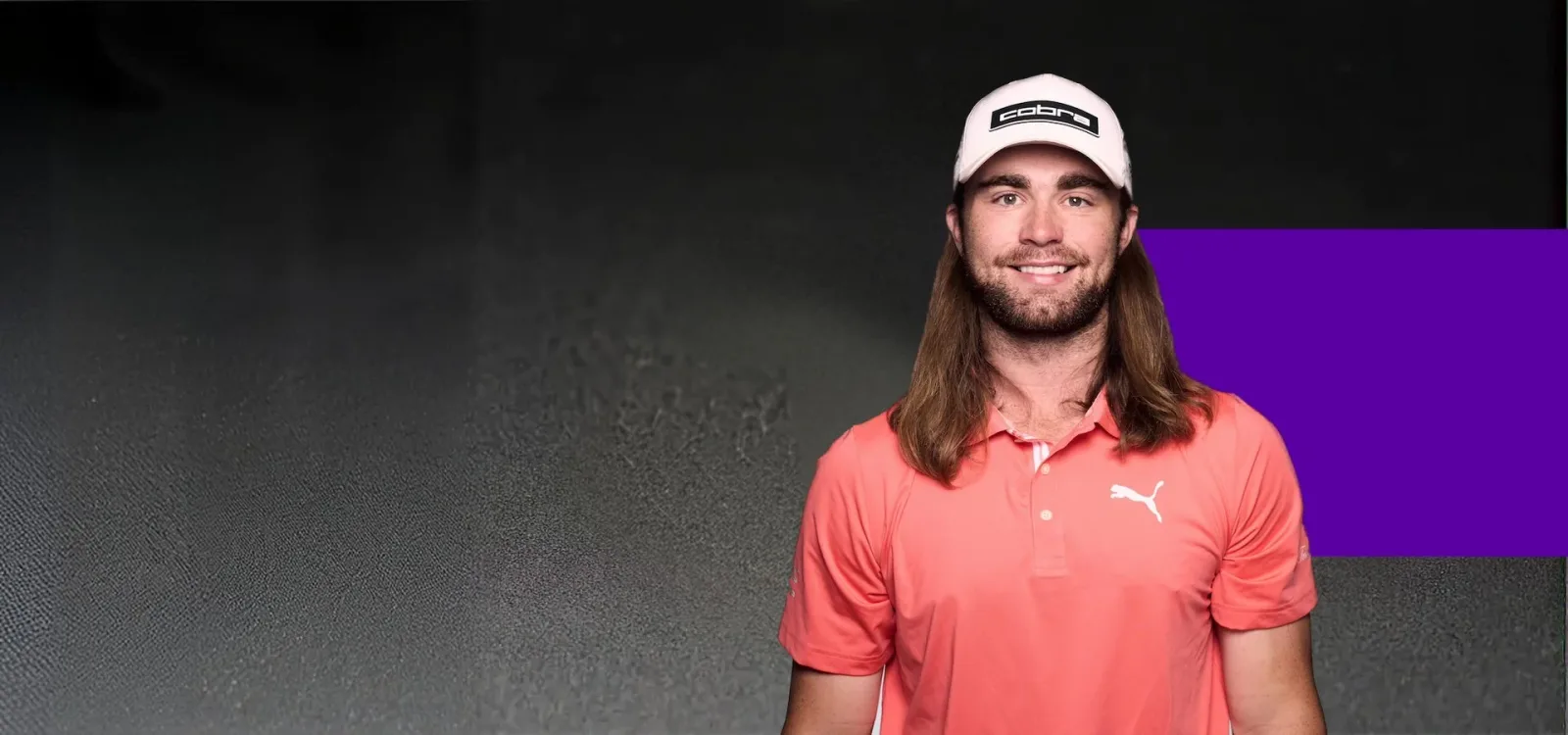
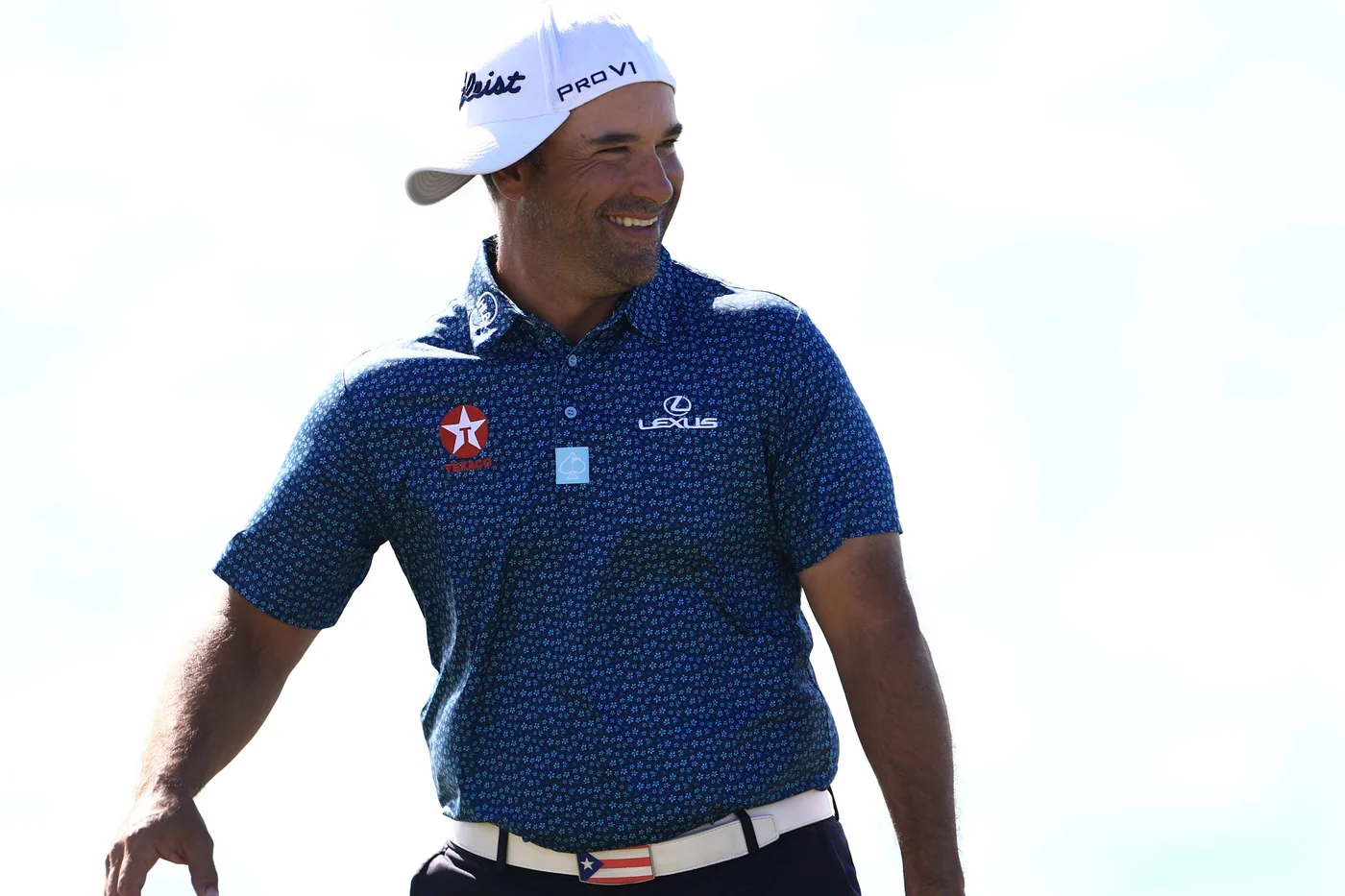
The brand's best tour story is one it did not pay for. By the company's telling, PGA Tour player Rafael Campos simply started wearing Pins & Aces polos in 2021 with no sponsorship arrangement, because he liked them.
In November 2024, Campos won the Butterfield Bermuda Championship for his first PGA Tour title, in his 80th start and sixteenth year trying, six days after the birth of his daughter, having arrived ranked 147th in the FedEx Cup with his card in jeopardy. He became only the second Puerto Rican to win on the PGA Tour, after Chi Chi Rodriguez. He did it in a $70 polo.
Golf's apparel economy is built on paying players to wear things. A first-time winner choosing a sub-$70 shirt from a Denver warehouse on his own is a better advertisement than most sponsorship budgets buy, and it is the single cleanest illustration of what the people's brand positioning actually means.
Why Does Pins & Aces Matter?
DORMIED spends most of its time watching how attention moves between golf brands, and Pins & Aces is a case study in building it from the bottom rather than buying it from the top. No tour stable, no traditional advertising, no private equity. A price ceiling held on purpose, a warehouse the founders own, and a customer base that came for a joke headcover and stayed for a golf bag.
The risk is the one every growing-up brand faces. The irreverence is what built the audience, and every step toward bunker-to-boardroom polos and serious club fitting is a step toward the crowded middle where Malbon, Swag, and a dozen others are already fighting. Rank 29 says the audience has followed so far. Whether it follows all the way into a set of Edel irons is the thing worth watching, and the thing our data will answer before the press releases do.
Shop Pins and Aces
Some links on this page are affiliate links. DORMIED may earn a commission on purchases made through them. This does not influence the DORMIED Index or our editorial coverage.
What Do People Ask About Pins & Aces?
Who owns Pins & Aces?
Pins & Aces is owned by its founders, brothers-in-law Nick Mertz and Jon Major, who started the company in 2018. It remains an independent, founder-owned business with no outside private equity ownership, and also owns Edel Golf following its acquisition announced in December 2024.
When was Pins & Aces founded?
2018, when Mertz and Major began selling headcovers after failing to find one they liked at a reasonable price. Some brand materials cite 2017 as the founding year, likely reflecting when the company was formed rather than when it began selling.
Where is Pins & Aces based?
Arvada, Colorado, on the northwest side of Denver, where the company owns a 14,000-square-foot distribution center and a small storefront at 5280 Ward Drive. It employs about 34 people.
Is Pins & Aces a good brand?
By DORMIED's tracking it is the 29th most-searched brand of the 215-plus we follow, with interest up 59.1 percent over the last three months, which places it well ahead of most independent golf brands. The company has been profitable every year since 2018 and did $20 million in revenue in 2024.
Did Pins & Aces buy Edel Golf?
Yes. The acquisition was announced in December 2024 and rolled out publicly in January 2025 at the PGA Show. Edel's former owner Doug Coors remains chairman and Rocky Hansler is president. The brands operate separately, and Pins & Aces cut Edel's prices after taking over.
How much do Pins & Aces polos cost?
No polo on the site exceeds $70, and headcovers top out around $65. Holding those price ceilings is a core part of the company's "people's brand" positioning, funded by keeping production, shipping, photography, and embroidery in house.
Do any pros wear Pins & Aces?
Rafael Campos is the most prominent. By the brand's account he began wearing its polos in 2021 without a sponsorship deal, and he won the 2024 Butterfield Bermuda Championship in one. A handful of Korn Ferry Tour players also wear the brand.
Why is Pins & Aces called the people's brand?
The nickname followed the company's appearances at the Waste Management Phoenix Open, known as the people's tournament, and stuck because it matches the strategy: accessible pricing, heavy giveaways, and designs aimed at golfers who are not trying to look like anyone else.