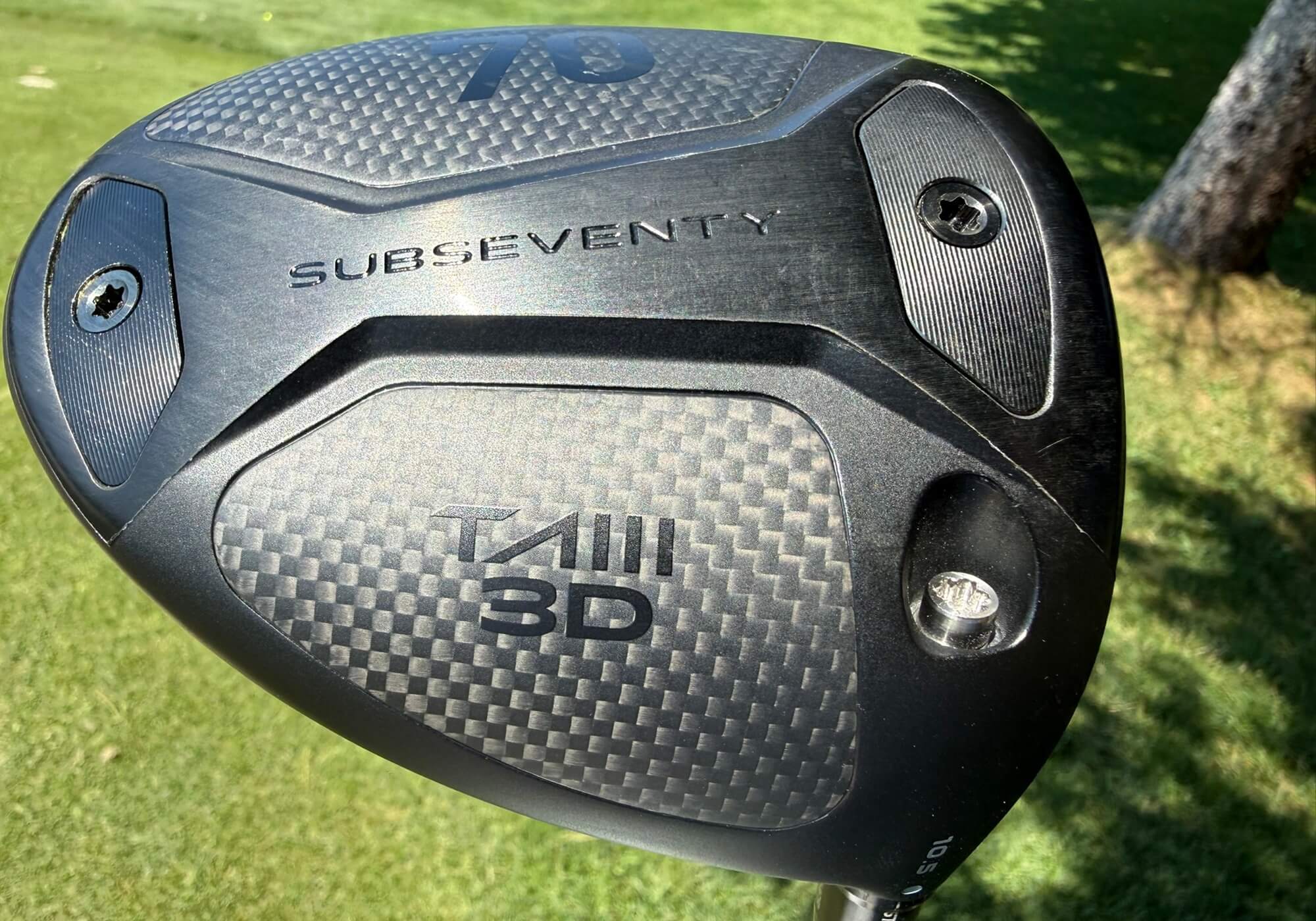
COBRA started the 3D-printed metalwood conversation in 2023 with the LIMIT3D irons. Sub 70, a direct-to-consumer brand operating out of Sycamore, Illinois, is the first to actually put a fully 3D-printed titanium driver on the market. The TAIII 3D, developed with Tommy Armour III and designer Bob Renegar, has been shipping for a few months. At least one major OEM is expected to follow within a year.
The engineering claim here is worth taking seriously, which is not something to say lightly about a DTC launch. Standard premium driver construction is a forged titanium face plasma-welded to a cast body. The weld line is the constraint. It limits how far variable face thickness can extend toward the perimeter, and it caps how much the face can flex near the edges. Print the head and face as a single titanium shell and both constraints disappear. Renegar's argument is that you can push high-CT area closer to the boundary of the face without touching the center, which is capped by USGA CT limits anyway. That is a real engineering benefit, not a marketing claim dressed up as one.
The result is a 440cc head with a face deeper than most 460cc drivers, a hosel connection that sits low enough to look hosel-less, and CG placement Renegar could not have achieved with a cast-and-weld process. Early testing numbers, 1.49 to 1.51 smash factor at 90 to 94 mph swing speeds, are not category-breaking, but they are consistent with what the design brief promised: a workable, compact head that behaves like a larger one on mishits. Sub 70 says the 869 line, standard and Max, will be 3D-printed next.
The strategic read is the interesting part. Sub 70 has been the quiet DTC brand that plays clean, avoids the PXG-style price war, and ships forged irons at prices that make Mizuno's marketing team uncomfortable. Getting to market first on 3D-printed titanium, ahead of Callaway, TaylorMade, Titleist, and PING, is a category-visibility moment the brand has not previously earned. It is also the kind of first-mover claim that shows up in every subsequent piece of marketing for the next five years. Nike had this moment with the Sasquatch in 2004. Cleveland had it with the HiBore. Being first matters longer than being best.
The $549 price is the pressure point. It is high for Sub 70's own customer, who is used to paying $399 for a driver, and low against the $649 to $699 shelf price of a mainstream OEM flagship. 3D-printed titanium is not cheap to manufacture, which is part of why the majors have not moved yet. When Callaway or TaylorMade does launch a printed metalwood, expect it above $700, and expect the marketing to treat it as a category reset. Sub 70 will already have a year of consumer data and a workable second-generation product by then. The ranking at #42 globally, roughly flat month over month, does not yet reflect any of this. It will.
The bet Sub 70 is making is that a small brand with a factory relationship, a competent designer, and no shareholder pressure can move faster than the majors on a manufacturing shift the majors will eventually own. That has worked before in golf equipment, and it has failed before. Scotty Cameron did not invent the milled putter. Titleist bought the company that did. Whether Sub 70 gets to keep this territory or gets bought into it is the next chapter. Either outcome is a win for a brand that was pressing forged irons out of a small Illinois shop a decade ago.