
Twelve more Trackman units are going into a single venue in Abu Dhabi. That is now the default unit of measurement for how Trackman grows its installed base outside tour bags and driving ranges: not one launch monitor at a time, but by the dozen, tucked inside somebody else's hospitality concept.
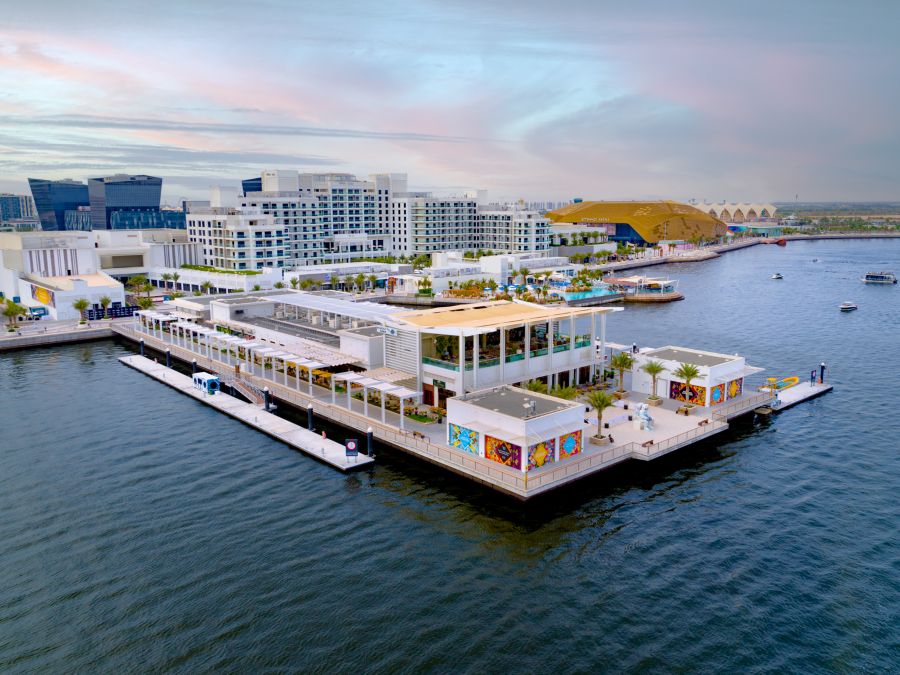
Five Iron Golf announced a nearly 30,000-square-foot location at Yas Bay Waterfront opening in mid-August 2026, its latest international build and its deepest push yet into the Middle East. The venue includes 12 Trackman-powered simulators, a 12,000-square-foot terrace, commissioned work from six regional artists, and the usual Five Iron food and beverage stack. Founding memberships are on sale now. The location sits minutes from Yas Marina Circuit, Yas Links, Etihad Arena, and the forthcoming Disney park and Sphere Abu Dhabi.
The interesting part of this announcement is not the terrace or the artist roster. It is the quiet consolidation happening underneath the Five Iron logo. Callaway is a Five Iron investor. Trackman is the exclusive simulator technology. Every new Five Iron opening functionally adds a dozen Trackman bays, a Callaway retail-adjacent touchpoint, and a data collection surface that competitors like Full Swing, Foresight, and Uneekor do not get. The Topgolf model taught the category that entertainment venues are distribution channels for launch monitor brands. Five Iron is running the premium, urban-and-resort version of that playbook, and Trackman is the one benefiting on the hardware side.
The regional context matters. Yas Island has quietly become the Middle East's answer to a mid-size Las Vegas: F1, Ferrari World, arena concerts, and now imported American entertainment IP. Yas Links, one of the region's few genuinely elite courses, is a five-minute drive from the new Five Iron. That proximity is not incidental. The Middle East golf traveler, and the expat resident who plays 40 rounds a year at Yas Links or Saadiyat Beach, is exactly the customer profile that pays for a founding membership at an indoor simulator club. Dubai's indoor golf market is already crowded. Abu Dhabi is not, yet.
What is worth watching is Trackman's own trajectory in this arrangement. The brand's global ranking dropped 18.3 percent month over month in June, settling at 27th on the DORMIED Index, which is a reminder that consumer-facing share of voice for Trackman fluctuates in a way its commercial footprint does not. Trackman does not run Times Square takeovers or tour player unveilings the way TaylorMade or PXG do. Its growth is B2B and infrastructural: teaching academies, tour vans, and increasingly, entertainment venues like Five Iron and its imitators. When Garmin launched the R50 and Bushnell pushed Launch Pro into the sub-$3,000 bracket, the consumer conversation shifted. Trackman's response has been to keep locking in the venues where consumers eventually end up hitting balls, regardless of what they bought for the garage.
That is a defensible position, but not an invulnerable one. Full Swing has the Tiger endorsement and is aggressively courting the same hospitality partners. Foresight owns the club-fitting channel in a way Trackman has never fully cracked. If a competitor lands the next 20-location Five Iron equivalent, the venue moat narrows quickly. For now, though, each new Five Iron opening is a Trackman win booked years in advance of the ribbon cutting.
Five Iron will open more locations in 2026 and 2027. Trackman will be in most or all of them. The brand's consumer-facing metrics will keep bouncing with each product cycle from Bushnell, Garmin, and Foresight, but its installed base in the venues where golfers actually spend leisure money keeps compounding. The next test is whether Trackman can convert that footprint into the direct-to-consumer visibility it has historically ceded to louder brands. The infrastructure is there. The marketing posture is not, yet.