
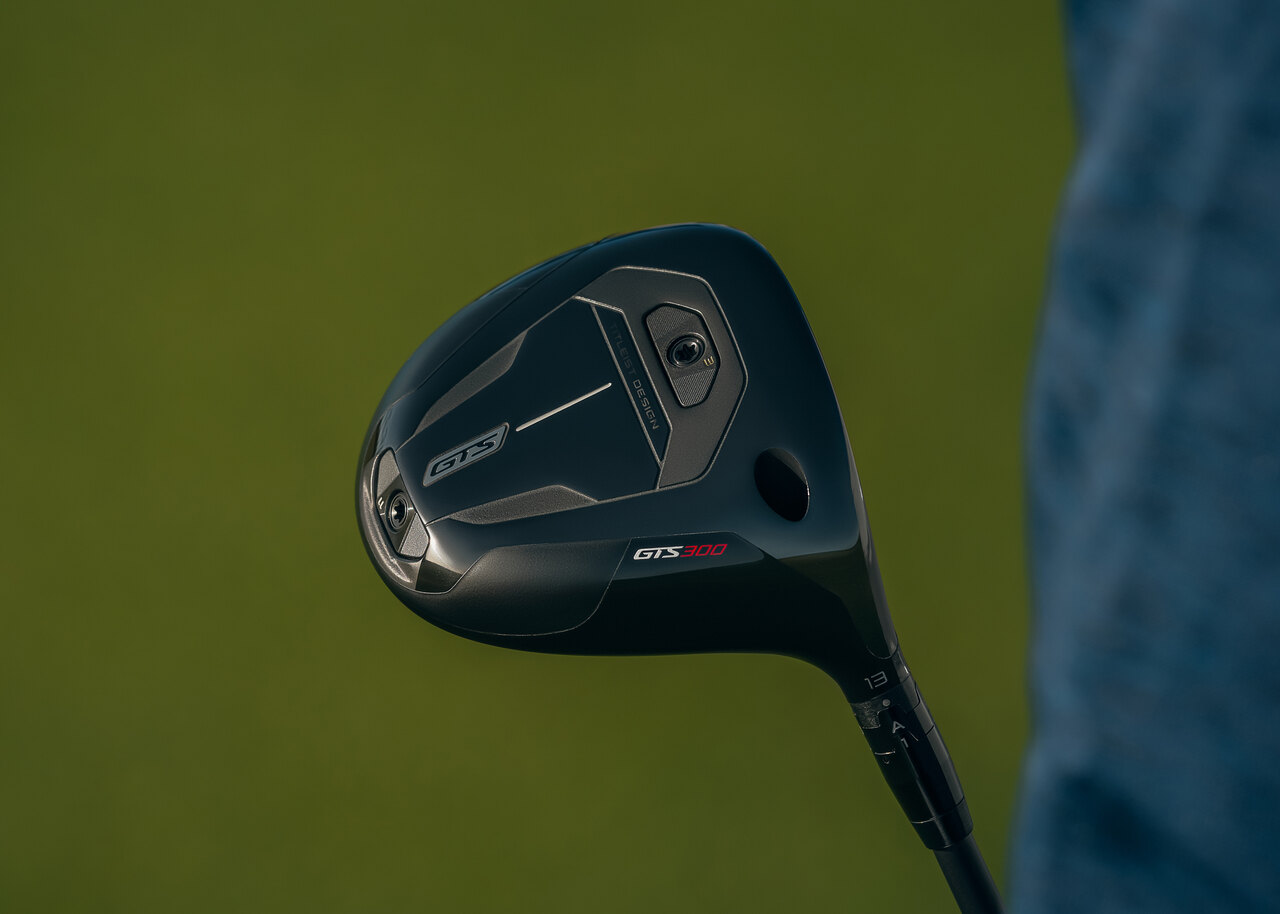
The mini driver category has been declared dead and resurrected roughly every four years since TaylorMade launched the original SLDR Mini in 2014. Titleist's GTS300, arriving July 23 at $549, is not trying to revive anything. It's fixing what tour players told the company was wrong with the GT280 that came before it.
The headline change is volume. GTS300 moves from GT280's smaller footprint to 305cc, with a deeper CG and roughly 15-20% higher MOI according to Stephanie Luttrell, Titleist's Senior Director of Metalwood Development. Face height stays the same, which is the tell that Titleist is not turning this into a small driver. It's a mini driver that now forgives like one, without giving up the turf performance that was GT280's actual selling point.
The backstory here matters. GT280 was engineered to be hit off the deck, a niche use case that Justin Thomas and Cameron Young turned into a workflow. Thomas games the GTS300 on courses where he doesn't need a 3-wood off the ground, which lets him keep a 46-inch shaft in his GTS2 driver. That's not a marketing anecdote, that's a bag-construction decision, and it's the kind of detail that separates a real tour-driven product from a category filler. Titleist has quietly built the mini driver into a strategic bag piece rather than a novelty, which is more than can be said for most of the SLDR Mini's descendants.
The tech spec sheet reads like standard 2026 metalwood language: forged L-Cup face with ATI 425 titanium, composite crown for discretionary weight, dual-weight system with an 11g and 3g swappable pair. None of this is category-redefining. What's worth noting is the L-Cup carryover from the GTS fairway line, which is a coherent engineering story rather than a marketing one. Low-face contact off the turf is genuinely where mini drivers live or die, and wrapping the face material around the sole is the correct answer to that problem.
The broader context is where the story gets interesting. Over 60 PGA TOUR players moved into a new GTS driver since March, which is the kind of tour conversion number that Titleist historically posts and TaylorMade historically claims. Titleist sits at the top of the DORMIED global ranking this month, though the June trend line is down 18.3%, which reflects the natural cooldown after the March GTS launch cycle rather than any structural weakness. Adding the GTS300 as a mid-summer supplemental release is exactly the sequencing Titleist has used since the 917 driver cycle: launch the flagship in spring, feed the line through the season.
The pricing is worth flagging. $549 stock and $749 for the premium shaft menu (Tour AD DI, VF, FI) puts GTS300 above most standalone fairway woods and within striking distance of full driver pricing. Titleist is betting that the mini driver buyer, particularly the tour-influenced consumer who saw JT put one in play at Colonial, is not shopping on price. That's the same customer who bought the T-Series irons at premium and the Vokey SM10 wedges at a $50 premium over category norms. It's a coherent customer, and Titleist knows exactly who they are.
The question for the back half of 2026 is whether the mini driver category expands beyond tour adopters into the club-champion amateur, or whether it stays a specialist club. Titleist has just built the most forgiving version yet of a category that has never quite crossed over. If GTS300 doesn't move the needle at retail, the answer is probably that the mini driver is, and will remain, a tour tool sold to amateurs who want to think like tour players. That's still a business. It's just not a growth category.