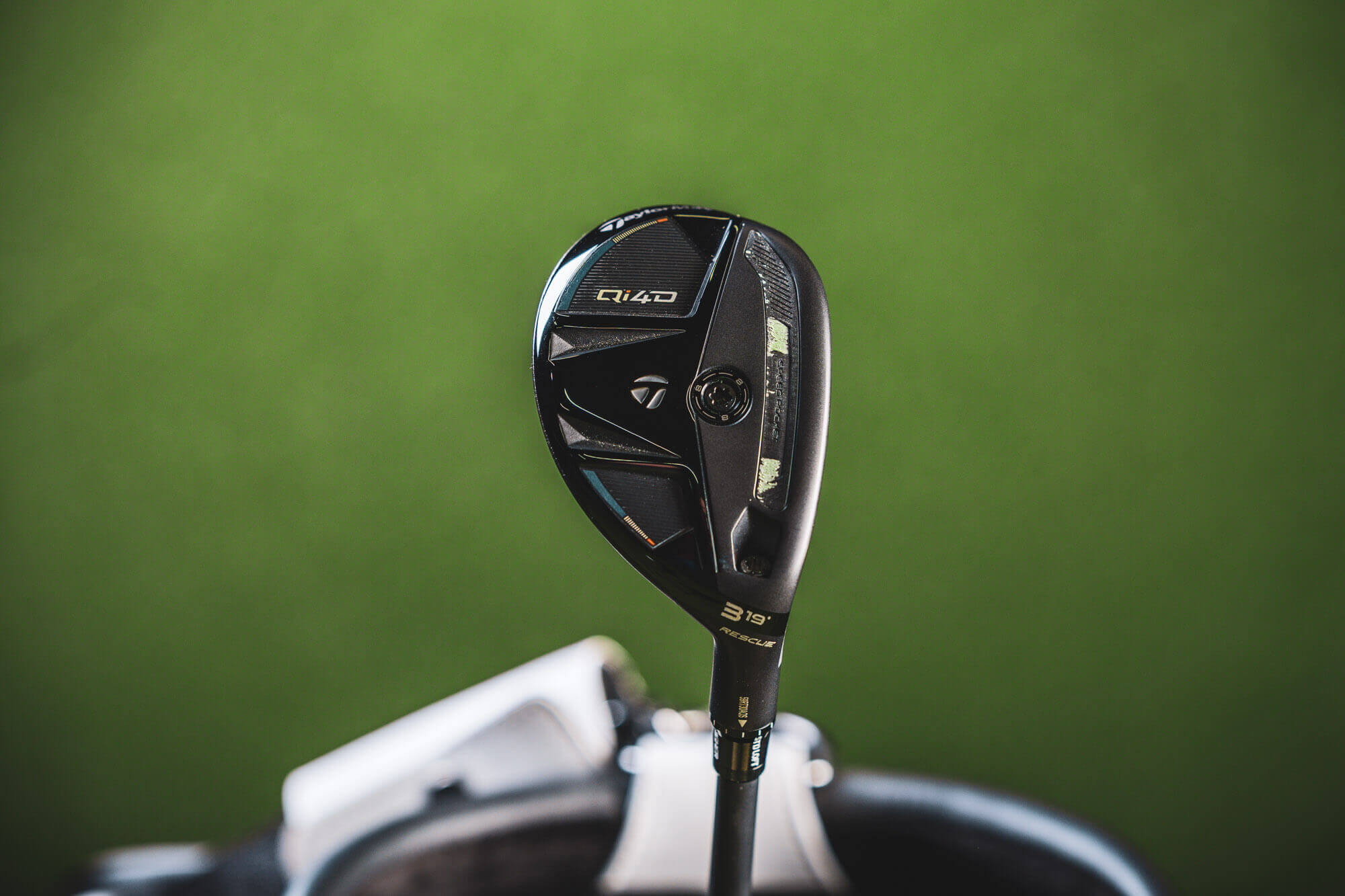
MyGolfSpy's 2026 hybrid test surfaced a data point worth sitting with: one tester carried the Qi4D 21.6 yards farther than the Qi4D Max, and the Max was still the better club by every meaningful measure. Playability jumped from 60 percent to 100. GIR nearly tripled, from 13.3 to 35.7 percent. Average proximity improved by 42 yards. Shot area shrank to roughly a quarter of what the longer club produced.
Why Is the TaylorMade Qi4D Max the Better Hybrid?
That is not a marginal gap. That is a fundamentally different club performing a fundamentally different job, and it happens to have TaylorMade's badge on both sides of the comparison. Sixteen of twenty testers in the same protocol saw their longest hybrid outperformed by a shorter option in the lineup. The pattern is the story, not the outlier.
TaylorMade has spent the better part of a decade engineering the hybrid category around two personas. The Qi line, and the Rocketballz and M-series before it, has always chased distance and low spin for the better player who wants a driving iron replacement. The Max variant, going back to the M2 D-Type and forward through Stealth and Qi, has been the forgiveness play. What the testing data shows is that the Max design brief, higher launch, higher spin, wider sole, deeper CG, is doing exactly what it was designed to do for the golfer it was designed for. That is a design win, even when the marketing copy will inevitably lead with carry numbers on the standard head.
Why Does Hybrid Fitting Matter More Than Carry Distance?
The hybrid category has a legacy problem the industry has never fully solved. When Cobra Baffler and TaylorMade Rescue reshaped long-iron replacement in the mid-2000s, the pitch was playability. Somewhere between then and now, hybrid marketing quietly merged with fairway wood marketing, and carry distance became the headline stat. Titleist's TSR hybrids, Callaway's Apex, Ping's G430, all get sold on ball speed and launch numbers first. The gap-filling premise, the actual job of the club, gets buried three paragraphs down.
This is where the fitting infrastructure matters more than the launch monitor number. Club Champion, True Spec, and the better in-house fitting operations at green grass shops have been preaching this for years. The longest hybrid is almost never the right hybrid. The data from a 20-golfer sample matches what a good fitter would tell any walk-in customer. The problem is that most hybrid buyers never see a fitter. They see a Golf Galaxy hitting bay, a launch monitor showing carry, and a wall of clubs sorted by loft. The system rewards the wrong metric.
Why Isn't This a Marketing Problem for TaylorMade?
Credit where it earns credit: TaylorMade builds both clubs, sells both clubs, and the correct answer for most of the field was the one with a smaller headline number. That is not a marketing problem for TaylorMade so much as an education problem for the entire category. The brand sits second globally on the DORMIED Index, and the Qi lineup continues to move volume across every price tier. Whether the Max variant gets the shelf position and the fitting-cart priority it deserves in the second half of 2026 is a different question, and one worth watching. The engineering already made the case. The retail motion has not caught up yet.