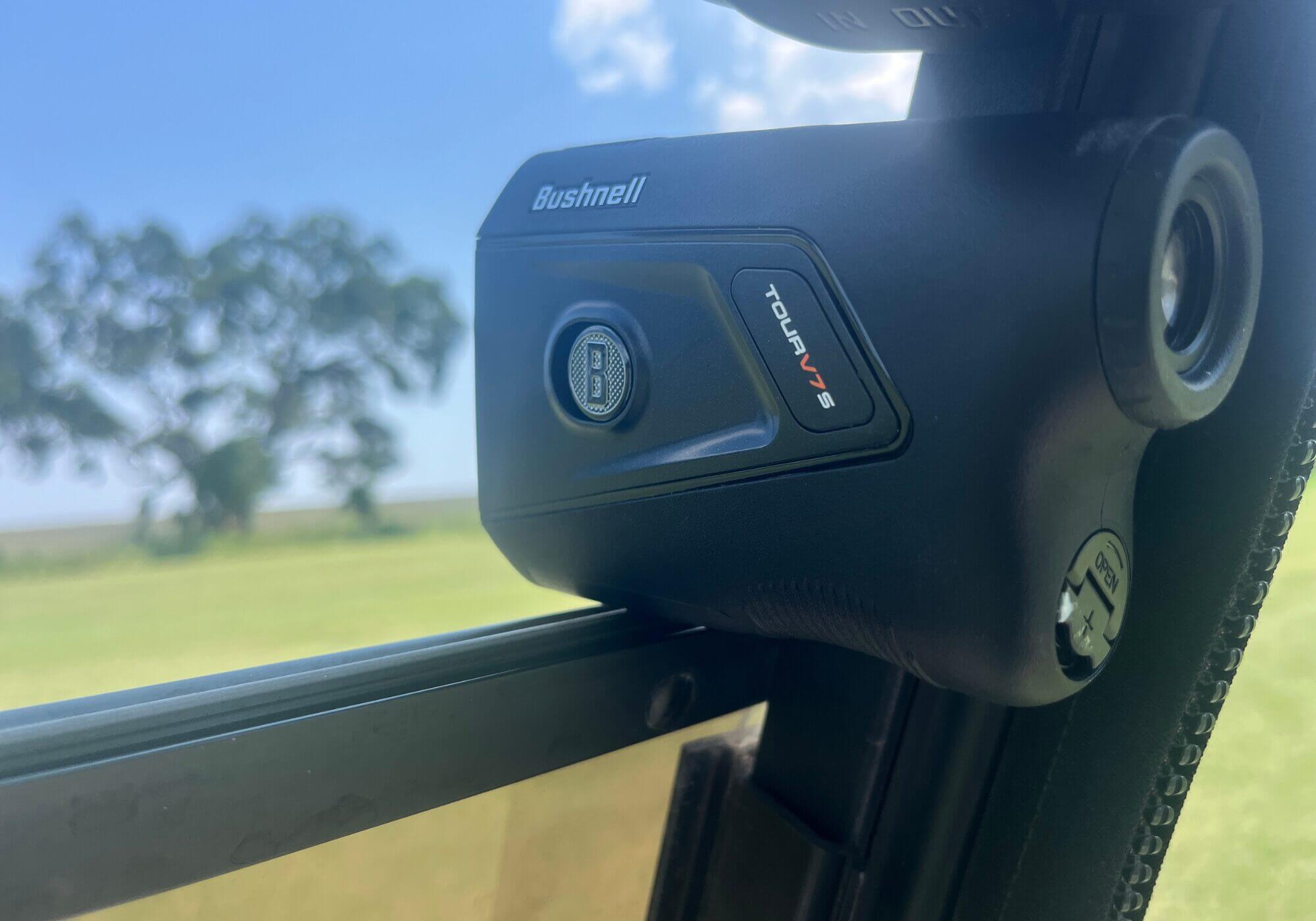
A MyGolfSpy contributor just published a long-form case for ditching the rangefinder in favor of GPS, and Bushnell happens to make both products in question. The Wingman View won. The Tour V7 Shift lost, despite being called the best rangefinder she's ever owned. That outcome should interest anyone watching how distance-measurement technology is evolving inside the amateur game.
Why Has the Golf Rangefinder Market Favored Bushnell?
The rangefinder category has been the more profitable half of Bushnell's business for two decades. The Pinseeker patent, filed in 2005, built a moat that competitors are still trying to cross. The Tour V series has been the default tour-bag rangefinder since the late 2000s, and Bushnell's deal with the PGA Tour as the official rangefinder partner reinforces the premium position. Rangefinders have historically been sold on precision, and precision has historically been sold as better.
The argument the MyGolfSpy piece makes, almost in passing, is that precision is the wrong product spec for the average amateur. Front, middle, and back yardages produce better course management than a single pin number, because the pin is not actually the target for a 14-handicap. The green is. This is not a new idea. Mark Broadie's strokes-gained data has been pointing toward zone-based targeting for years, and DECADE Golf built an entire instructional business around the same premise. What's new is that the argument is now being made in product-comparison terms, by a writer comparing two devices made by the same company.
How Does the Wingman View Fit Bushnell Golf's Lineup?
Bushnell has read this room. The Wingman View, launched in 2022, was the company's first serious push into cart-mounted GPS, and the product has quietly become one of the most visible non-rangefinder devices in the category. The magnet mount, the speaker integration, the family-shared use case: none of that is rangefinder logic. It's lifestyle-device logic, and it's the same logic Garmin has been using to take share at the wrist with the Approach S70 and R10 launch monitor. The Wingman View competes with both, in a category Bushnell did not previously dominate.
The broader question is whether the rangefinder's role inside a recreational round is being quietly downgraded. Tour use will keep the category visible. Amateur use is where the volume lives, and the volume is shifting. Shot Scope has built a real business at the entry level. Garmin owns the wrist. Arccos owns the data layer. Bushnell still owns the optic, but the optic is becoming a specialist tool inside a stack of GPS-driven decisions, not the default first purchase. A DORMIED rank of 61 in a category this competitive reflects a brand whose identity is still tied to a product format the market is reorganizing around.
Which Bushnell Golf Device Should Buyers Watch Next?
The Wingman View is the more interesting product inside Bushnell's own lineup right now, and the company seems to know it. Watch what gets refreshed next. If the next major Wingman release outpaces the next Tour V release in marketing spend and feature depth, that's the tell. Bushnell built its reputation on the number to the pin. The next decade of growth is in the number to the front.