The most valuable real estate in a steel shaft company's business has always been the seven-club iron set. It is where volume lives, where OEM stock agreements are decided, and where a brand either exists at retail or doesn't. Nippon Shaft won two tournaments on the same weekend without occupying a single one.
Which Nippon Shaft Models Were in the Winning Bags?
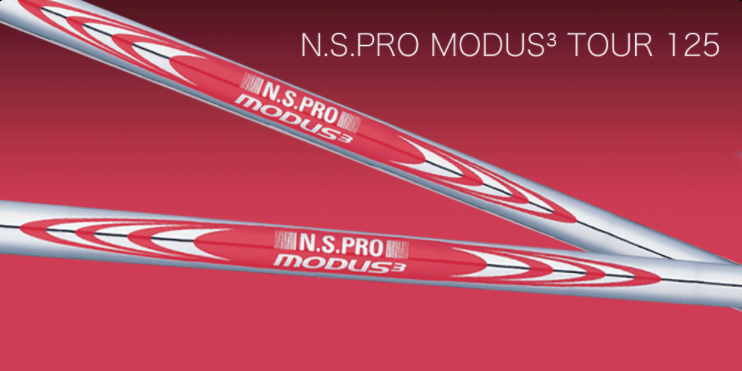
The world's top-ranked player took the FedEx St. Jude Championship by eight strokes at 17 under, rounds of 68-61-68-66 for 263, with an N.S.PRO MODUS3 Hybrid Tour X in his utility 3-iron. On the Korn Ferry Tour the same Sunday, a 25-year-old from Columbia, Missouri shot 27 under at the Albertsons Boise Open, 65-64-64-64 for 257, using the MODUS3 Hybrid in his hybrid and MODUS3 WEDGE 125 in his wedges. The win was his second KFT title of the season after the Blue Championship, and it locked up 2027 PGA Tour membership. Neither player is named in Nippon's release, which is the standard outcome when a component brand has the shaft but not the image rights. You can claim the club. You cannot claim the face.
The wedge shaft is the more interesting of the two placements. For roughly three decades the category was not a category at all: wedges shipped with whatever True Temper Dynamic Gold weight the OEM had negotiated, and nobody, tour players included, thought hard about it. That changed slowly through the 2010s as fitters started treating the wedge shaft as a spin and trajectory variable rather than a default. MODUS3 WEDGE 125 exists because of that shift. It is one of the few products that has actually pulled share off Dynamic Gold in a slot Dynamic Gold has owned since before most of the field was born.
Why Does the Utility Iron Shaft Slot Favor Nippon Shaft?
The utility iron placement follows the same logic from the other direction. The 2-through-4 gap has become the most fitted, most churned part of the bag, and it is where hard specs beat brand loyalty because the club exists to solve a specific problem. Component brands win there first, then work backward into the set. Nippon has done this before. The N.S.Pro 950GH, launched in the late 1990s, made lightweight steel a real category and forced True Temper to answer with a product line it had not previously needed. That is not a marketing story. It is a metallurgy story, which is what you get when the parent company, NHK Spring, spends most of its revenue making suspension springs for automakers.
Where the argument gets harder is share of voice. Nippon sits at 125th of 215 brands in DORMIED's global rankings this month, flat month over month, which is a strange place for a company that is the top-selling steel shaft in Asia and just put shafts in two winning bags in a weekend. Tour wins do not automatically convert to search volume or consideration, particularly for a shaft brand whose distribution runs through OEM stock programs and a fitter network rather than a shelf a consumer walks past. The customer often owns the product without knowing the name on it. That is a fine commercial position and a poor brand position, and the two are not the same problem.
What Does Nippon Shaft Still Need in North America?
What to watch is whether Nippon translates the utility and wedge beachhead into full-set stock placements in North America, where True Temper and KBS still set the terms. The company has the manufacturing case, the Asian volume, and now the tour proof in the slots where fitters actually make decisions. What it does not have is a reason for an American club buyer to ask for it by name at point of sale. Two winners in one weekend is a good week. A stock iron shaft designation on a mainstream 2027 players' iron would be a business.