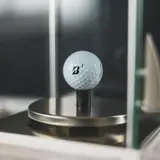
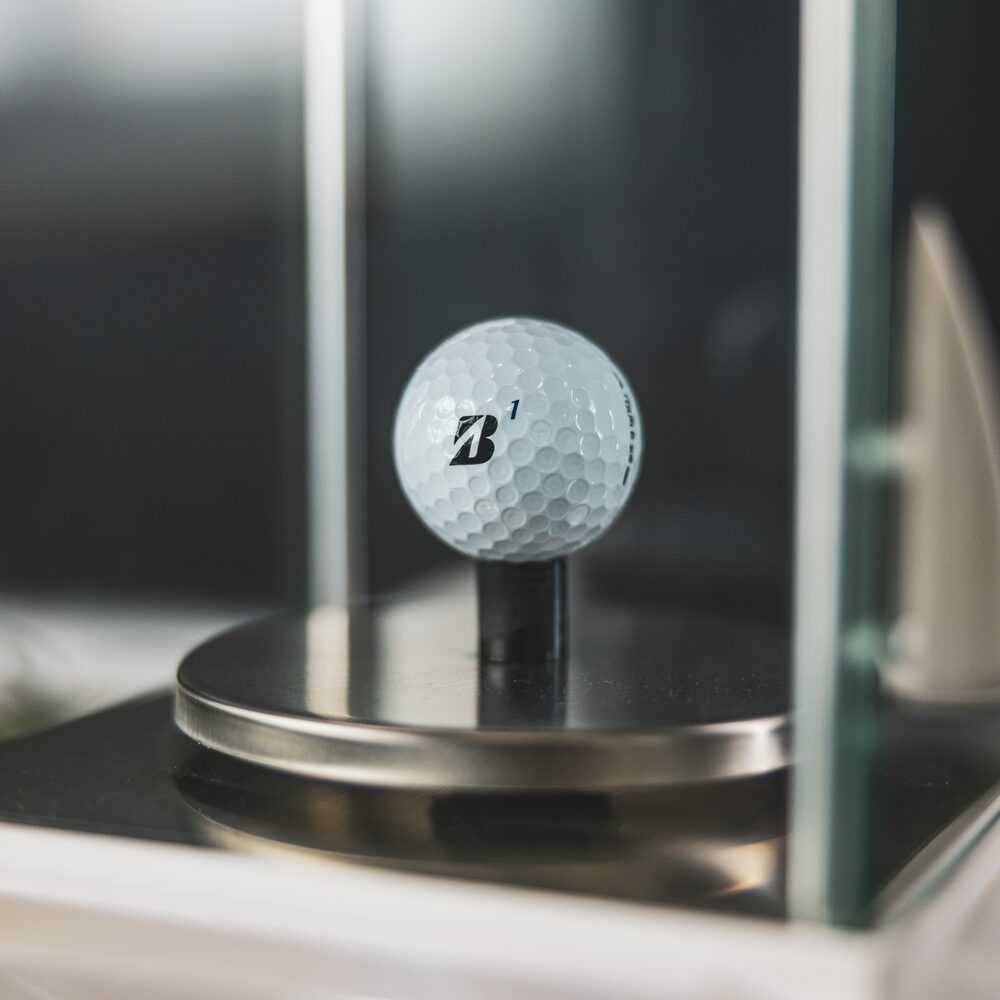
Compression symmetry and compression consistency sound like the same measurement. They are not, and the distance between the two is the entire story of the 2026 Bridgestone Tour B XS.
What Did MyGolfSpy Ball Lab Find in the Tour B XS?
MyGolfSpy's Ball Lab put 36 Tour B XS balls from three boxes through weight, diameter, compression and balance testing and came back with a Quality Score of 84, a B grade and a conditional recommendation. The ball retails at $54.99 per dozen, is a three-piece urethane build with an 87 compression rating, and is molded at Bridgestone's plant in Covington, Georgia. Four of the five graded categories landed between B-plus and A-minus. The fifth, compression consistency, graded C and put the ball in the bottom quartile of the database.
The technical read is more interesting than the letter grade. Compression symmetry measures how evenly a single ball compresses at three points around its own circumference. The Tour B XS averaged 1.0 points of deviation against a field average of 1.9, one of the stronger results Ball Lab has recorded. Pair that with a roundness deviation of 0.0003 inches, no pole-versus-seam pattern and 32 of 36 balls falling inside gauge noise on diameter, and you have a picture of a molding and press operation that is doing its job with real precision. Each individual ball is well made. The cores are centered. The layers are concentric.
Why Does Tour B XS Compression Consistency Grade Lower?
What is not consistent is one ball against the next. The compression delta across the sample came in at 17.0 points, spread from 74.2 to 91.2, against a database average of 9.7. Those are different problems with different causes. Symmetry failures point at tooling and centering. Delta failures point at material batch variance and process drift across a production run. One of the 36 balls was flagged as bad for falling outside the allowable compression range, and that single outlier is doing most of the damage to the spread. The Good Ball Rate of 97.2 percent still graded A. A golfer could reasonably play three dozen of these and never encounter the ball that cost Bridgestone the higher score.
That nuance matters more for Bridgestone than it would for most brands, because Bridgestone has spent more than a decade building its ball business around fitting rather than tour presence. The pitch has always been that the right ball for your delivery is a measurable performance gain, and that argument only holds if the ball you get in the next sleeve behaves like the one you were fit into. A 17-point compression window undercuts the premise. It also sits awkwardly against the domestic manufacturing story. Covington is one of a short list of American plants still turning out tour-level urethane alongside Titleist in New Bedford and Callaway in Chicopee, and process control is precisely what that proximity is supposed to buy.
Is the Bridgestone Tour B XS Still Worth Playing?
None of this makes the Tour B XS a bad ball. It was flagged in the 2026 MyGolfSpy Ball Test as a legitimate high-spin option for faster swing speeds, and the manufacturing profile mostly supports the reputation. The gap is narrow and it is fixable, which is a better position than a ball with a structural design problem. Bridgestone sits 67th globally on the DORMIED Index and slid more than 18 percent month over month, and the honest reading is that its problem has never been engineering credibility. It is share of voice in a category where Titleist owns the default and Callaway owns the price fight.
The number to watch is the delta on the next revision. Bridgestone has the plant, the tooling data and the shorter feedback loop that domestic production is supposed to deliver, which means tightening a compression window from 17 points toward the 9.7 database average is a scheduling and sourcing exercise, not an R&D project. If the 2028 Tour B XS comes back with the same spread, the fitting-first argument gets a lot harder to make in a retail aisle.