Travis R. covers equipment, shafts, and the DORMIED Index data for DORMIED. He is the data co-founder and has been tracking the golf brand market since 2018.
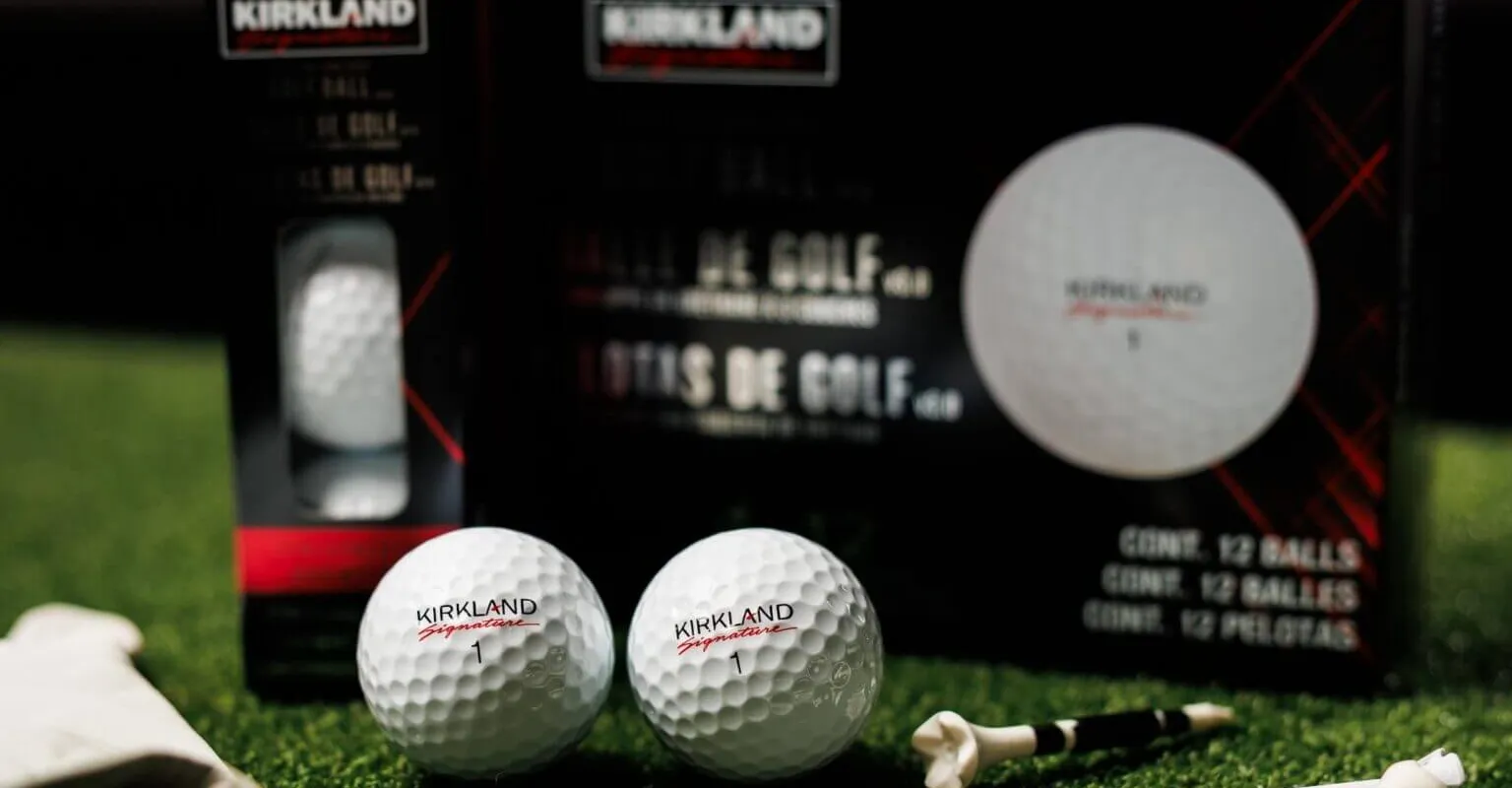
Kirkland Signature golf balls are made for Costco by contract factories, and who that is has changed over time. The original four-piece ball of 2016 came from Nassau Golf in South Korea. The current Performance+ V3.0 comes from factories tied to SM Global and SM Parker, and the white and yellow versions are made in different plants: the white in Vietnam, the yellow reportedly in China. Costco has never named its manufacturer, so the record is built from teardowns, regulatory listings and court filings.
In one sentence: Kirkland golf balls are contract-made for Costco, first by Nassau Golf of South Korea and now by factories connected to SM Global and SM Parker, with the white and yellow balls coming from different plants.
Who Makes Kirkland Golf Balls?
There is no single answer, and anyone offering one is simplifying. Here is the chain, with how firmly each link is established.
| Version | Made by | How we know |
|---|---|---|
| Original four-piece (2016) | Nassau Golf, South Korea | Consistent across golf press |
| Later versions | Factories tied to SM Global and SM Parker | SM Global listed on the USGA Conforming Ball List |
| Current V3.0, white | SM Parker, Vietnam | MyGolfSpy Ball Lab teardown |
| Current V3.0, yellow | SM Global, China | Reported; a separate factory is confirmed |
The firmest evidence is regulatory. SM Global LLC has been listed as the manufacturer of Kirkland golf balls on the USGA Conforming Ball List, and MyGolfSpy has reported that Costco is among that company's largest clients. The white ball's origin comes from a Ball Lab teardown, which traced it to the SM Parker factory in Vietnam that also makes PXG's Xtreme ball.
The yellow is the least certain link. MyGolfSpy's 2026 ball test confirmed the two colours come from different factories and tested them as separate balls for that reason. Attributing the yellow to SM Global in China rests on secondary reporting of those teardowns, so treat it as likely rather than settled.
Several widely shared explainers get this backwards, crediting the original to a Chinese factory and the current ball to Nassau. The documented record runs the other way.
Who Made the Original Kirkland Signature Golf Ball?
Costco launched its first private-label golf ball in 2016: a four-piece ball with a cast urethane cover, the construction of a tour ball, at $29.99 for two dozen. It made Golf Digest's Hot List in 2017 and sold out almost immediately. It was made by Nassau Golf in South Korea.
Where the design came from is murkier. Stories have circulated about factory overruns and leftover cores, and MyGolfSpy noted that the common thread in all of them points back to TaylorMade, with Nassau selling or leasing the design to Costco. None of it has been confirmed, and it should be read as the industry's best guess rather than fact.
The popular version of what happened next is that Titleist sued the ball out of existence. MyGolfSpy's assessment is that manufacturing, not litigation, ended it: at Nassau, Costco was not a priority customer. The design did not vanish entirely. MyGolfSpy reported in 2023 that it was still sold in Europe as the Nassau Quattro.
Why Did Acushnet Sue Costco Over Kirkland Golf Balls?
Strictly, Costco sued first.
In December 2016, Acushnet, Titleist's parent company, sent Costco a letter accusing the Kirkland ball of infringing 11 of its patents, and accusing Costco of false advertising through the Kirkland Signature guarantee, which promises products that "meet or exceed the quality standards of leading national brands." In March 2017, Costco filed suit in federal court in Seattle, asking for a declaratory judgment that it infringed nothing and that the patents were invalid.
Five months later Acushnet answered with a 284-page countersuit. It alleged infringement of 10 patents covering core construction and dimple patterns, said its own testing showed the Pro V1 and Pro V1x were "demonstrably superior" in performance and durability, and asked for a jury trial and damages including three times Costco's profits on the ball.
Costco had picked a fight with the most patent-heavy company in the category. Acushnet held more than 1,200 US golf ball patents at the time, had spent years in litigation with Callaway, and in 2015 had sued several smaller ball makers, some of which stopped producing as a result. The case was settled out of court in 2018.
Who Makes the Current Kirkland Golf Ball?
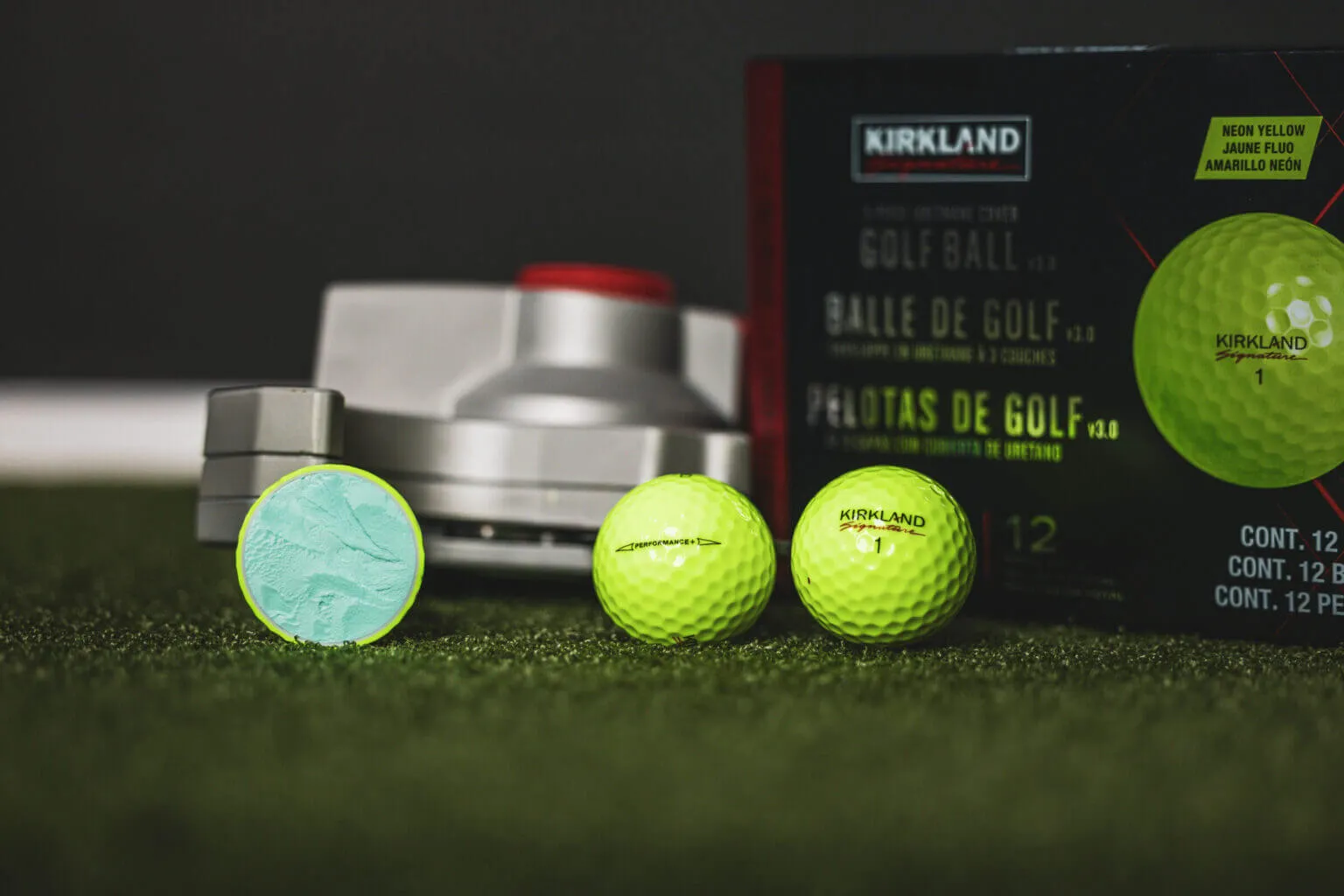
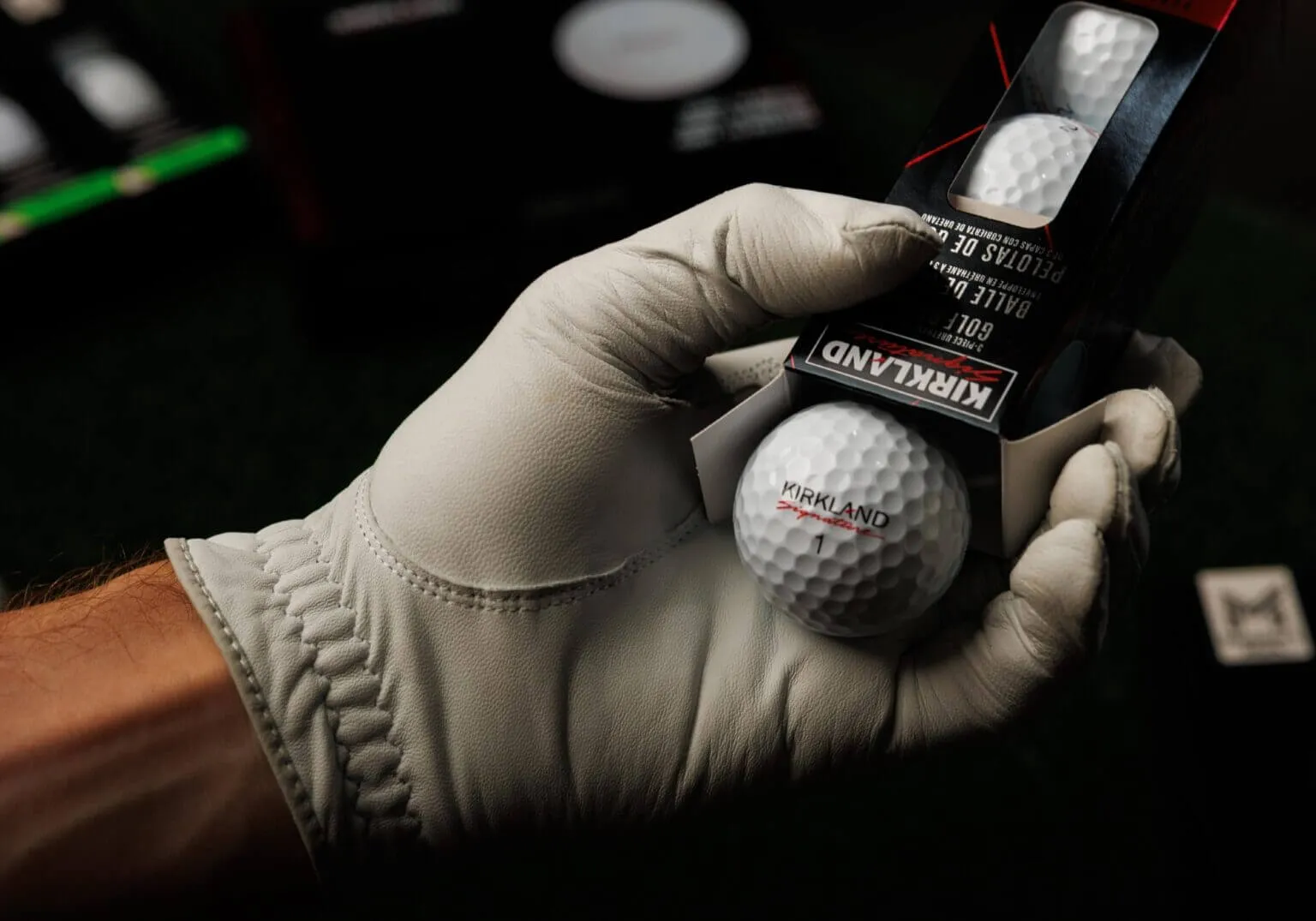
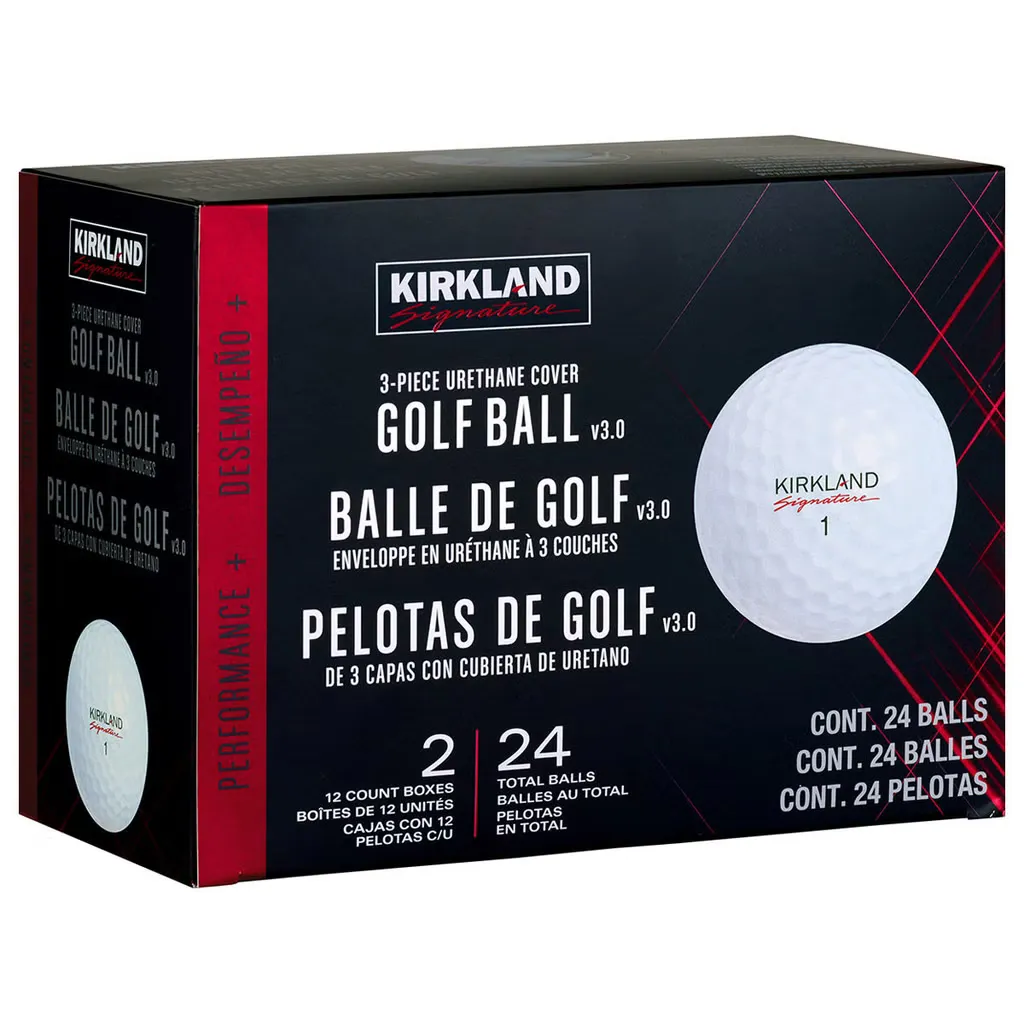
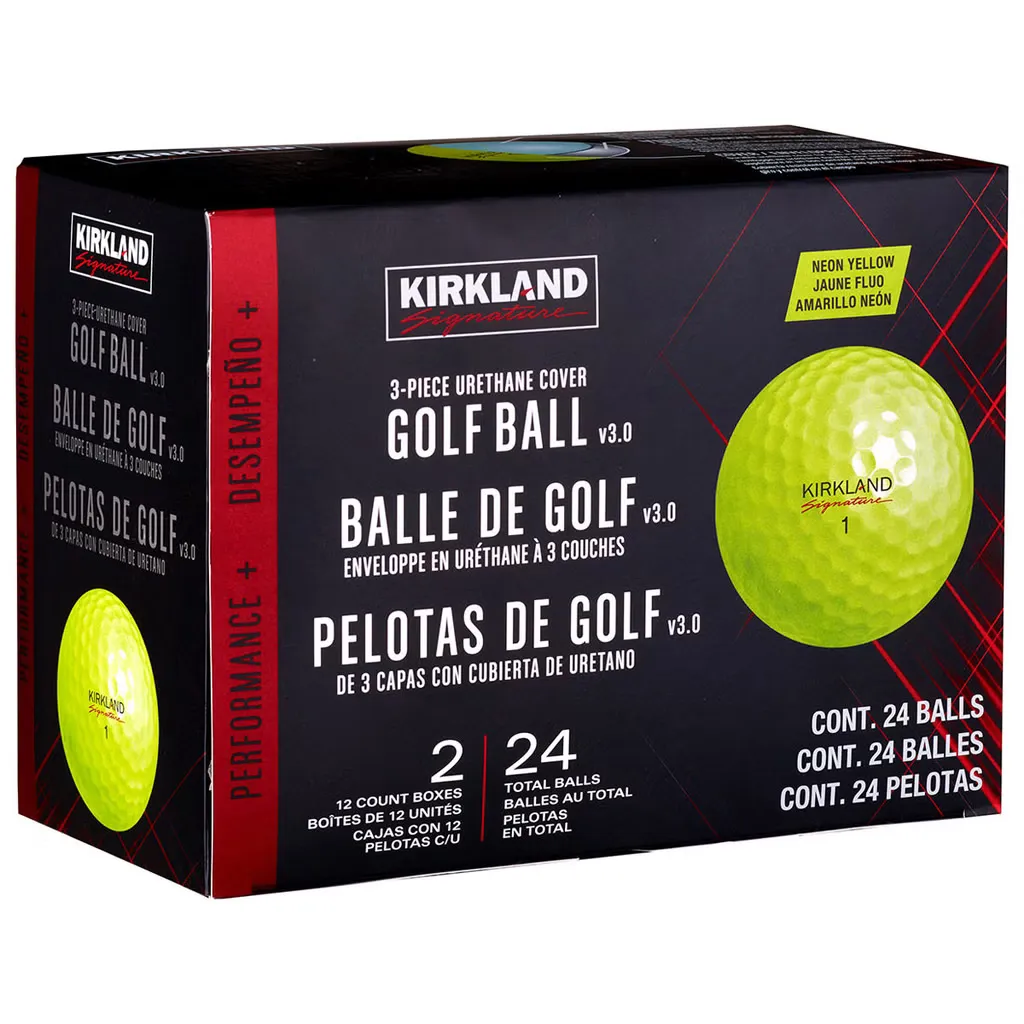
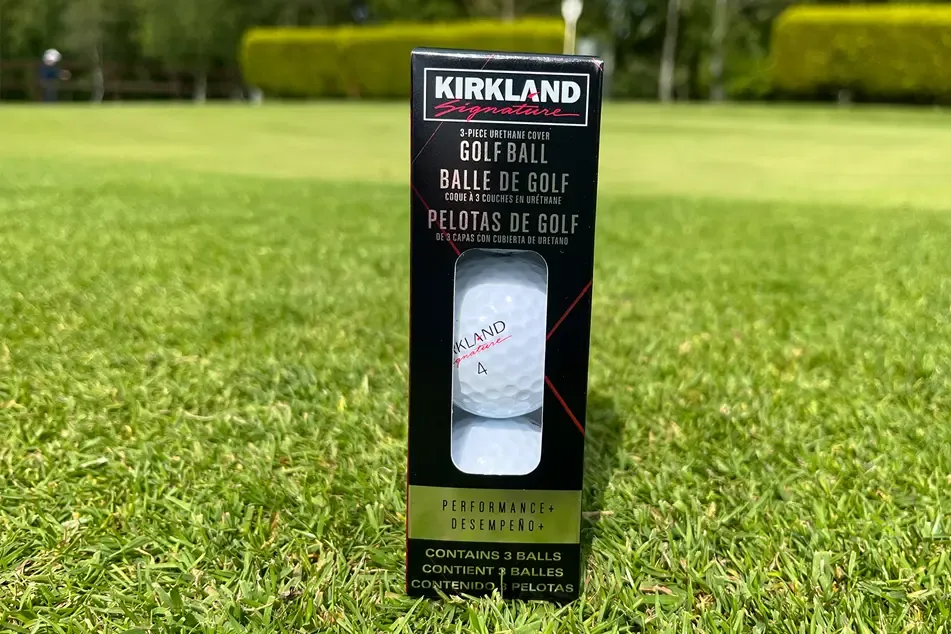
The ball on sale now is the Kirkland Signature Performance+ V3.0, a three-piece ball with a cast urethane cover, made by the factories in the table above. It costs about $40 for two dozen as of September 2026, roughly $20 a dozen and a third more than the 2016 original. In August, Costco ran a rare sale that took it to about a dollar a ball, the first markdown on the ball in seven years.
The colour matters more than it should. In MyGolfSpy's 2026 test the yellow finished 10 or more places ahead of the white in five of six full-swing conditions. Same box art, same price, different factory, different result. If you are buying, buy yellow.
Costco has also taken the name beyond balls, and its wider push into golf includes a Kirkland driver and iron set released in December 2023.
Is a Kirkland Golf Ball as Good as a Pro V1?
No, and none has been since the original.
MyGolfSpy's Ball Lab scored the current ball 85 out of 100, a B grade with a conditional recommendation. Its manufacturing was clean, with a perfect record on defects. Compression averaged 92, firm, in the range of Callaway's Chrome Tour and TaylorMade's TP5, and the reviewers identified compression as where the low price shows in the data. In the 2026 ball test, the white ball finished inside the top 20 for ball speed off the driver at high swing speed, but in the bottom third for total distance.
MyGolfSpy's view is that the 2016 original genuinely challenged the Pro V1 and nothing since has. The current ball is good value and consistently made. It is not a like-for-like substitute, and none of the 283 tour bags in DORMIED's WITB database carries one.
How Is Kirkland Golf Trending on the DORMIED Index?
| Metric | Value |
|---|---|
| Global DORMIED Index rank | 136th of 215 |
| DI score | 0.4 |
| Monthly global searches | 2,400 |
| Month-over-month change | +26.3% |
| Three-month change | -2.9% |
| Year-over-year change | -17.2% |
Source: DORMIED Index, August 2026 snapshot. The DI score is a brand's global search interest relative to the most-searched golf brand, which scores 100.
Kirkland is a product golfers buy rather than a brand they search for. The 26.3 percent monthly jump lines up with the August markdown. The year-on-year decline says the sale lifted a month without restoring the interest the ball had a year ago.
What Do People Ask About Kirkland Signature golf balls?
Who manufactures Kirkland golf balls now?
Factories tied to SM Global and SM Parker. The white ball is made at SM Parker in Vietnam; the yellow comes from a different factory, reported to be SM Global in China.
Are Kirkland golf balls made in Korea?
The original 2016 ball was, by Nassau Golf. The current ball is made in Vietnam and China.
Does Titleist make Kirkland golf balls?
No. Titleist's parent company, Acushnet, was on the opposite side of a patent and advertising lawsuit with Costco over the ball, settled in 2018.
Are Kirkland golf balls good?
They are good value. MyGolfSpy rated the current ball a B, 85 out of 100, with clean manufacturing. It is not the equal of a Pro V1.
How much do Kirkland golf balls cost?
About $40 for two dozen as of September 2026, roughly $20 a dozen. The original sold for $29.99 in 2016.
Why did Acushnet sue Costco?
Acushnet accused the ball of infringing its patents and Costco of false advertising. Costco sued first, in March 2017, and Acushnet countersued that August. The case settled out of court in 2018.
Is the yellow Kirkland ball different from the white?
Yes. They are made in different factories, and in MyGolfSpy's 2026 test the yellow outperformed the white in five of six full-swing conditions.