The company that helped build the launch-and-spin shaft fitting vocabulary is now arguing that vocabulary is wrong about half the time. That is the actual headline buried inside Mitsubishi's new Advanced Fitting Protocol, and it deserves more attention than it is getting.
Why Does Mitsubishi Say Color-Code Shaft Fitting Is Broken?
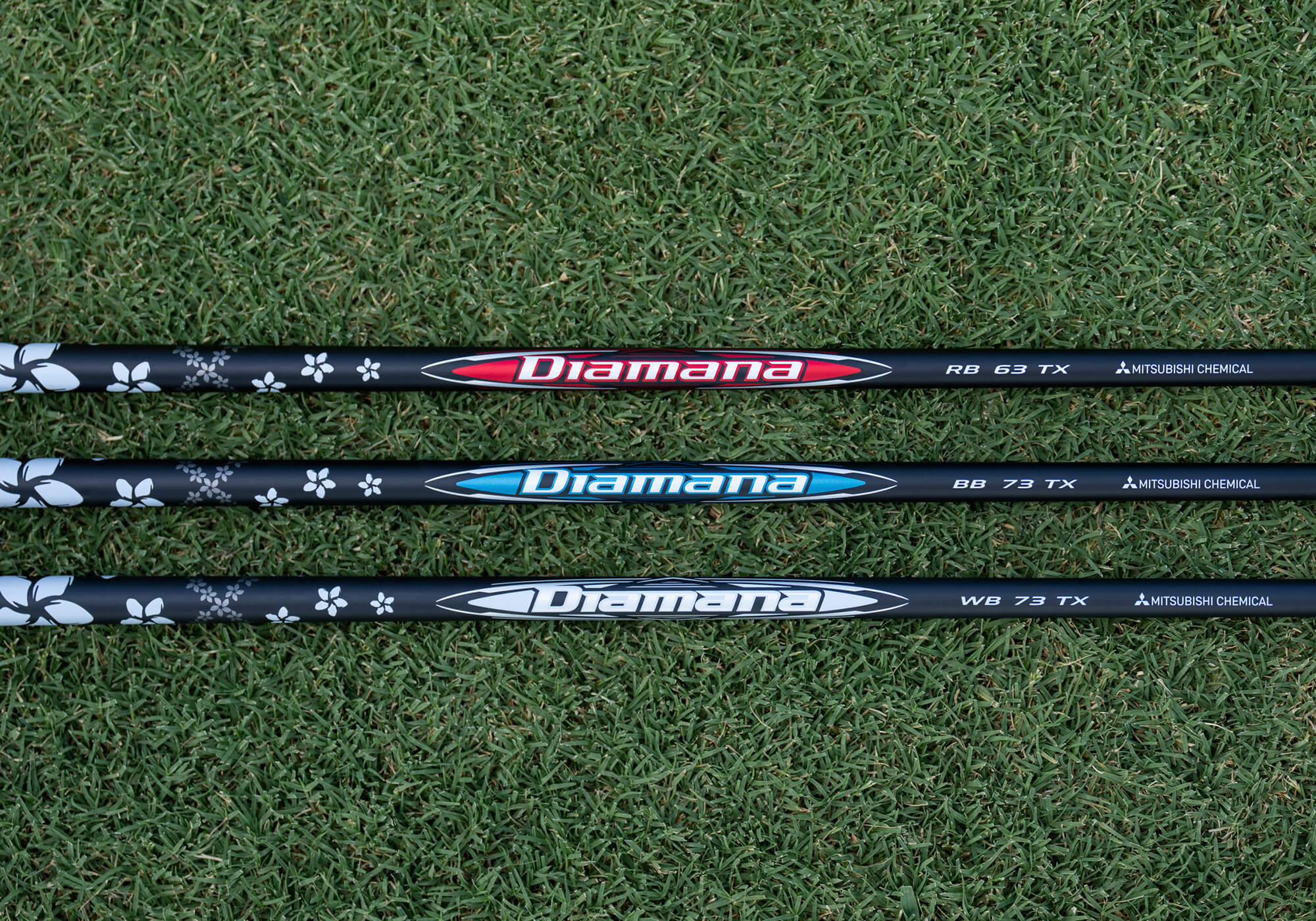
For roughly two decades, premium shaft fitting has run on a shared shorthand. White and black profiles meant low launch, low spin. Blue meant mid-mid. Red meant the high-launch, high-spin side of the rack. Aldila started it with the NV and NVS in the early 2000s. Mitsubishi standardized it with the original Diamana White, Blue, and Red Boards. Fujikura, Graphite Design, and the rest of the category fell in line because customers and fitters could finally talk about shafts using the same words. The system worked well enough to become the industry's lingua franca.
Mitsubishi is now saying, on the record, that the system is right about 50 percent of the time when used as a launch-and-spin lever. Jason Felicitas, the company's Manager of Tour Performance and Fitting Innovation, framed it as a data-driven re-examination of what the shaft actually contributes to ball flight. The conclusion: not nearly as much launch and spin influence as the color-code system implies, and considerably more influence over start line and impact location. The shaft, in Mitsubishi's revised framing, is a face-finding tool, not a trajectory tool. The clubhead, with its CG, MOI, and loft, does the heavy lifting on launch and spin. The shaft refines where the ball starts and where on the face contact happens.
What Is the Diamana Advanced Fitting Protocol?
The Advanced Fitting Protocol replaces the 2D height-and-distance model with three components: Start Line, Impact Location, and Player Feel and Delivery. Torque governs face closure. Tip stiffness governs droop, which influences both start line and where impact lands on the face. Softer tip, more droop, start line right and contact toward the high toe. Firmer tip, less droop, start line left and contact toward the low heel. None of this is new physics. What is new is a major shaft OEM publicly reorganizing its fitting framework around it and telling fitters to use loft and CG first if launch and spin are the actual targets. That is a notable concession from a company whose business depends on selling premium shafts as performance levers.
There is precedent for this kind of category reset, and it usually comes from the dominant player. Titleist did it with the Pro V1 launch in 2000, redefining what a premium ball was supposed to do. TaylorMade did it with movable weights in 2004. The brand with the most to lose by admitting the old framework was incomplete is usually the one with enough credibility to replace it. Mitsubishi has 17 of the top 50 OWGR players in its driver shafts and 23 worldwide wins this year including a major. That is the receipt that makes the argument land. A boutique shaft brand making the same case in 2026 would get ignored.
How Does Mitsubishi Shaft Fitting Change Across the Bag?
The practical implication for fitters and serious players is bigger than the marketing language suggests. If start line and impact location are the shaft's real job, then weight-progression matching across the bag becomes less defensible than shape-and-delivery matching club by club. Felicitas confirmed as much: a Diamana BB in the driver and a WB in a higher-lofted fairway wood is not a contradiction, it is a feature. That is either a fitting renaissance or a logistical nightmare for retail, depending on whether Club Champion, True Spec, and the independent fitter network want to retrain their staff around it.
The color code will not disappear. It is too useful as a starting point, and too much of the existing shaft inventory is built and marketed around it. But Mitsubishi has put a stake in the ground that the rest of the category will eventually have to address, either by adopting a similar framework or by explaining why theirs still works. The brands that move first will own the next decade of premium fitting conversation. The ones that wait will be answering questions they did not write.