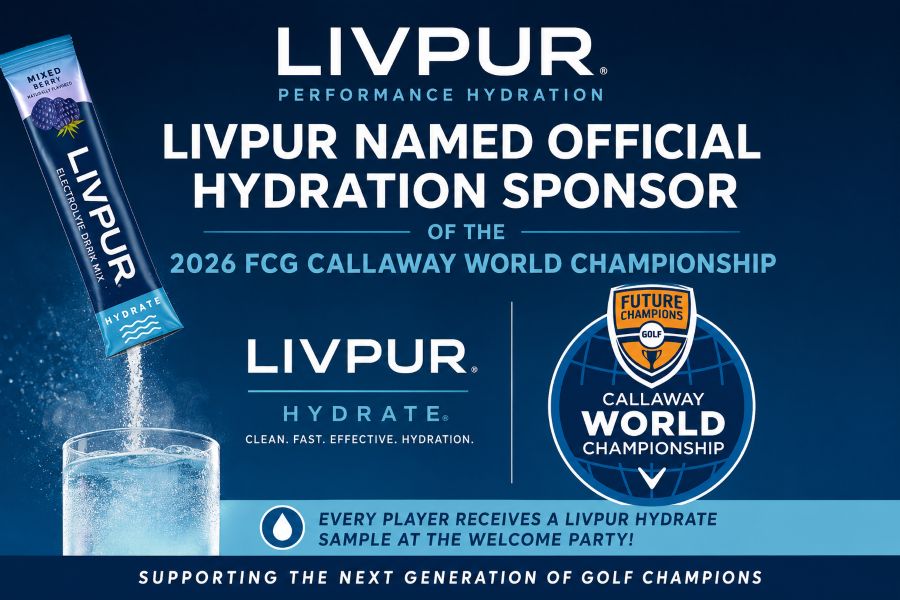
A Nashville hydration startup paying for sample distribution at a junior welcome party is not, on its own, an industry-moving development. What the announcement reveals about the FCG Callaway World Championship as a marketing asset is more interesting.
What Is LIVPUR Sponsoring at the FCG Callaway World Championship?
LIVPUR will serve as official hydration sponsor of the 2026 FCG Callaway World Championship, handing out single-serve packets of its electrolyte mix to every player at the tournament's welcome party. The product is built around a sodium-glucose transport formulation with added amino acids, which is the same basic architecture Liquid IV brought to mainstream retail in 2018 and that a dozen athlete-backed brands have iterated on since.
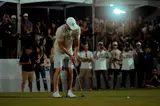
The FCG event has quietly become one of the most valuable junior properties in golf. It draws roughly 700 players from 40-plus countries to San Diego every July, and Callaway's title sponsorship, in place since 2018, has functioned as a long-term brand pipeline rather than a tournament line item. The juniors who win age divisions at FCG tend to show up in college lineups two years later and on the Korn Ferry within five. PING ran a similar play through the AJGA for two decades. Titleist still does, through the U.S. Junior and the Pro V1 sampling program that puts a sleeve in every competitor's bag. Callaway's version is geographically concentrated and demographically broader, which is part of why it works.
What LIVPUR is buying, then, is access to a captive audience of high-performing junior athletes and, just as importantly, their parents, who are the actual purchasers of $40 tubs of electrolyte powder. The welcome-party sampling model is older than most of the brands using it. Gatorade did it at AJGA events in the early 2000s. Bodyarmor ran the same play at junior tennis nationals before Coke acquired it in 2021. The mechanism works because the conversion math is honest: a kid who likes the taste and feels better on the back nine becomes a recurring SKU in the household pantry.
Why Is Callaway Leaning Harder on Junior Golf Properties?
The more telling data point sits on Callaway's side of the ledger. The brand currently ranks fourth globally in the DORMIED Index but posted an 18.2 percent month-over-month decline in May, which tracks with the broader narrative around Topgolf separation pressure, softer hardgoods sell-through, and a Chrome Tour ball cycle that has not generated the conversation the 2023 launch did. Against that backdrop, properties like FCG are doing more work than they used to. The junior championship is one of the few places Callaway's brand still operates without competitive friction, because the field is wearing Callaway hats before they have an opinion about Qi35 versus Paradym Ai Smoke. That is worth protecting, and worth monetizing through ancillary sponsorships like this one.
LIVPUR's broader golf strategy has leaned on PGA and LPGA player investment, which is the standard 2024-era playbook for performance nutrition brands without the marketing budget to buy tour exposure outright. The category is crowded. Nuun, LMNT, Gainful, Momentous, and Roar all compete for the same shelf and the same athlete endorsements. Differentiation at this stage is less about formulation, since the science converges quickly once you settle on a sodium-glucose ratio, and more about distribution and trust signals. A junior golf sponsorship delivers both, cheaply.
Is Callaway Junior Golf a Cost Center or Revenue Line?
The interesting question for Callaway is whether FCG remains a marketing asset or becomes a revenue line. Title sponsorships of junior events have historically been cost centers justified by long-tail brand affinity. With ancillary sponsors like LIVPUR now paying to access the same audience, the property is starting to look more like a media platform than a charitable line item. That reframing, if Callaway pursues it, would be the actual story here. The hydration packets are just the first invoice.