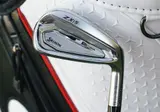

A shaft company issued a victory announcement for the Bank of Utah Championship and declined to name the player who won it. The champion is "the winner," "the champion," and "1st Place." The thing with a name is the KBS Tour 125 S+, in Titleist irons, at 26-under par, two shots clear at Black Desert Resort.
That is not sloppiness. It is the entire business model of a component brand stated out loud. KBS does not sell a clubhead, does not control shelf space in a green-grass shop, and does not get a logo on a hat. What it sells is a 125-gram steel tube that disappears inside somebody else's product the moment a consumer picks it up. The player is interchangeable. The part number is the asset.
Why Do KBS Golf Tour Win Announcements Matter More Than Equipment Counts?
Shaft companies live and die on seeding, and seeding is won in the fitting bay, not the press release. But the fitting bay is downstream of awareness, and for a component brand awareness has exactly two channels: tour WITB listings and no-upcharge stock offerings in OEM catalogs. KBS has spent fifteen years working both. Kim Braly launched the brand under FST in 2008 against a market where True Temper's Dynamic Gold was effectively the default iron shaft on the PGA Tour, close to a monopoly in premium steel, and the only way in was to be the shaft a fitter reached for when Dynamic Gold was 130 grams of too much.
That is where the 125 S+ lives. It is a gap product. S+ sits between S and X, and 125 grams sits between the 120-gram KBS Tour and the heavier end of the category. Nobody designs a half-flex, five-gram step unless the fitting data says there are players falling through the cracks between the existing SKUs. Most shaft marketing dresses up a paint job as engineering. A weight-and-flex interstitial is the opposite: an unglamorous admission that the real work in steel iron shafts now happens in increments too small to put on a billboard.
Does a Fall Series Victory Prove Anything About an Iron Shaft?
No, and it is worth being plain about that. Black Desert plays soft and short of the Tour's usual resistance, 26-under is a number that says as much about the golf course as the golfer, and a fall-series field is not a Players field. No shaft produced that score. The honest read is the reverse of the press release's claim: the win does not validate the shaft, the shaft's presence in the bag validates that KBS has enough tour penetration that a random winner is statistically likely to be playing one.
Which is the actual point, and a better one. Seeding depth means you get to send these emails most weeks. True Temper, Project X, Nippon and KBS are all running the same play, and the winner is whoever has the most bags, not the best week.
How Much Brand Visibility Does a KBS Shaft Win Actually Generate?
Very little, which the numbers confirm. KBS sits 65th of 215 brands in the DORMIED Index with a score under two, and the month-over-month trend is down 33 percent. A tour victory barely registers as a signal. That is the structural tax on component manufacturing: you can be in the winning bag and still be invisible, because the consumer conversation is about the Titleist irons the shaft was glued into.
The escape route has been tried. Aerotech built Steelfiber into a name through fitters. Fujikura and Mitsubishi turned driver shafts into aftermarket luxury goods with their own retail identity and $400 price points. Steel iron shafts have never managed that, partly because the aftermarket upgrade culture in irons is thin, and partly because steel is a commodity material that makes premium pricing hard to defend.
KBS's trajectory, then, is not about winning more tournaments. It is about whether the brand can convert tour presence into stock-option placement across more OEM iron lines, where the volume and the margin actually live. Watch the no-upcharge columns in the 2027 iron catalogs. That is the scoreboard. The victory emails are just how the sales team keeps the conversation open until the catalogs are printed.