Zegna Baruffa is a yarn spinner in northern Italy, not a golf brand. It got named in a MyGolfSpy layering roundup anyway, which tells you something about how one of golf's quieter wholesale labels is choosing to compete.
What Does the Fairway & Greene Windsweater Do Differently?
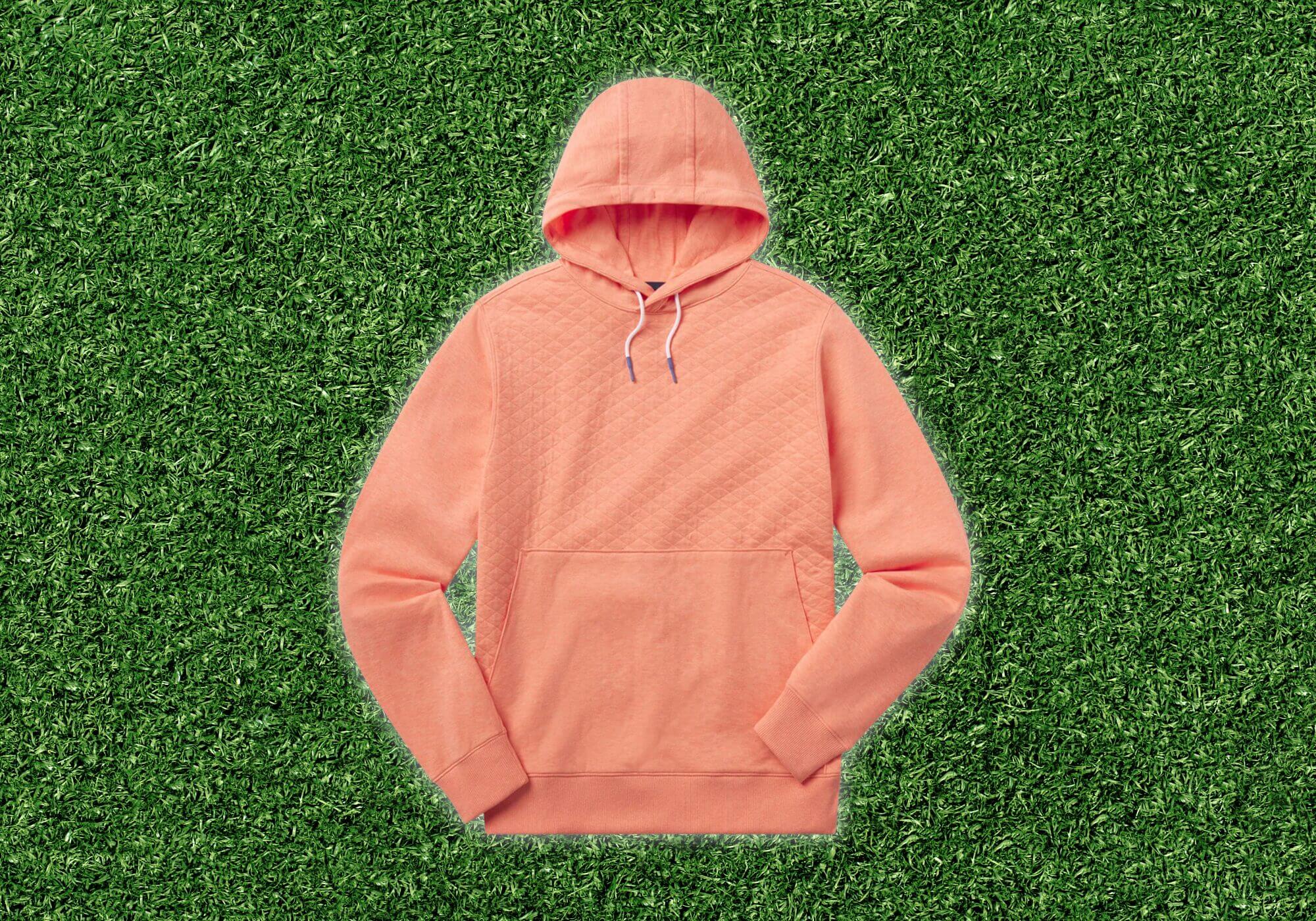
The roundup, six layering pieces sorted into splurge, pricey and budget tiers, puts the Fairway & Greene Baruffa Merino Quarter Zip Windsweater in the top bracket alongside B. Draddy's Andy Quilted Hoodie. Below that sit the Johnnie-O Sully quarter-zip, the lululemon Soft Jersey Half-Zip, UNRL's Highlands, and a Quince Flowknit performance half-zip at roughly $40. Read the descriptions in sequence and a pattern emerges. Five of the six are sold on stretch, softness and how they feel against skin. One is sold on the wool and what is hidden behind it.
That one is the F&G. The construction is a fine-gauge Zegna Baruffa merino face with a windproof lining sandwiched inside, which turns a sweater into something closer to a light jacket without the shell-fabric rustle. The windsweater is not a new idea in golf. It is a country club category that has existed for decades, largely ignored by the performance-apparel arms race because a membrane-lined merino knit is expensive to build, slow to source and impossible to move at velocity. It also does something the brushed polyester crowd cannot: fine merino manages moisture and odor across a temperature swing, which is the actual problem with a 46-degree tee time that becomes 62 degrees by the turn.
Why Does Fairway & Greene Name Zegna Baruffa Merino?
The caveat is buried in the same copy. The piece "should last for years if you take care of it," which is a polite way of saying you cannot throw it in with the towels. Sitting three slots above a $40 machine-washable Quince half-zip, that is a real ask. But naming the mill is the tell. Calling out Zegna Baruffa in product copy is the apparel equivalent of specifying the shaft on a stock build: meaningless to most shoppers, decisive for the ten percent who know what it signals. And it is close to uncopyable by the brands F&G actually loses shelf space to. Mill relationships at that level run on multi-season yarn commitments and long lead times. A DTC label that launched on Shopify eighteen months ago can buy stretch jersey from anyone on a two-month turn. It cannot buy a Borgosesia allocation.
Which makes the visibility picture strange. Fairway & Greene sits at 119th of 215 brands on the DORMIED Index with a score of 1.46, down 18.2 percent month over month, meaning it is effectively absent from the cultural conversation that B. Draddy, Johnnie-O and lululemon live inside. For a green-grass wholesale brand, that is not necessarily a failure. The buyer is a head pro deciding what will sell through at 50 percent margin with a low return rate, not a 28-year-old scrolling a drop calendar. Zero social velocity and healthy pro shop reorders is a legitimate business, and it has been F&G's business for a long time.
Can a Green Grass Golf Apparel Brand Stay Hidden?
The structural risk is what happens to a brand that is only ever discovered at the point of sale. Peter Millar and B. Draddy now own the mental slot marked "premium golf layer" for anyone under 45, and they got there by talking constantly. lululemon owns comfort by default and does not have to mention golf at all. If F&G's differentiator is genuinely a mill contract and a membrane nobody else wants to engineer, the fix is not more marketing spend. It is telling that story loudly enough that a golfer walks into the shop asking for the windsweater by name.
Watch whether the brand does it. There is a version of Fairway & Greene that leans hard into the Italian-yarn, made-properly angle and becomes the answer for golfers aging out of stretch-poly hoodies, a market that grows every year. There is another version that keeps quietly selling excellent sweaters to men who found them by accident, until the pro shop rack gets one column narrower.