
Shaft companies rarely build high-launch variants because the engineering demanded one. They build them because fitters kept walking back into the build room without an answer. VA Composites has just admitted as much, and named the shaft accordingly.
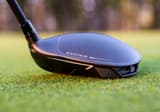
SYNYSTR High Launch is a re-profiled version of the original SYNYSTR, the tip-stiff, low-to-mid launch design VA built for players who generate their own height. The HL runs a smoother transition and a more active tip to load the head harder through impact. It comes in driver and fairway profiles at 55, 65 and 75 grams in A, R, S and X flexes, with torque between 3.6 and 4.5 degrees, a .335 tip, 46 inches raw and a three-inch parallel tip section. There is also an 85-gram hybrid in R and S with a .370 tip, 42 inches raw and torque as low as 3.1 degrees. Distribution stays where VA has always kept it: authorized fitters only.
The line-extension playbook here is not new and does not need to be. Fujikura built an entire decade on Ventus Black, Blue and Red, three bend profiles sharing one platform identity. Mitsubishi has run Tensei and Diamana the same way since the Whiteboard era. The economics are the reason: a re-profiled prepreg schedule on an existing mandrel family costs a fraction of a clean-sheet design and doubles the number of slots a brand occupies in a fitting cart. For a boutique operation founded in 2016 competing against companies with their own carbon supply chains, that math is not optional.
Victor Afable's framing is the part worth reading twice. "We didn't soften it, we retuned it." That is a real distinction and a defensible one. An active tip section normally buys launch by trading torsional stability, which is why so many high-launch aftermarket shafts feel loose to a 115 mph player. Holding torque in the 3.6 to 4.5 range across a lineup that includes 55-gram A flex means VA is managing material modulus, not just wall thickness. Where the messaging gets slippery is the flight description. The release calls the woods a mid-to-high bend point design, then describes the hybrid as carrying "low-bend-point DNA," and the headline on the original announcement promises lower spin while the body says spin is being optimized. Those are three different claims about the same platform. Fitters will figure it out on a launch monitor in ten swings, which is presumably the point of selling this way, but the copy is doing the shaft no favors.
The A flex and the 55-gram option are the actual tell. A brand whose founder's designs sit behind 100-plus worldwide tour wins is now building a profile for a player with an aggressive move and a weak, low ball flight. That is not a tour bag. That is a 55-year-old single digit who lost 8 mph and does not want to be told to play a senior shaft. The dealer list makes the same argument: Club Champion, True Spec and PGA TOUR Superstore are named alongside the independent studios, and PGA TOUR Superstore is a national footprint with fitting bays, not a boutique. VA's brand voice remains fitter-first. Its distribution is quietly a channel wider than that phrase implies.
What it does not have is consumer share of voice. VA sits at 191st of 215 in the DORMIED Index, up roughly 22 percent month over month, which in that neighborhood means the release itself moved the number. That is the trade every fitter-channel shaft brand makes: no advertising spend, no tour bag payouts, total dependence on whether a builder reaches for your shaft or Fujikura's. SYNYSTR HL widens the range of players for whom that reach makes sense, and widening the range is how a brand this size grows. Watch whether the 55-gram A flex is still in the catalog in two years. If it is, VA has found a customer beyond the one its reputation was built on.