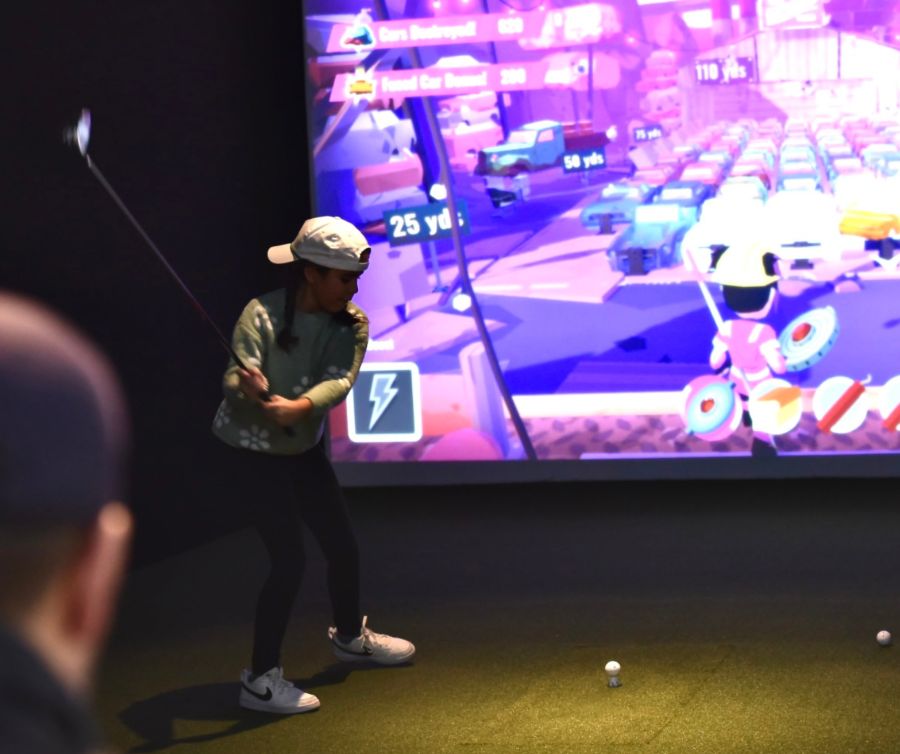
A weekday tee time before 4pm at Golf Lounge 18's new Nanuet location costs $40, and it comes with a Trackman. Fifteen years ago that sentence would have read as a pricing error. Trackman was the radar unit behind the ropes at tour events and inside the six or seven fitting studios in a given metro area that could justify the capital outlay. It is now a line item in a franchise buildout in a Rockland County shopping center, sitting next to the cocktail menu.
Why Does the Golf Lounge 18 Franchise Deal Matter?
Golf Lounge 18 opened its 11th facility at Nanuet Town Centre, extending a Northeast footprint that runs from the North Shore of Boston to Lake Grove on Long Island. The venue is spec'd with Trackman simulators, a full bar, an American pub menu, and a pricing architecture built to move volume: seasonal all-you-can-play passes, the $40 weekday early-bird rate, discounted kids and teens sessions, and group party packages. Walk-ins are welcome, clubs are available to rent. The company is also selling franchises.
That last detail is the actual business story. When an indoor golf operator franchises, the launch monitor decision gets made once, at the franchisor level, and then replicates into every unit an operator opens for the life of the agreement. It converts what used to be an eleven-times sales cycle into a single spec win with an annuity attached, because Trackman bays carry software subscriptions per unit, per year. Full Swing, Uneekor and Foresight are all fighting the same war on the same ground. X-Golf solved it by building its own tech and keeping the margin in-house. Topgolf did the same thing with Toptracer and then turned around and licensed it to driving ranges as a separate revenue line. The franchise channel is where the volume in this category actually lives, and every vendor knows it.
How Does Trackman iO Fit Low-Ceiling Retail Bays?
The technical reason Trackman can compete for strip-mall real estate at all is worth naming. A dual-radar unit wants depth behind the hitting position, which is exactly what a converted retail box does not have. The iO, Trackman's ceiling-mounted camera-based unit, was built for short bays and low ceilings, and it is the product that made venues like this addressable in the first place. Trackman did not win the entertainment channel by cutting price on its flagship. It built a different instrument for a different room and kept the brand name on it. That is the correct engineering answer, and it is also the riskier brand answer.
The risk is visibility. This announcement is Golf Lounge 18's. The seasonal passes, the leagues, the low-skill games for beginners, the booking system, all of it belongs to the operator. Trackman appears as a specification, the way Intel once appeared on the sticker of a laptop somebody else designed and somebody else sold. The customer who books a bay in Nanuet is buying an evening out, not a launch monitor, and the brand equity from that transaction accrues mostly to the venue. Trackman sits 27th globally in brand visibility this month, down 18.3 percent month over month, and the mechanism is not hard to read: the installed base keeps growing while the announcements keep going out under other people's letterhead.
What Can Trackman Learn From Toptracer's Branding?
The next two years will show whether Trackman treats the entertainment channel as distribution or as brand. Toptracer answered that question by putting its name on the screen and the scorecard and the app, so that the range customer left knowing what powered the experience. Trackman has the harder version of the same problem, because its name still has to mean tour-grade measurement to a fitter paying six figures for a bay while simultaneously meaning fun to somebody splitting a pitcher at 3pm on a Tuesday. Those two meanings can coexist. They coexist right up until a franchisor runs the math and decides the cheaper unit reads the same to a customer who is not looking at the numbers.