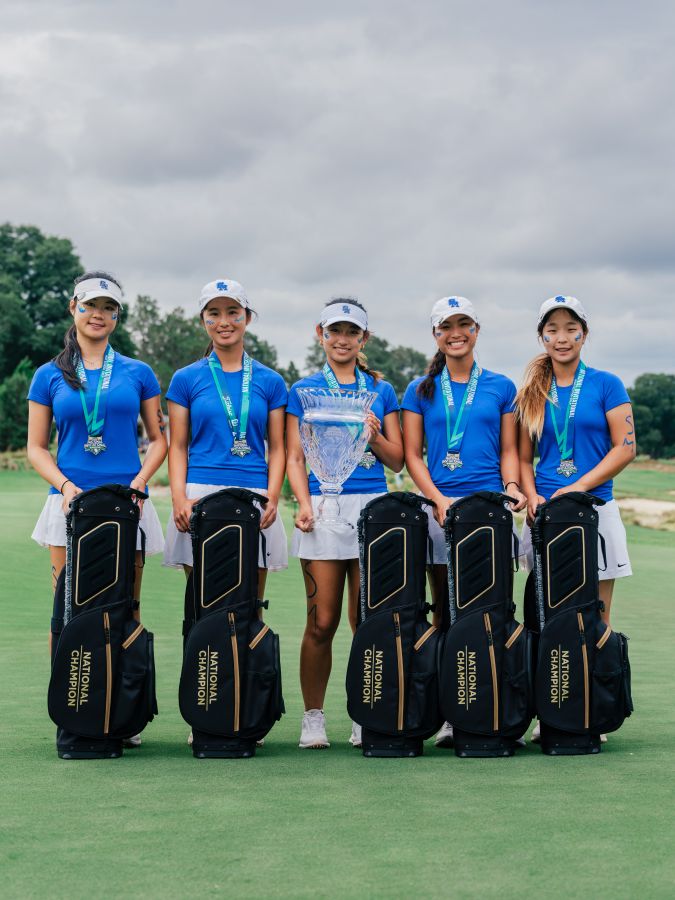
Five hundred state champions rotated through Pinehurst this month wearing FootJoy shoes, carrying Titleist balls, and posting scores in a tournament that carries the Titleist and FootJoy name in its title. The 2026 PGA High School Girls Golf National Invitational wrapped July 13 with California (SMC) taking the team title at 20-under and Oklahoma's Lisa Herman winning medalist honors wire-to-wire. Those are the results. The strategy behind the presenting sponsorship is the story.
California's SMC squad, anchored by returning players Angelina Tao, Emily Song, and Donina Zhou, finished 26 strokes clear of Pinecrest High School, the only team in the field to break par as a group. Herman shot 65-66-69 to win by three over Texas's Dresden Bounds, the only two players in the field to card three sub-70 rounds. Depth beat everyone else in Pinehurst: California put three players in the top ten individually.
The scoreboard is worth reading, but the reason Acushnet writes the check for this event is not scoreboard exposure. It is pipeline. The 2018 Titleist junior fitting expansion, which quietly grew the T//RX fitting program from roughly 40 events annually to more than 200, was built on the same premise that PING has run against Solheim Cup pipelines for two decades: a golfer who gets fit into a Pro V1 at sixteen tends to be a Pro V1 buyer at thirty-six. Callaway walked away from that logic during the 2019 reorganization and has spent the years since trying to rebuild it through the Chrome Tour tour van program.
This is the second year of a three-year Pinehurst run for the event, which previously hosted from 2020 to 2022. Anchoring the invitational at the Cradle of American Golf, on courses the USGA has committed to through 2047 as U.S. Open sites, layers the Titleist brand into the aspirational geography of American amateur golf. That is a different kind of marketing spend than a Times Square billboard or a tour player equipment contract. It is slower, harder to measure quarterly, and difficult for a challenger brand to replicate without the retail relationships and fitting infrastructure Titleist has spent forty years building.
The monthly index movement for the brand ran negative in June, which reads noisy against a #1 global position that has not meaningfully moved in the two years DORMIED has tracked the category. The June softness is more about the seasonal drop in launch-cycle news volume than any structural shift. Titleist does not run press-release marketing at the tempo of TaylorMade or PXG. It runs sponsorships like this one, which generate quiet, sustained association rather than spike-shaped attention.
The Boys Invitational runs July 18-20 on Pinehurst Nos. 5 and 6, and the same 500-golfer funnel will move through the same brand touchpoints. The competitive question is not whether Titleist wins this generation of junior golfers. The 2018 Arccos WITB data on players aged 16-22 already answered that: Titleist ball share in that cohort was 61 percent, higher than any other age band. The question is whether the challenger brands with legitimate junior programs, PING and Callaway most obviously, can compress that lead before the current 16-year-olds turn into the 2036 club-buying demographic. On current evidence, they cannot.