A 100 percent good ball rate across 36 samples is the kind of manufacturing outcome most premium OEMs would frame as a marketing campaign. Titleist treats it as table stakes.
What Did MyGolfSpy Ball Lab Find in the Pro V1x?
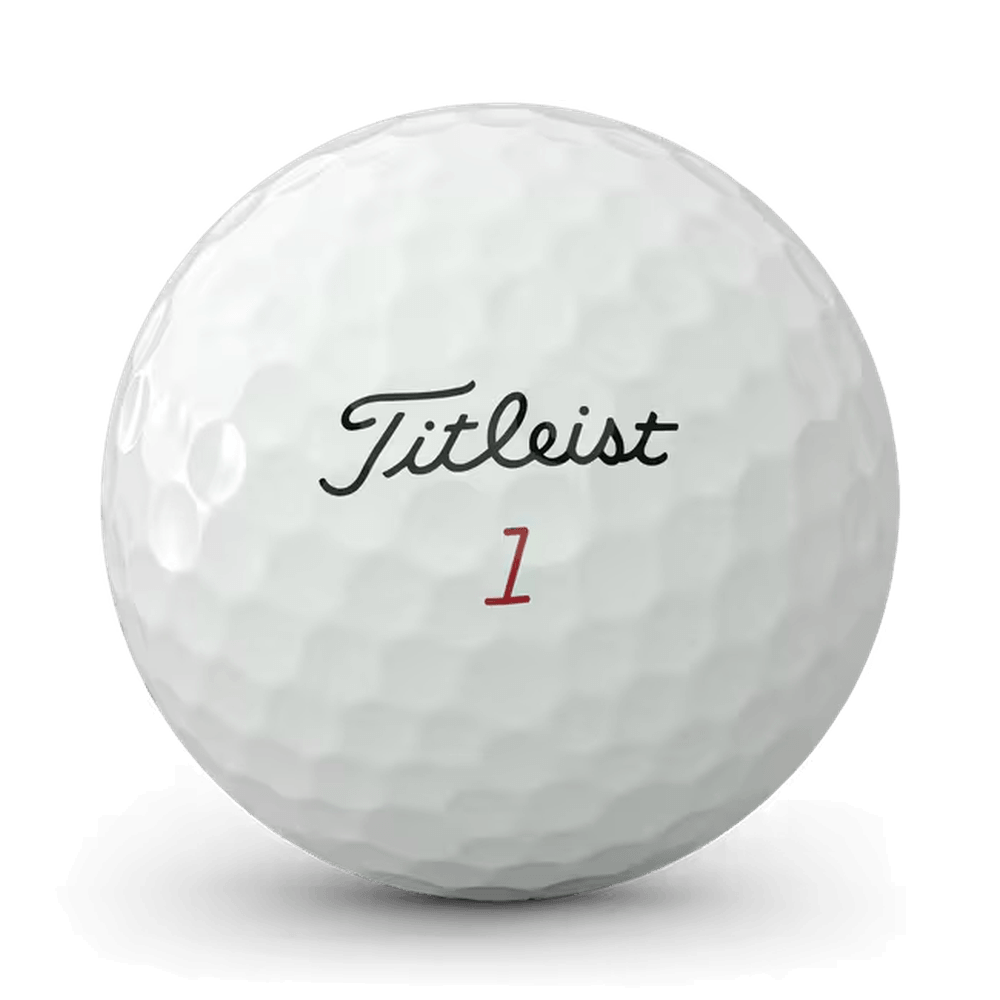
MyGolfSpy's Ball Lab put the 2025 Pro V1x through its five-metric quality gauntlet and returned a score of 94, good enough for a Ball Lab Quality Award. The headline number is compression consistency: a delta of 3.3 points across all 36 balls, ranking in the top ten of the entire database. Compression symmetry averaged 1.0 points against a field average of 1.9. Zero flagged defects. For an X-firm ball built to a 101 compression target, that's a tight window.
Context matters here. The Pro V1x comes out of Ball Plant 3 in New Bedford, a facility that has been building tour balls since 1996. The manufacturing DNA at that plant is older than most competitors' entire ball programs. Bridgestone opened Covington in 2011. Callaway didn't own a ball plant until acquiring Top-Flite in 2003, and even then, the tour ball manufacturing story took years to catch up. Titleist has spent three decades refining the same core competency, and the Ball Lab numbers reflect compounding process discipline more than any single technology story.
Why Did the Titleist Pro V1x Get B Grades?
The B grades on weight and diameter consistency are the interesting wrinkle. Every ball cleared the USGA weight maximum, every ball cleared the diameter minimum, and roundness deviation averaged 0.0004 inches. Nothing was flagged. But relative to Titleist's own compression performance, the weight and diameter windows are a half-step behind. That's the difference between a 94 and a 97. In a category where the top of the database is separated by rounding errors, it matters to the people who care, and irrelevant to everyone else.
What this report reinforces is why the Pro V1 franchise remains the default answer for roughly 70 percent of PGA Tour ball counts most weeks. It's not marketing spend, and it's not tour seeding budgets, though both are substantial. It's that when independent testing pulls three boxes off a shelf and cuts them open, the balls are the same. Titleist's competitive moat isn't a proprietary cover material or a patented mantle geometry. It's the boring, expensive, decades-old ability to make the same ball 350 million times a year. TaylorMade's TP5 has closed the performance gap on paper. Bridgestone's Tour B X has real tour validation. Neither has consistently matched Titleist's manufacturing floor in third-party testing, and that's the number that gets ignored in every launch cycle.
Why Does Titleist Charge $57.99 Per Dozen?
At $57.99 per dozen, the Pro V1x sits at the top of the premium tier and has for years. The pricing power is downstream of the manufacturing consistency. Golfers who play it don't switch, and the data explains why: the ball you buy in May performs like the ball you bought in January. That's a harder claim to make than most brands admit.
The next test for Titleist isn't whether the Pro V1x holds its Ball Lab grade. It's whether Left Dash, AVX, and the growing tour-tier variants can sustain the same manufacturing floor as the franchise scales sideways. The Pro V1 and Pro V1x are the ball equivalent of a 30-year-old iron mold that still runs true. What happens at the edges of the lineup is where the story goes next.