The 3-wood is being quietly retired at the top of the game, and the equipment industry has been slow to say so out loud. Justin Rose, J.J. Spaun, J.T. Poston, Chris Gotterup and Wyndham Clark all won this year with a 7-wood in the bag. That is not a fad WITB detail. That is a category migrating loft upward, and the amateur market is following about eighteen months behind, as it always does.
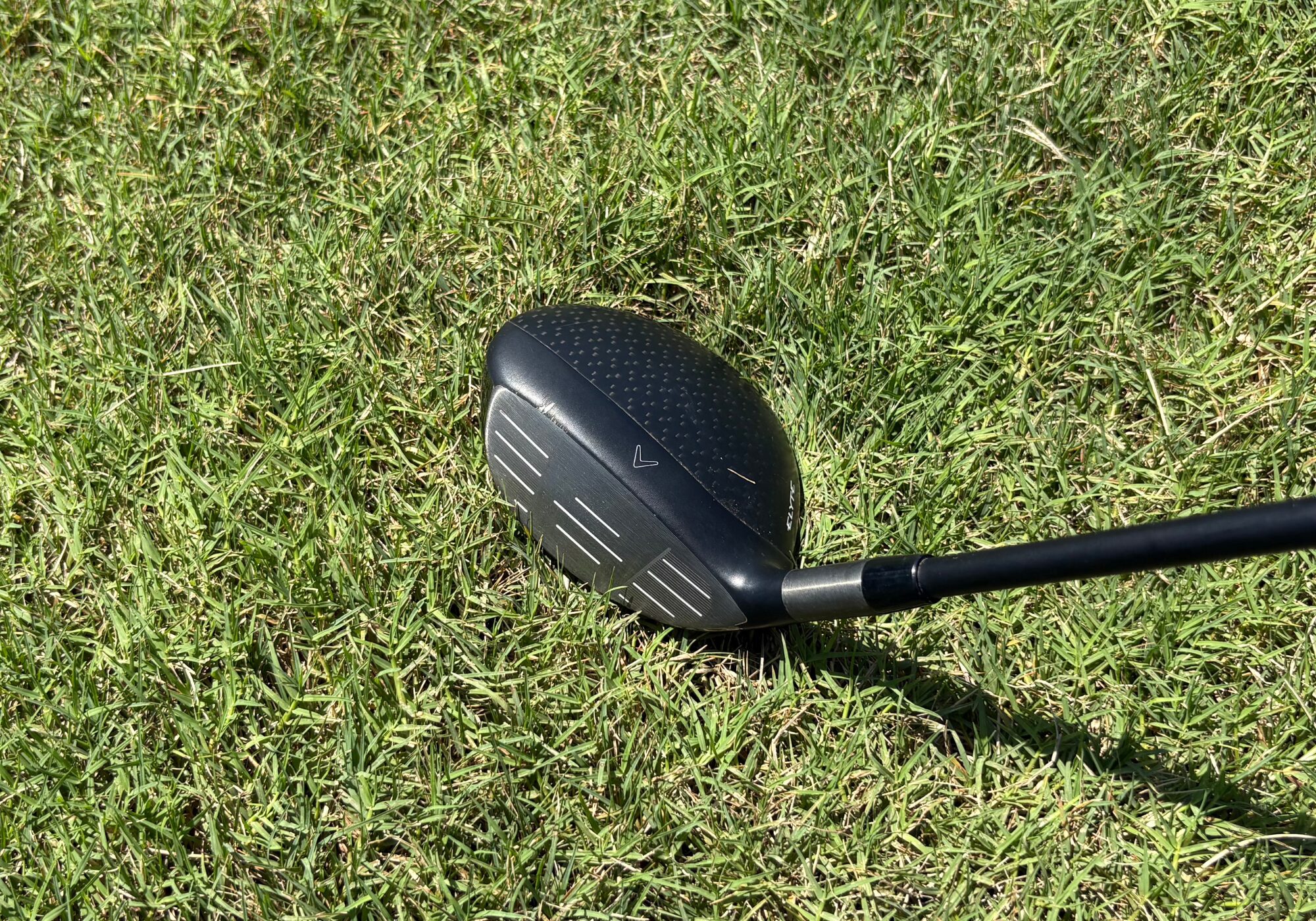
The latest evidence is a MyGolfSpy tester who pulled an early-2000s Big Bertha 3-wood out of the bag, put a Callaway Elyte 7-wood in its place, and reported the outcome most mid-handicappers get when they make that swap: higher launch, playable results from the rough, and a 220-yard approach that finished 12 feet from the hole. He is now carrying 12 clubs, with a 4-hybrid and the 7-wood doing the long approach work, and no urgency to replace the 3-wood at all. The gap between driver and 7-wood should bother him more than it does. It doesn't, which is the point.
Why Does the 7-Wood vs 3-Wood Shift Echo Hybrids?
This has happened before and the industry handled it badly the first time. Adams built an entire company on the Tight Lies fairway wood in the mid-1990s by recognizing that most golfers could not hit a long iron off a tight lie. TaylorMade's Rescue line did the same thing at the end of the decade for the 2- and 3-iron, and within a decade the driving iron was a specialty product. Every OEM eventually sold hybrids, but the brands that got there first owned the shelf space and the fitting conversation for years. The 7-wood is that same argument arriving one club later in the bag, and this time the tour proof came before the retail push rather than after it.
What makes the current cycle different is who is validating it. Hybrids were an amateur-first product that tour players adopted reluctantly and often hid. The 7-wood is running the other direction: elite ball strikers with 110-plus mph swing speeds are choosing it because it holds firm greens from 230 yards in a way a 3-iron or a 21-degree hybrid does not, and because modern agronomy has made stopping power more valuable than raw carry. When five winners in a season share a club choice, the fitting bay follows. Club Champion and every decent independent fitter has already reordered their fairway wood matrix around it.
What Does the Elyte 7-Wood Give Callaway Right Now?
For Callaway, the timing is useful. Elyte is the current line, it sits in the middle of a fairway wood category the brand has historically owned as well as anyone, and the 7-wood is the rare product where the tour story and the mid-handicap story are identical rather than contradictory. That matters for a company sitting fifth in the DORMIED Index this month, down 18.5 percent, in a stretch where most of the news around Callaway has been corporate rather than product. A club that solves a real problem for a 15-handicap, that a US Open champion also plays, is worth more shelf voice than another driver launch nobody can differentiate on a launch monitor.
The honest caveat is the one the tester made himself: the loft does not fix the swing. Fewer topped shots is not zero topped shots, and the confidence a high-launching fairway wood produces tends to convert into worse decisions before it converts into lower scores. That is a fitting and coaching problem, not an engineering one.
How Will Callaway Prove the 7-Wood Shift Is Real?
Watch the SKU mix. If Callaway and its competitors start building 7-woods and 9-woods as designed products with their own head shapes and stock shaft profiles rather than as the last two entries on a fairway wood spec sheet, the shift is real and permanent. If they keep treating high-loft fairway woods as an afterthought while the tour data says otherwise, someone smaller will do what Adams did in 1996 and take the category by simply paying attention first.