A grooved putter face sold as a forward-roll technology is not a new idea. Yes! Golf built an entire company on the C-Groove in the early 2000s, got it into thousands of bags, and eventually got sold off in pieces. Ping ran variable-depth grooves through the TR line. Odyssey has cycled through inserts since White Hot. Two decades later, the claim survives because nobody at retail can disprove it. There is no launch monitor number that embarrasses a putter.
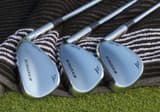
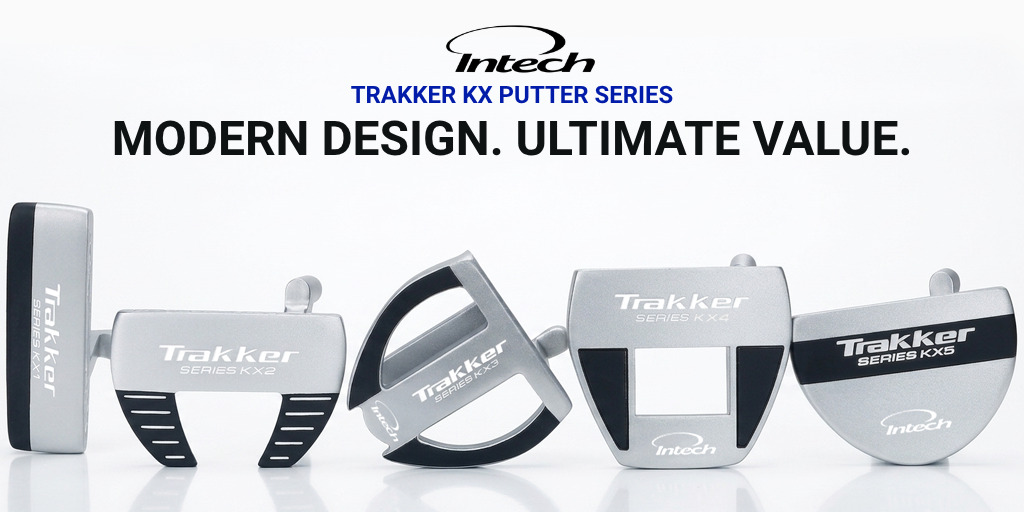
Which is the useful frame for what Hireko Golf just did. The Roseville, California component house has launched the Intech Trakker KX Putter Series: five head shapes, KX1 blade through KX5 circular mallet, with a silver-and-black bi-color finish, reduced-friction grooved faces, oversized synthetic grips and a synthetic leather headcover in the box. Available through Hireko, Intech and authorized dealers. No price was quoted in the announcement, which in the component channel usually means the price is the point and it will be set by whoever is stocking it.
Launching five SKUs simultaneously is a component-house move, not an OEM move. Titleist stages Scotty Cameron releases across a calendar because each model has to carry a marketing story and a tour validation cycle. Hireko has neither obligation. The tooling economics of a cast putter head are forgiving, the catalog is already built, and the customer is often a clubmaker or a small pro shop buying an assortment rather than a consumer choosing between two flagship mallets. Five shapes is not a product line. It is a fill rate.
The more interesting detail is the nameplate. Hireko's brand stable includes Orlimar, Intech, Juggernaut, Karma Grips, Acer, Dynacraft and SK Fiber, and the company is also the US licensee for PowerBilt. That is a brand with real history: Hillerich and Bradsby, the Louisville Slugger company, put PowerBilt clubs in play for most of the twentieth century, and the label's last genuinely distinctive engineering swing was the nitrogen-charged Air Force One driver family around the turn of the 2010s. A putter series is exactly the kind of low-risk, high-margin product a licensee would use to put a legacy name back in front of buyers. Hireko chose Intech instead. That is a read on which of its labels still moves units at a given price point, and PowerBilt did not win it.
The flatness of PowerBilt's position tells the same story from the other direction. The brand sits at 175th of 215 in the DORMIED Index with zero month-over-month movement, which is what happens when a nameplate is being maintained rather than marketed. Licensing keeps a trademark alive and generates a royalty stream. It does not generate demand. Every product cycle the licensee spends building equity in a different house brand is a cycle PowerBilt does not get back, and the golfers who remember Citation irons are not the golfers buying a $60 mallet.
The broader point is about the value putter category itself, which is quietly the most defensible cheap-club segment in golf. A $199 driver loses a ball-speed test in public. A $199 iron set gets dismantled by a fitting bay. A $59 mallet with a decent alignment aid, a fat grip and a headcover competes on feel, looks and confidence, all of which are unfalsifiable and all of which a good-looking bi-color finish can deliver. Costco understood this when it put a milled putter into Kirkland Signature. Hireko has understood it for years. The margin structure is why the component channel keeps returning to the flat stick.
Watch what Hireko does with PowerBilt over the next two cycles. A licensee with seven house brands allocates attention the way a retailer allocates shelf space, and PowerBilt is currently on the bottom shelf. If the name resurfaces, it will most likely be on a box set aimed at a big-box or online channel where the century of history does the selling and the components come from the same catalog as everything else. That is a viable business. It is not a revival.