Signing onto a B2B ordering platform is the least glamorous kind of brand announcement, which is exactly why it's worth reading. Linksoul just told the industry where it's putting its chips for the next 24 months, and it's not DTC.
What Is Linksoul's RepSpark Wholesale Deal?
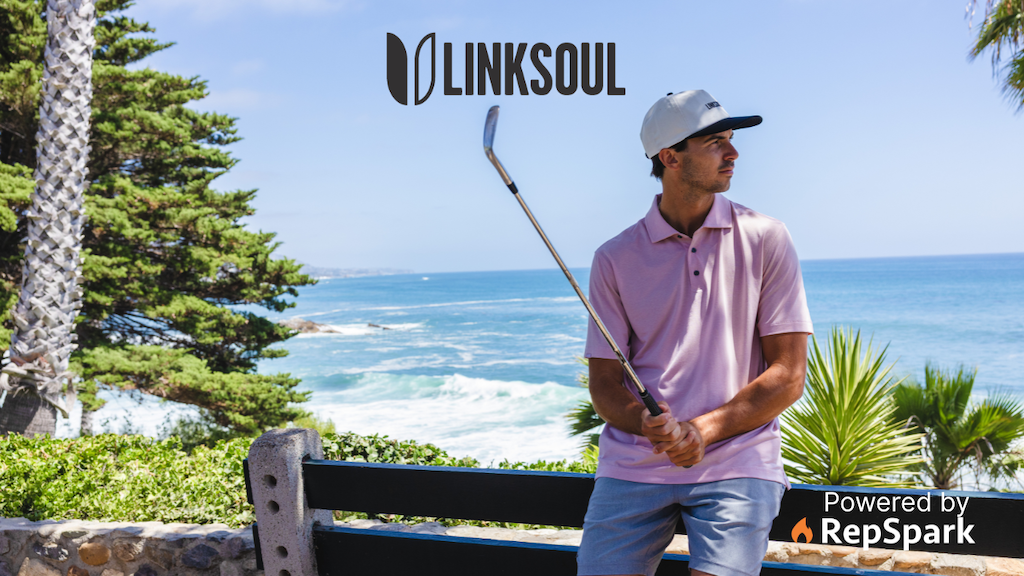
The Carlsbad brand announced it has joined RepSpark, the Anaheim-based digital wholesale platform that already powers ordering for a large share of golf's apparel and equipment brands. On paper it's back-office plumbing. In practice, it's Linksoul formalizing a wholesale-and-green-grass strategy at a moment when most of its peers are chasing the opposite direction.
The context matters here. For the last five years, the loudest apparel stories in golf have been DTC-first plays: Malbon building a Los Angeles flagship, Sun Day Red engineering a Nike-scale retail launch, Eastside Golf riding collabs into sneaker culture. The playbook has been Instagram, drops, waitlists, and cutting out the middleman. Green-grass shops, the pro shops at private clubs and public facilities, have been treated as a nice-to-have rather than a growth channel. Linksoul is doing the reverse. Tyler Shearer, the brand's VP of Sales, called it an investment in wholesale and green-grass, and the RepSpark integration is the tooling that makes that investment operational.
Why Does Green-Grass Retail Fit Linksoul's Customer?
There's a reason it might work. Linksoul's customer has always skewed older, more coastal, and more Patagonia-adjacent than the streetwear crowd. The brand was founded by John Ashworth, who built and sold Ashworth Golf before it became a Callaway property, and his nephew Geoff Cunningham. The DNA is Southern California men's lifestyle, not hype cycle. Linksoul's core products, the Boardwalker pants, the tempus polos, the cotton-linen blends, are designed to survive a beach day and a member-guest without changing outfits. That customer buys at the pro shop after a round. He does not refresh a browser at 10 a.m. on a Thursday for a limited drop. Meeting him where he shops is a rational strategy, not a defensive one.
The RepSpark piece is worth understanding because it says something about the state of the wholesale channel. RepSpark has quietly become the connective tissue for golf wholesale, giving buyers at green-grass shops a single interface to view line sheets, check inventory, and place reorders across dozens of brands. For a small buyer at a 200-member club who orders from fifteen vendors, the friction of that process has historically been the reason certain brands never made it into the shop. RepSpark removes that friction. Brands that show up on the platform benefit from being in the same buying flow as the incumbents. Brands that don't get overlooked. Linksoul joining is less about picking a vendor and more about making sure it stays on the shopping list.
How Does Wholesale Affect Linksoul's Media Attention?
Whether it moves the needle in the standings is a separate question. Linksoul sits at 89th in the DORMIED Index with essentially no movement month-over-month, which reflects the reality that a wholesale-and-green-grass strategy generates less earned media noise than a Malbon collab or a TravisMathew capsule. That's the tradeoff. The wholesale grind builds a durable revenue base but doesn't produce the kind of cultural moments that light up feeds. Linksoul appears comfortable with that tradeoff, which is either disciplined or a ceiling, depending on how the next two years play out.
The brands to watch aren't the ones announcing collabs. They're the ones deciding which channel to defend. Linksoul just picked wholesale and green-grass, and if the strategy works, the second-order effect will be a slow reappearance of the brand in pro shops that stopped carrying it during the DTC-obsessed years. Not a Sunday-red moment. A Wednesday-restock one, which in this category might be the more valuable position.