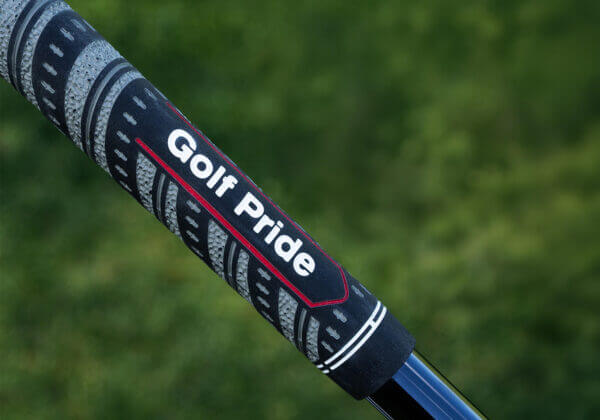
Grip size is the last variable most golfers check and the first one message-board diagnosticians blame. Golf Pride's own fitting protocol suggests both instincts are wrong.
How Does Golf Pride's Grip Size Fitting Protocol Work?
The brand's sizing method, resurfaced this week in a MyGolfSpy piece on whether midsize grips cause slices, hinges on a checkpoint most fitters skip entirely: where the fingers of the lead hand sit relative to the heel pad. Fingers barely brushing the pad is the target. Fingers wrapping under it means the grip is too small. Fingers falling short of it means the grip is too big, and that gap, per Golf Pride, is the one that matters for face control. Not thickness in the abstract. Not some blanket rule about hand action being quieted.
That's a meaningful distinction, because the internet's version of grip fitting has calcified into a slogan: thicker grips reduce hand action, therefore thicker grips open the face, therefore midsize causes a slice. Golf Pride's process throws cold water on that logic without saying so directly. The company would rather you add two to four wraps of tape between sizes than jump a full size, because a full jump overcorrects. Which is not the language of a brand trying to sell you on going bigger for the sake of going bigger.
Why Does Golf Pride Push Fitting Against Lamkin?
The subtext here is more interesting than the fitting tip. Golf Pride sits on something close to a monopoly in the OEM grip category, and it has spent the last five years fending off Lamkin, SuperStroke's putter-first expansion, and a wave of tacky-feel challenger brands trying to peel off the enthusiast dollar. The brand's response has been to lean into fitting as a differentiator. Not new compounds, not marketing budget, but the argument that you're probably playing the wrong size and haven't been measured properly since you started golf. It's a category defense dressed up as consumer education, and it works because it happens to be true.
The fitting-as-moat play also explains why Golf Pride's rank sits at #36 globally on the DORMIED Index despite the category's low visibility. Grips don't move the needle on social the way a driver launch does. What Golf Pride is doing is quieter: embedding a proprietary sizing method into every major fitter's workflow, which is the kind of infrastructure win that doesn't spike a trend line but does keep challenger brands at arm's length. The 18% month-over-month dip reflects a slow news cycle in a category that lives on slow news cycles.
Can Golf Pride Make Its Grip Fitting the Standard?
The bigger read for the industry: grip fitting is one of the last equipment categories where the consumer has almost no first-party data. Shafts have Trackman fittings. Balls have compression numbers and Bryson evangelism. Grips have vibes, a diameter chart, and a fitter who might or might not check where your fingers land. Golf Pride is trying to change that by making the heel pad check the standard, and if it sticks, it becomes another proprietary language the brand controls. Lamkin has to either adopt it or invent its own, and both options benefit the incumbent.
Watch for Golf Pride to push the fitting protocol harder into retail, likely through a digital sizing tool or a partnership with a major fitting chain. The brand doesn't need to sell more grips to win. It needs to make sure every grip sold, by anyone, gets measured its way.