The head is the tooling. The neck is the variable. In putters, adding a hosel option is the cheapest way a manufacturer can double the number of strokes a model fits, and it is the reason flatstick lines expand sideways instead of forward. PING just ran that play twice on the same line and told almost nobody.
What Did PING Add to the Scottsdale TEC Line?
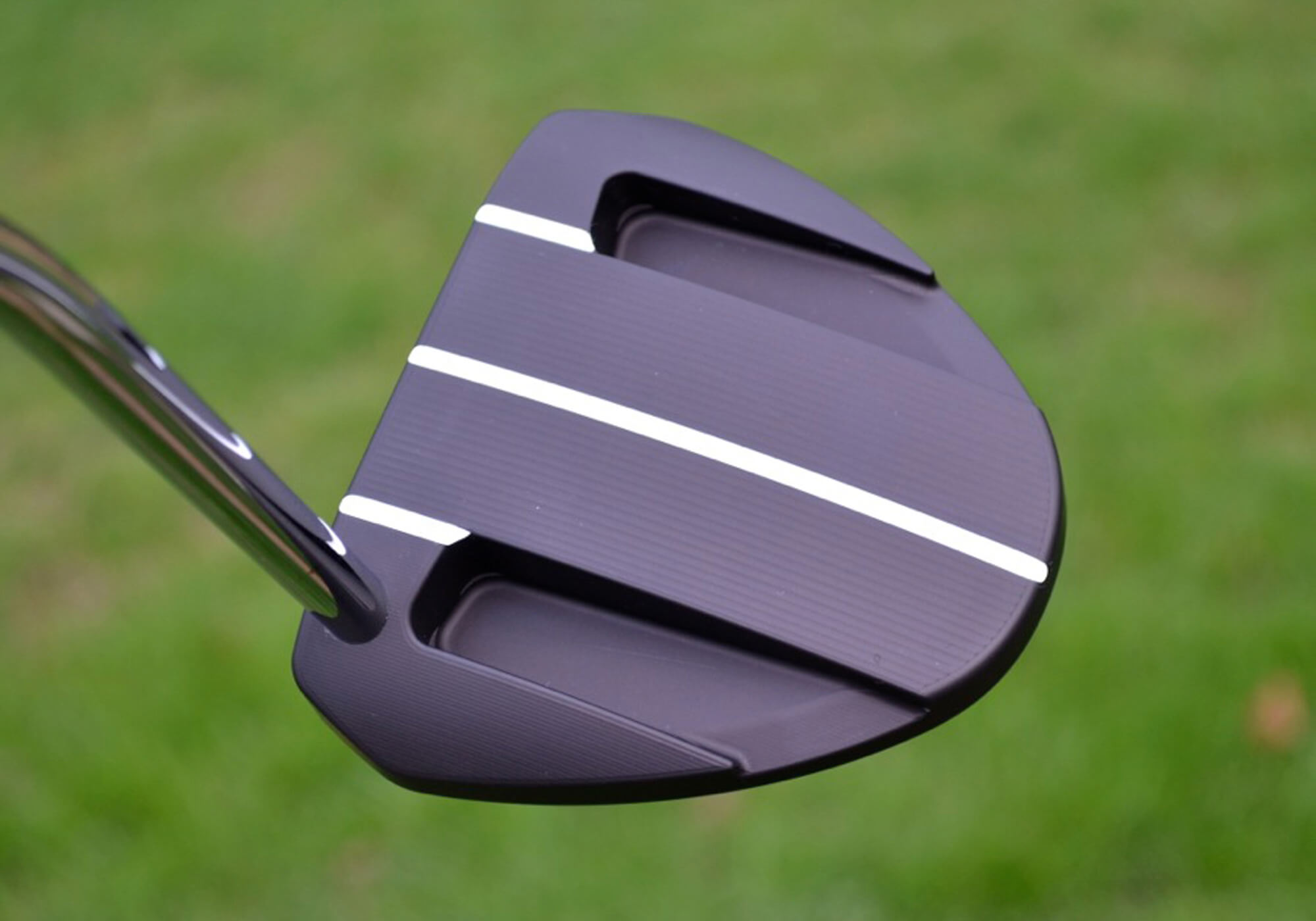
The Scottsdale TEC family has added the Ally Blue H, a plumber's neck version of the Ally Blue, and the Ketsch 4, which uses PING's Anser-4 slant hosel to produce deep toe hang for strong-arc strokes. Both carry a $435 MSRP and are at retail now. The Ally Blue H had already been in limited release in Europe before landing in the US. The announcement consisted of a couple of social posts. No release, no embargo, no launch video. This is not an oversight. The original Ketsch, one of the most consequential mallets of the last fifteen years, arrived the same way.
What is being expanded is worth understanding. Scottsdale TEC is built around Eye-Q, an alignment scheme derived from Quiet Eye gaze-tracking research: high-contrast white body, black sight line for target alignment, black front-edge dot to collapse focus immediately before the stroke. The claim is that stabilizing the eyes stabilizes the stroke. PING does not tend to make performance claims it cannot document, which is a reputation earned slowly and spent quickly. Wyndham Clark winning a second U.S. Open with a Scottsdale TEC Ally Blue Onset within months of the line's release is the sort of proof point most brands would build an entire campaign around.
Why Does PING Market Its Putters So Quietly?
Instead, the brand's share of voice went the other direction. PING sits 21st globally in the DORMIED Index this month with a score of 16.5, down 18.2 percent month over month, which is a strange place for a company whose putter just won a major. L.A.B. Golf built a category out of a torque argument and a relentless content operation. Odyssey spends against Toulon and White Hot with a media budget that assumes the customer needs telling. PING keeps producing engineering-first putters and letting fitters do the talking. It works on the fitting bay floor and underperforms everywhere else, which is exactly the tradeoff PING has accepted since the colored dot chart made fitting a retail ritual rather than a marketing message.
The technical detail that matters most here is not the hosel geometry. It is that the two new necks are adjustable and the original Onset models are not. Lie can be moved four degrees either side of the stock 20, and loft runs from three degrees stock to plus three and minus two. That changes the economics for the people who actually sell putters. A fitter stocking Onset models needed the customer's specs to be close out of the box. An adjustable plumber's neck and an adjustable Anser-4 cover most of the fitting matrix off a shelf, which reduces the inventory risk that has quietly pushed independent shops toward brands with fewer SKUs and more tolerance. Note also what the Onset hosel is not: the shaft enters behind the face but not at the center of gravity, so these are not zero-torque putters, whatever they resemble on a rack. PING has not marketed them as such, which in the current climate counts as restraint.
How Many Models Are in Scottsdale TEC Now?
Five models now, across right and left hand, with counterbalanced builds available. The line is doing the thing PING lines do, which is grow toward the fitting chart rather than toward a launch calendar. The open question is whether a company can keep winning majors with putters nobody markets. PING has answered yes for fifty years. The next test is whether it still holds in a putter category where the loudest brand of the last three years built its position almost entirely on explanation, and where a customer who has never been fit has no reason to know Eye-Q exists.