Limited-edition putters exist to be scarce and expensive. PING built one and priced it $55 above the stock model it is based on, which is either a pricing error or the most interesting thing the company has done in the putter category this year.
What Is the PING PLD Milled SE DZB?
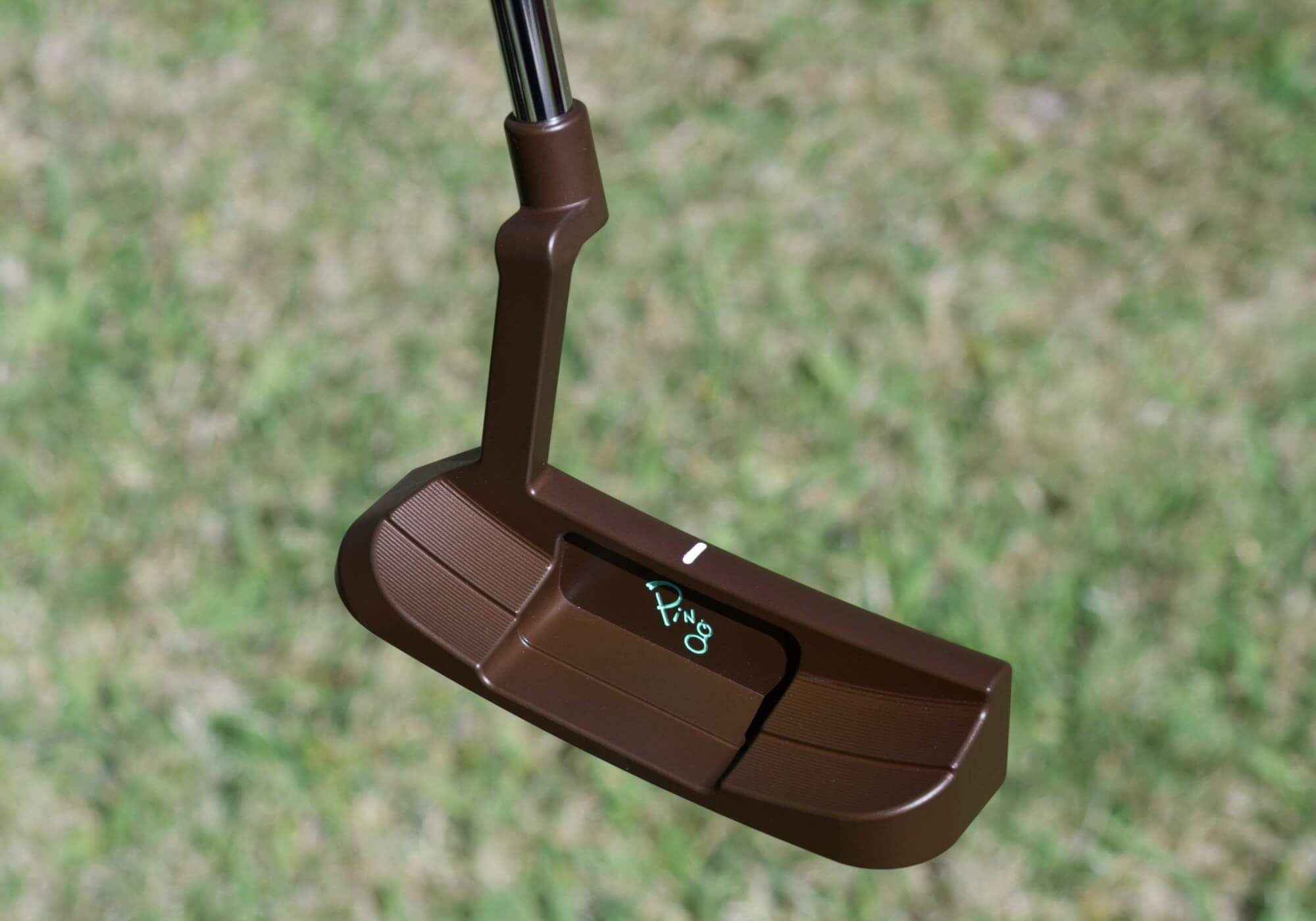
The PLD Milled SE DZB is a 350-gram milled blade with a plumber's neck, a heritage patina finish, mint-green paint fill, a leather grip with matching stitching and a distressed leather headcover. MSRP is $540. It is available now through PING's normal retail channels, online and at green-grass and independent accounts, with no announced quantity. For context, a stock PLD Milled Anser is $485 and a putter built through the PLD Custom program, which includes a full fitting, runs $1,490.
The design is a parts-bin exercise, and that is a compliment. The skeleton is Anser: plumber's neck, heel-toe weighting, the silhouette PING has been selling since Karsten Solheim's 1966 patent made the shape the most copied object in golf. The body is wider than an Anser, closer to the Redwood D66 in thickness with the same rounded corners and sloped bumpers. The heel section comes off the ZB, sharper and more pointed than either the Anser or the D66. The toe edge is elevated, a D66 and ZB trait. The cavity carries the Redwood City logo rather than the four-block-letter mark PING uses on current production. This is the kind of thing PLD Custom builders have been assembling one at a time for years. The difference is that PING is now selling one at retail without requiring the fitting.
The genuinely new detail is the sight pill on the topline. That is Eye-Q, the alignment system PING developed for the Scottsdale TEC line, and this is the first time it has appeared on a blade. Alignment technology usually moves the other direction, from the premium milled line down into the cast and insert models where the margin is thinner. Moving it up into a $540 milled blade means PING has enough internal data on the eye-quieting effect to put it on the product that gets scrutinized hardest. Anyone reading tea leaves on the next PLD blade refresh should assume that pill is coming with it.
Why Did PING Price This Limited Putter So Close to Stock?
The pricing is the strategic read. PING has spent fifteen years failing to build a premium putter identity that sticks. The Redwood line arrived in 2010 with soft carbon steel and a price point that flattered Scotty Cameron, and it was gone within a few seasons. The Vault series later in the decade pushed higher and never established a resale culture. Meanwhile Titleist turned Circle T into a religion and Bettinardi built the Hive into a drop-culture machine where scarcity does the pricing work. PING never played that game, partly because Solheim's entire operating philosophy was volume, fitting and engineering access rather than manufactured shortage. The SE DZB is PING taking a position on that history: instead of pricing scarcity at $900 and hoping a secondary market forms, it is pricing the limited piece as a $55 upgrade over stock and using it as a visible on-ramp to a $1,490 fitting program. That is a funnel, not a flex.
The channel choice reinforces it. This is not a timed web drop with a queue and a bot problem. It is going to PING's dealer network, which remains one of the few OEM retail relationships in golf that has not been strip-mined by DTC. PING's visibility has been soft lately, down roughly 18 percent month over month in the DORMIED Index and sitting 21st globally, and a limited putter of unknown quantity is not a volume answer to that. Feeding it to accounts rather than to a website is a defensive move dressed as a heritage release.
What Would Confirm PING Is Committing to Scarcity?
Watch two things. Whether Eye-Q shows up across the PLD blade line in the next cycle, which would confirm the DZB was a test balloon rather than a one-off. And whether PING runs a second SE drop. One limited putter is a marketing asset. Three a year is a business, and it would be the first time PING has committed to the scarcity economics its competitors have been printing money on for two decades.