Bridgestone Golf's new Leaderboard Edition capsule celebrates the Open Championship without ever saying the words Open Championship. That is the entire product, and it is more interesting than it sounds.
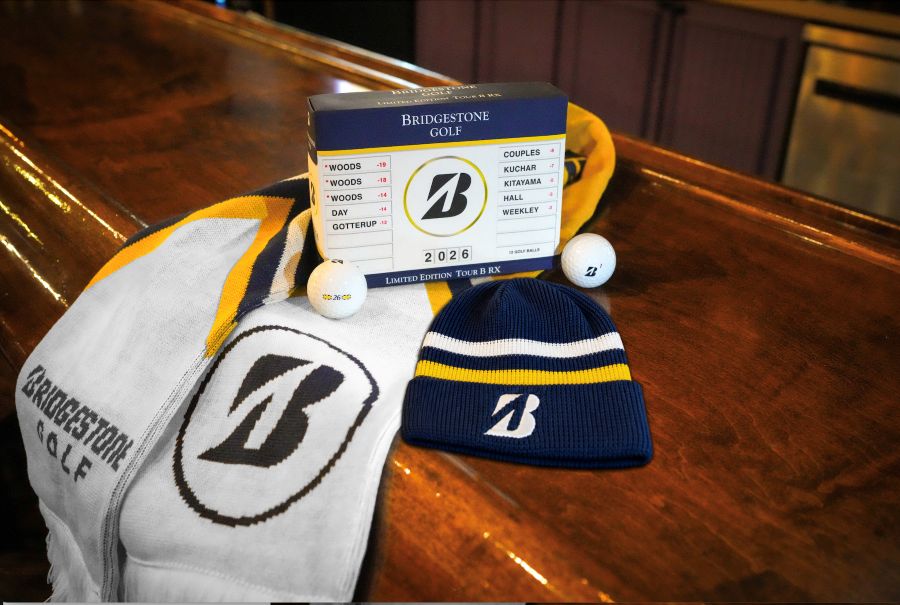
The $99.99 kit, launching July 14 exclusively on bridgestonegolf.com, includes a dozen TOUR B RX balls with a leaderboard-inspired design, a Team Bridgestone beanie, a soccer-style scarf, and collector packaging. The visual language borrows from the yellow leaderboards at Royal Portrush and the wool-and-weather aesthetic of links golf. The R&A is not mentioned once, because Bridgestone is not an official patron and cannot license the marks. This is ambush marketing in the tradition Nike perfected in the 1990s, dressed up as a heritage tribute.
The more relevant context is what Bridgestone is doing with the TOUR B RX itself. The 2026 line introduces what the brand calls VeloSurge, a denser mantle construction pitched as pushing ball MOI to new territory. Ball MOI is a real engineering variable, most publicly discussed when Titleist rebuilt the Pro V1x around a higher-inertia core in 2019, but it is also a claim that resists independent verification in the way driver MOI numbers do not. Robot testing can measure ball speed and spin. Measuring MOI in a 1.68-inch sphere requires equipment most reviewers do not own. The claim will live or die on launch monitor data, not on the marketing sheet.
Fred Couples putting a ball in play matters less than it used to, but the tour roster still carries weight: Tiger Woods, Jason Day, Kurt Kitayama, Chris Gotterup, Harry Hall. That is a deeper stable than Bridgestone had in 2015, when the brand was still trying to convert Matt Kuchar's endorsement into meaningful shelf pull. What the brand has not done is convert tour presence into US market share against Titleist and TaylorMade, and a June ranking drop of 18 percent inside DORMIED's index reflects the broader challenge. Capsule drops sold direct do not fix that. They monetize the existing fan base at higher margin.
What the Leaderboard kit does accomplish is instructive. It creates a reason for a Bridgestone loyalist to buy a dozen balls at $99.99 that would otherwise sell for $44.99, bundled with soft goods that cost the brand a fraction of the retail delta. It generates content windows around a major the brand has no official relationship with. And it tests whether Bridgestone's direct-to-consumer channel can move limited SKUs the way Vessel and Malbon have proven the golf lifestyle buyer will accept. The scarf is not an accident. It is a signal that Bridgestone is watching how the category has changed.
The question for the back half of 2026 is whether Bridgestone can turn a ball-fitting operation, four million fittings and counting, into the kind of brand affinity that sells scarves. Titleist does not need to sell scarves. Bridgestone, ranked outside the global top 60 and slipping, needs every adjacent revenue stream it can build while the TOUR B lineup finds its audience. The Leaderboard kit is a small test of a larger thesis. Watch what drops next.