The laser rangefinder is the most easily copied product category in golf. The time-of-flight sensor module at the center of a $500 unit and a $99 unit comes off the same kind of supply chain, and anyone with a purchase order and a logo can be in the business by spring. Every brand that enters on price eventually has to find something that cannot be undercut. Usually it tries software. Sometimes, first, it buys television.
What Did Blue Tees Sponsor in the Big Break Qualifier?
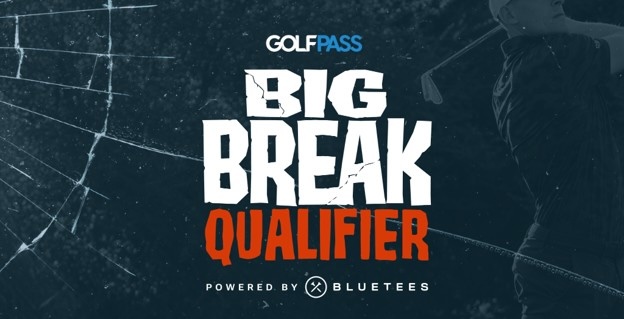
Blue Tees Golf sponsored the first-ever Big Break Qualifier, which premiered August 7 on GolfPass and hits Golf Channel on Monday, August 24 at 7 p.m. ET. Three golfers, New England's Fletcher Babcock, California's Murphy Scott, and Nick Bienz, a Golf Galaxy associate from Indiana, competed for the twelfth and final spot on Big Break x Good Good presented by Golf Galaxy, which premieres August 25 and runs Tuesdays through October 27. Blue Tees supplied performance data and context around the competitors. The winner of the full season earns an exemption into the PGA Tour's Good Good Championship in November 2026.
Big Break debuted in 2003 as cheap original programming for a network that needed hours and a pipeline for players who needed exemptions. The revival is a different animal. It is co-branded with a YouTube golf company, presented by a big-box retailer, and one of the three qualifier contestants works for that retailer. A field that includes Good Good's Matt Meneghetti and Sean Walsh, long driver Josh Jackson, Kipp Popert and former PGA Tour caddie Asaeli Batibasaga is not a Q-School substitute. It is a content property with a Tour start attached to the back of it, and the sponsor inventory is priced accordingly.
Can Blue Tees Golf Move From Rangefinders to Software?
The more interesting line in the announcement is the phrase Blue Tees keeps repeating: a connected ecosystem of technology and software. That is a brand telling the market it does not want to be judged on hardware margin anymore. The precedent is not encouraging. Arccos and Shot Scope both learned that selling a sensor is a transaction and selling a subscription is a relationship, and that golfers churn out of the second one at rates that make the first one look easy. Garmin got there from the other direction, arriving in golf with two decades of GPS software behind it, which is why its Approach line can charge Bushnell money without a Bushnell heritage. Blue Tees is attempting the reverse sequence, and nobody has run it cleanly yet.
A sponsorship credit on a GolfPass special is a rational way to buy the one asset Amazon search cannot deliver: a story about the brand rather than a price comparison against three competitors on the same results page. It is also cheap relative to a tour staff deal, and the audience for a Big Break reboot skews exactly toward the golfer who will spend $250 on a rangefinder but not $600. That matters more than usual right now, with Blue Tees sitting 49th of 215 in the DORMIED Index and down 18.2 percent month over month. Visibility purchased is not visibility earned, but it is visibility.
How Will the Blue Tees Big Break Bet Be Judged?
The test is whether the software ever shows up. "Powered by" credits and on-screen shot data prove a brand can process numbers, not that it can sell a product built on them. If Blue Tees converts this into a shipped app with real retention, the Big Break placement will read as the opening move in a platform strategy. If the next announcement is another rangefinder in a new colorway, it reads as a media buy dressed up as an ecosystem. Good Good has quietly become the audition stage for brands that need relevance faster than product development allows. Blue Tees just took its turn on it.