
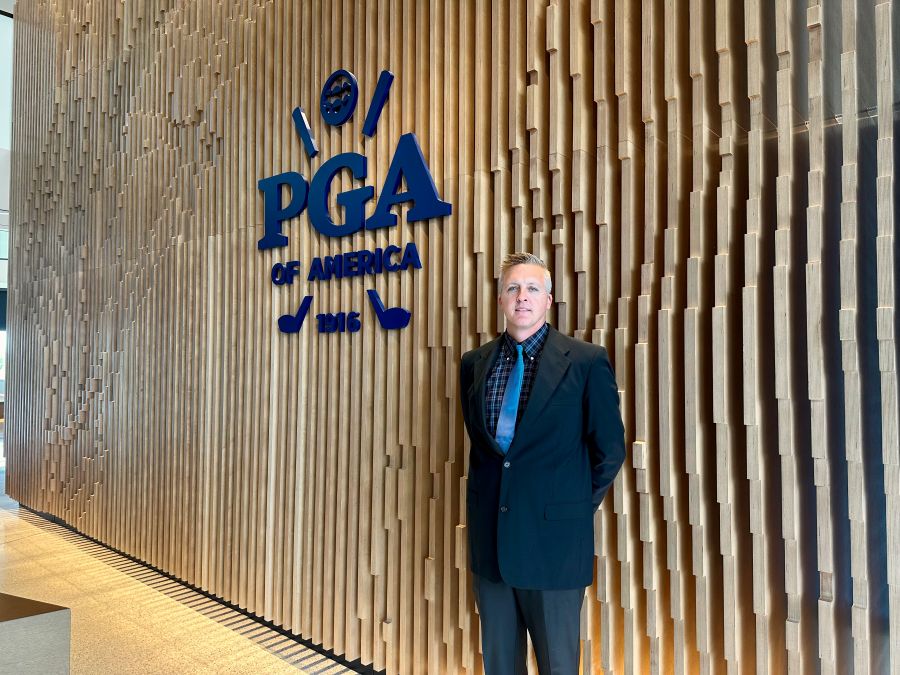
Travis Wilson, Director of Golf at Balsam Mountain Preserve in Sylva, N.C., has become the 484th PGA of America Member to earn Master Professional status since the program launched in 1969. That works out to roughly eight new Master Professionals per year across a membership base that now exceeds 30,000. The math is the story.
Why Is the PGA Master Professional Designation So Rare?
The PGA of America has spent the last decade defending the relevance of the club professional against a category that keeps getting squeezed. Top-tier instruction has fragmented to independent coaches with TrackMan bays and Instagram followings. Operations roles increasingly report to private equity owners who view golf as a hospitality asset. The Master Professional designation, restricted to members with 10-plus years of service and prior advanced certification, is one of the few credentials the Association still gates aggressively. Scarcity is the value proposition.
Wilson earned his designation in Golf Operations, one of three tracks alongside Executive Management and Teaching and Coaching. The Golf Operations path is the least visible of the three to the average golfer and the most relevant to anyone trying to understand how a private club actually functions. Balsam Mountain Preserve, a Arnold Palmer Signature course inside a 4,400-acre private community, is the kind of property where the Director of Golf role spans agronomy oversight, member experience, retail buying, and tournament operations. Wilson moved into that seat in May 2025 after nine years as Head Professional at the same club, a tenure length that has become unusual in an industry where the average club professional cycles every 3 to 5 years.
What Does PGA of America Certification Deliver?
The broader context worth noting: the PGA of America's certification programs are one of the few remaining structural advantages the Association holds over the LPGA's Teaching and Club Professional division and the various independent certification bodies that have emerged. When the PGA relocated its headquarters to Frisco in 2022 and built out the campus around education, the Master Professional pipeline was part of the justification. Producing eight per year does not move the needle on industry capacity. It moves the needle on the credential's value to the people who hold it.
For Wilson personally, the designation likely translates to mobility within the Carolinas PGA Section and beyond. Master Professionals in Golf Operations are the candidates clubs target when they want to upgrade from Head Professional to Director of Golf or from Director of Golf to General Manager. The credential travels. It also signals to ownership groups, particularly the ones acquiring private clubs as portfolio assets, that the person running their golf operation has cleared a bar most of their peers have not.
Where Is the Club Professional Industry Losing Ground?
The PGA of America will keep the Master Professional count low by design. That is the entire point of the program. What is worth watching is whether the Association expands the pathways into it, particularly for Teaching and Coaching professionals who are losing market share to independent instructors with no PGA affiliation at all. Wilson's recognition is earned and individual. The category it represents is institutional, and the institution has work to do.