
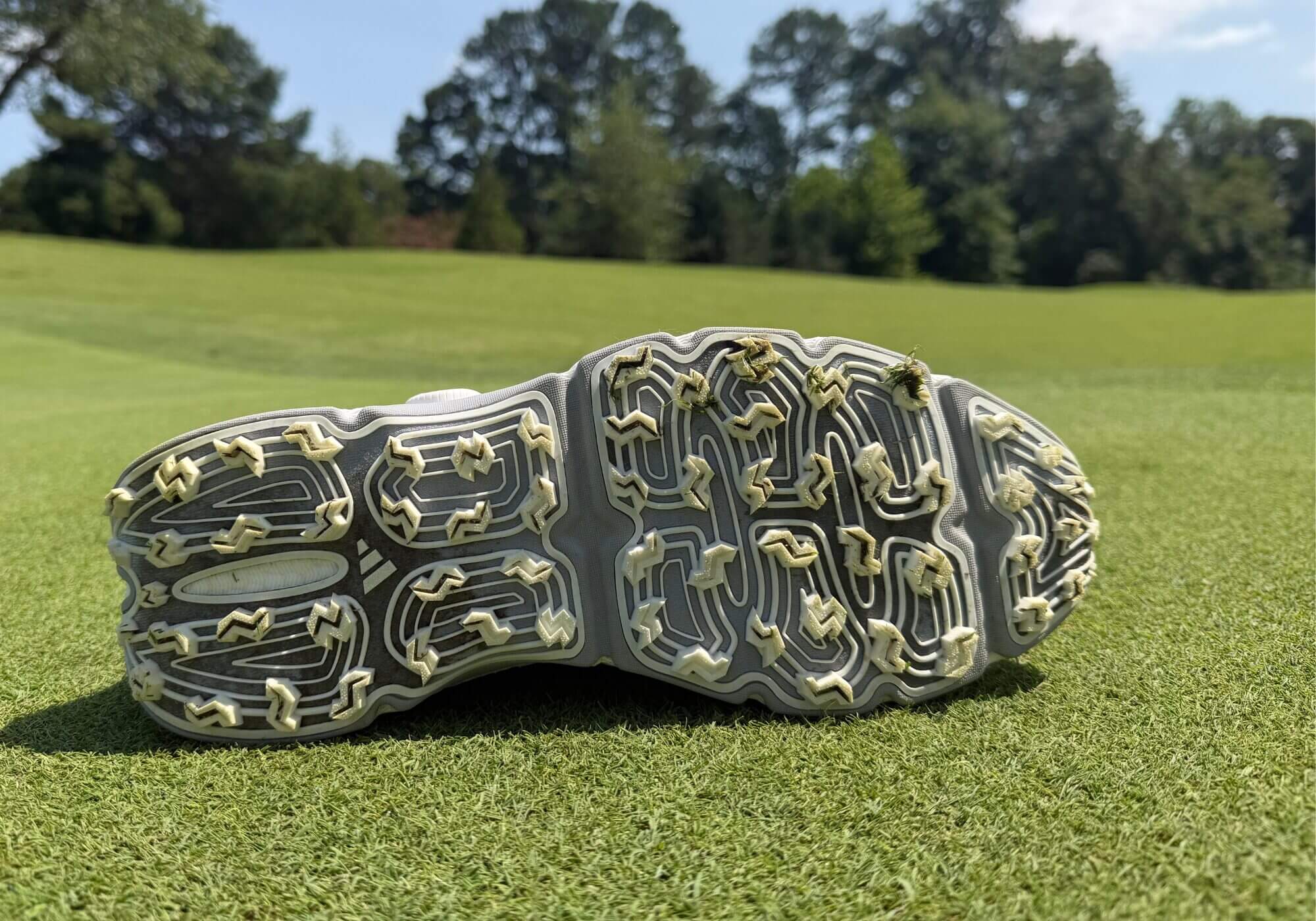
Taking BOOST out of the CODECHAOS was never a performance decision. It was a cost decision, and the golf internet caught it inside of a season.
What Changed in the adidas CODECHAOS 27?
Adidas has restored full-length BOOST to the CODECHAOS 27, launching with the BOA Fit System as the flagship configuration for the second consecutive model year. The traction pattern carries over largely unchanged, and the notable new piece is AXISLOCK, a full-length shank plate integrated into the heel cup to handle torsional load through the swing. MyGolfSpy's early verdict, from a writer who has been openly mourning the CODECHAOS 22 for three years, is that the line is finally back. That's the news. The more interesting part is why it needed to come back at all.
BOOST is expanded TPU, sourced through BASF, and it is heavier and materially more expensive to produce than the EVA and supercritical foams that have taken over the rest of the athletic footwear category. Adidas moved its performance running line toward Lightstrike years ago for exactly those reasons. The CODECHAOS 25 followed, quietly, with a different foam and a lighter spec sheet, and it landed with the enthusiasm of a store-brand cereal. Golfers did not read a press release explaining the midsole change. They put the shoe on and knew within nine holes. Value engineering used to be invisible in golf footwear. It isn't anymore.
Why Do Spikeless Golf Shoes Now Follow Sneaker Culture?
That's the structural shift worth sitting with. The golf shoe market now behaves like the running shoe market, which is to say it behaves like sneaker culture: annual model numbering, forum-level fluency about foam chemistry, and genuine nostalgia for a specific model year. There are golfers who will tell you unprompted that the 22 was the peak, the way a runner will tell you about the Vaporfly 4%. Once a customer base knows the difference between eTPU and a cheaper compression-molded EVA, the quiet downgrade stops being a margin lever and starts being a brand liability. Adidas absorbed a full product cycle of goodwill damage to learn that, which is an expensive lesson for a company that also sells the most recognizable spikeless silhouette in the sport.
The BOA decision is the other tell. Two years running as the flagship, and the placement matters: it sits about halfway back on the lateral side rather than on the instep, so tightening pulls the foot rearward into the heel cup instead of just clamping down on it. That's a real engineering choice, not a dial glued to a shoe. It's also a pricing choice. BOA has become golf footwear's carbon crown, the visible signal that separates the $180 model from the $220 model, and FootJoy, Ecco and adidas have all leaned on it to hold a premium tier while entry-level spikeless slides toward $130. Boa Technology has done a quietly excellent job making itself the default upcharge in a category that badly needed one.
Why Is Footwear Adidas Golf's Strongest Asset?
Where this leaves adidas Golf depends on how you read the rest of the house. The brand sits 25th globally on the DORMIED Index and dropped more than 18 percent month over month, which is what happens when apparel visibility softens and there's no major footwear launch holding the floor. Footwear is the strongest asset adidas has in golf right now. It's the thing that shows up in WITB-adjacent content, the thing that tour caddies and range rats actually notice, and the thing that competes credibly against a FootJoy business built on trust rather than hype. Undercutting that asset to save a few dollars per pair on foam was the kind of decision that looks fine in a spreadsheet and terrible in a review thread.
The CODECHAOS 27 reads like a brand buying back credibility it never should have spent. It'll work, because the shoe is good and because golfers are forgiving when the fix is obvious. The thing to watch is the 29. If BOOST survives another cycle without a quiet substitution, adidas has actually learned something. If it doesn't, the line becomes a cautionary tale about what happens when your customers get better at reading spec sheets than your product managers expected.