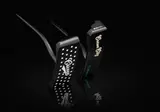

Most equipment brands build their calendar around retail sell-in windows and a January launch cycle. Bettinardi builds part of its year around a single night in a suburb of Chicago where the guest list matters more than the product page. The 17th Annual Social ran Friday at Studio B in Oak Brook, and the format has not meaningfully changed since it started: unreleased putters, one-off headcovers, irons, wedges and accessories, shown first to the people who actually buy them.
The pieces on display were described as some of the rarest builds the company has produced, with collectors traveling domestically and internationally to see them before anyone else. There was no broad media push, no embargo timed to a product launch, and no price list attached to the announcement. For a brand that sits in the top fifty globally on the DORMIED Index without a tour-wide staff presence or a mass-retail footprint, that omission is not an oversight. It is the mechanism.
Why Does Bettinardi Build Its Calendar Around Collectors?
Putters are the one club category where the secondary market can be worth more than the primary one. Scotty Cameron understood this first and industrialized it: the Gallery in Encinitas, Circle T releases, and a resale ecosystem where a headcover can carry a three-figure premium. Bettinardi arrived at the same conclusion from a different direction, and Studio B functions as its version of that engine. A limited build shown to 200 committed buyers in a room generates more durable brand equity per unit than 2,000 units sitting in a big-box putter rack under fluorescent light.
Seventeen years is the part worth sitting with. The Social predates the current hype-drop economy by roughly a decade. When Bettinardi started this, sneaker-style scarcity marketing had not yet colonized golf, and the idea that a mid-size OEM could run a meaningful portion of its brand strategy through an annual invite-only evening would have read as a hobbyist exercise. It now looks like the template that Sub 70, L.A.B. and every small-batch milling shop with an Instagram account is working from, with less runway.
How Did the Scotty Cameron Split Shape Bettinardi's Milling Business?
The history matters here because it explains the manufacturing posture. Bettinardi was the milling house behind Titleist-era Scotty Cameron putters before the two parted ways in the early 2000s, and the company came out of that relationship with something most golf brands never acquire: an owned, domestic CNC operation and a founder who understands tooling as well as marketing. Robert Bettinardi's background is machining, not consumer packaged goods. That is why the one-off builds shown at events like this are commercially viable at all. A brand that outsources milling to a contract partner in Asia cannot produce a run of twelve putters profitably. Bettinardi can walk down the hall.
That vertical control is the quiet argument the Social makes every year. The scarcity is real rather than manufactured, because the shop genuinely produces in small batches. Compare that to the limited-edition releases OEMs push out of high-volume casting lines, where the limit is a decision in a marketing meeting rather than a constraint of the process.
What Does Studio B Oak Brook Do That Retail Cannot?
The fitting-studio-as-brand-cathedral model has been tried widely and executed well rarely. PXG's 2018 buildout of company-owned fitting locations was premised on controlling the experience, and the company has spent the years since quietly recalibrating toward third-party retail. Studio B works because it is not primarily a transaction space. It is a room where the customer becomes a participant, and where the company can read demand signals off the faces in front of it before committing tooling time.
The risk in this model is the same one every collector-driven brand eventually meets: the audience that shows up every year gets older, and scarcity loses its charge once the room stops growing. Watch whether the 18th Social introduces new faces or the same ones. Bettinardi's flat trend line over the past month suggests a brand operating at steady state, which is precisely what a business built on repeat collectors looks like until it isn't.