Adam covers apparel, accessories, and golf culture for DORMIED. He has been tracking brand drops and collaborations since 2018.
Golf headcover resale value is driven by four things: scarcity, brand reputation, tour-only access, and collector demand. A small group of brands, Scotty Cameron above all, then Swag Golf, Dormie Workshop, and the occasional luxury collaboration, have built secondary markets where rare headcovers regularly sell for many multiples of retail. A leather putter cover that left a gallery store for under $100 can resell for four figures a year later. That is not a fluke, and it is not random. It is a market with rules.
This is a guide to those rules, built on real sold-listing data from eBay and StockX spanning the last few months. If you are trying to work out whether a cover you own holds value, whether a release is worth chasing, or whether the whole resale market makes any sense, this should cover it.
Why Do Some Golf Headcovers Have High Resale Value?
Headcovers sit in an unusual spot in golf. They are functional (they protect a clubhead), branded (every cover carries a maker's mark), giftable (many people's first nice cover was a wedding or club-championship gift), and visible (a tour player's bag is a televised display rack). Most golf accessories miss at least two of those. Headcovers hit all four.
That combination is why a market exists. The combination of visibility and scarcity is why specific covers reach four figures. When Scotty Cameron releases a tour-only cover at a national open and makes fewer than fifty, the supply is so thin that any real demand runs straight into a wall. Buyers at that level are not paying for leather. They are paying for proof that the object exists in a fixed quantity and that they own one of them. Every factor below is a variation on that single mechanic.
What Drives Golf Headcover Resale Value?
1. Brand reputation
Most headcover brands have no secondary market at all. The ones that sustain real resale value are a short list: Scotty Cameron, Swag Golf, Dormie Workshop, and a rotating cast of luxury and streetwear names that collaborate into the category. Scotty Cameron sits at the top because the brand has produced limited and tour-only covers for over two decades and built an institutional collector base that trades constantly.
Brand reputation matters partly because of liquidity. A rare Swag cover will sell. A rare Scotty Cameron cover sells within a day, sometimes within an hour of listing if it is anywhere near comp.
2. Limited releases
The single biggest predictor of resale strength is run size. Scotty Cameron's gallery releases drop in small batches on a schedule the brand does not announce in advance, typically a few hundred units. Tour-only covers handed out at events run far smaller, often under fifty. When a brand sets a limit and holds it, no surprise retail re-issue six months later, resale value holds or climbs. When a "limited" cover quietly reappears through another channel, the market punishes it.
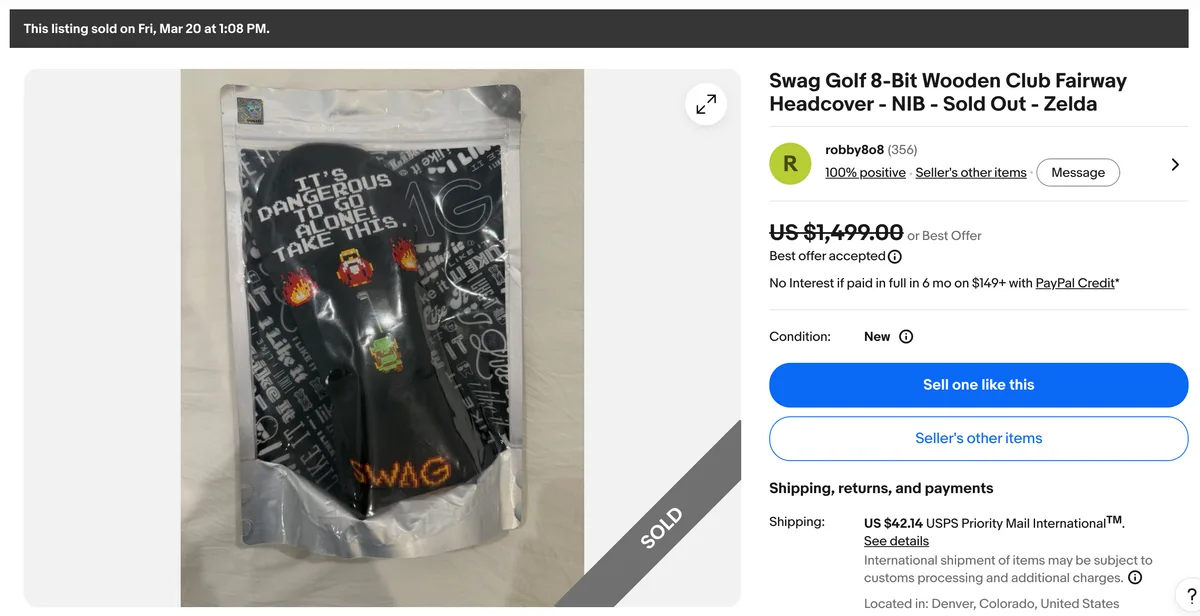
Swag Golf is the clearest example of limited drops sustaining value outside Scotty Cameron. A Swag 8-bit Zelda-themed fairway cover, new in bag, sold for $1,499 in March 2026. Swag's whole model is small, themed, numbered runs, and the resale market rewards the discipline.
3. Tour-only availability
A cover never sold at retail anywhere commands the largest premium. A Scotty Cameron 2025 Royal Portrush "Mutton Chops" mid-round mallet cover, a tour and event release tied to the Open Championship venue, sold for roughly US$2,868 (AU$4,000) in March 2026. The premium for tour-only is consistent: several multiples of the comparable retail cover from the same period, scaling with how few surfaced in the wild.
4. Collaborations
Collaborations split into two types, and they behave differently.
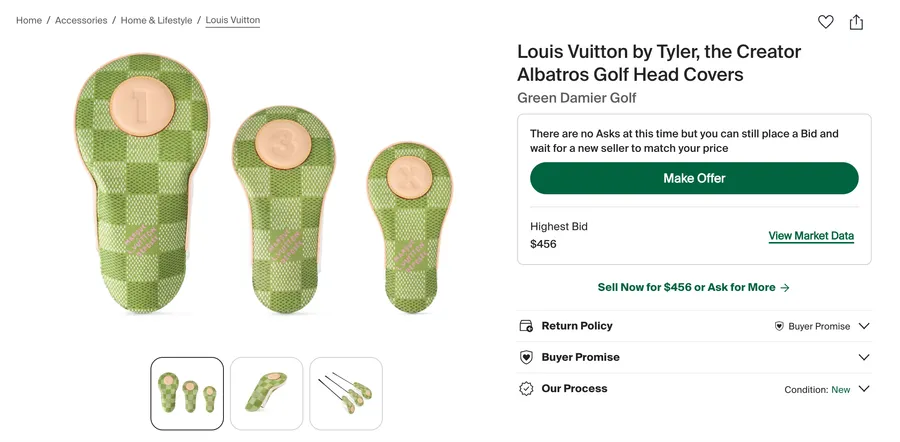
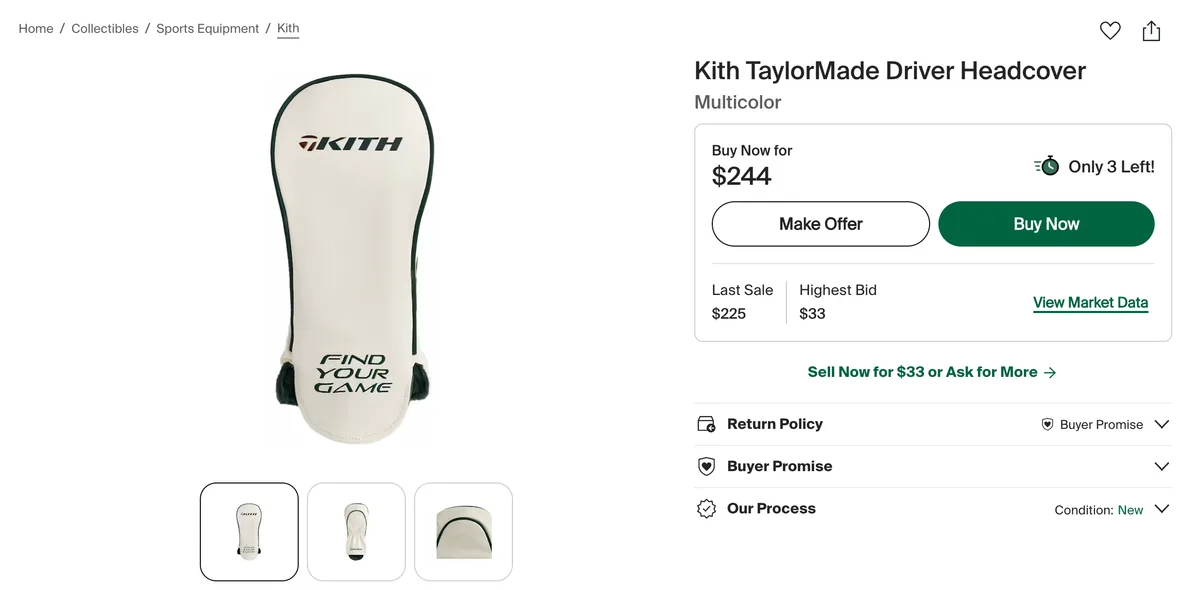
Luxury and streetwear collaborations can reach the highest prices of all. A Louis Vuitton x Tyler, the Creator "Albatros" golf headcover set in green Damier carried a standing bid of $456 on StockX with no sellers willing to match, meaning the real clearing price sits well above that. The Kith x TaylorMade driver cover trades around $225 to $244 on StockX. These pull in collectors from outside golf, which widens the demand pool, but the brands rarely do tiny runs, so supply caps the ceiling and prices tend to peak fast then drift.
Within-golf collaborations (an equipment maker working with an apparel brand) hold value more steadily because the buyers are golfers first and resellers second.
5. Condition
Headcovers are leather, and leather discolors, scuffs, and creases. New-in-bag covers can be worth roughly double a lightly used version of the same model. Tour-used covers, ones actually carried by a touring pro, can be worth more than new-in-bag if the provenance is verifiable, but verification is the whole problem: there is no centralized authentication for headcovers the way there is for sneakers, so a tour-used claim leans on photographic evidence or seller reputation. For most collectors, new or near-new is the safe zone, and anything past light use drops fast.
6. Collector demand
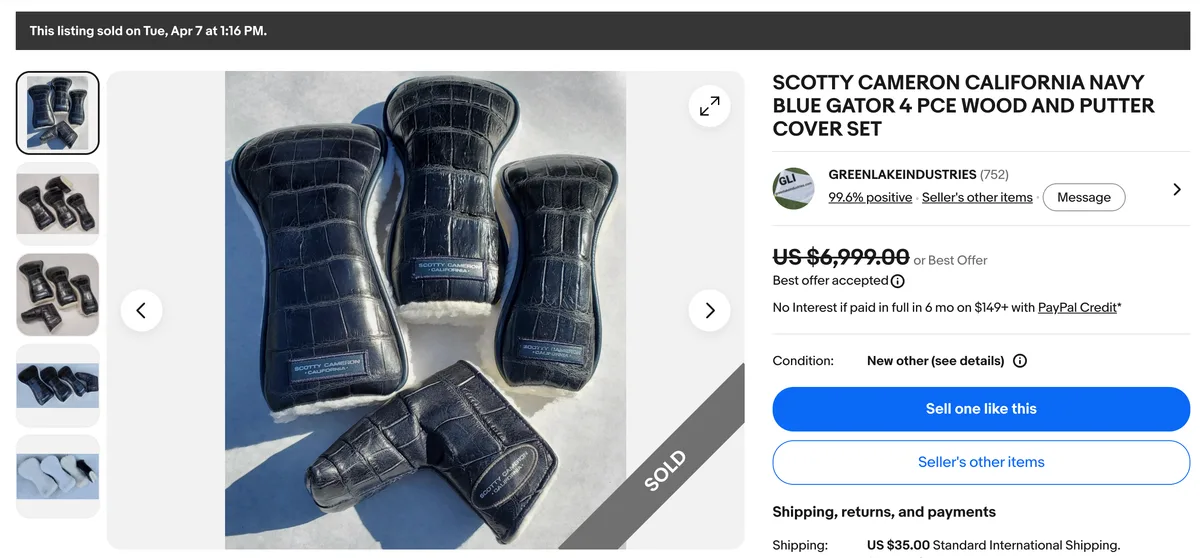
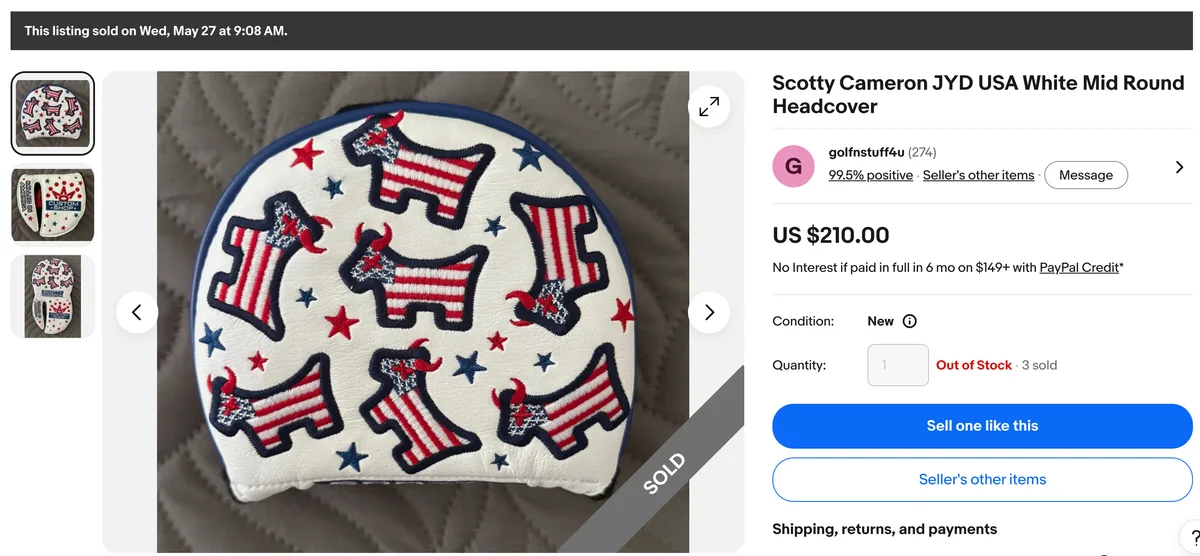
Some designs simply work. The Scotty Cameron Junkyard Dog line has run for years and every variant holds value. Pattern-based designs, dancing flags, dancing crawfish, the dogs, consistently outperform single-icon covers because they read as collectible objects rather than functional ones. Exotic-material covers occupy their own tier: a Scotty Cameron Circle T snakeskin blade cover sold for $2,250 in April 2026, and a Scotty Cameron California navy gator four-piece wood-and-putter set cleared $6,999 the same month. Exotic leathers combine scarcity, craft, and obvious visual signal, and the market pays for all three.
7. Storytelling
The covers that reach the highest prices have stories attached. The crawfish covers belong to the Zurich Classic in New Orleans. The flags covers drop at national opens. Even a Miura Ninja driver cover, a cult object from a brand worshipped by forged-iron obsessives, sold for $1,500 in March 2026 largely on the strength of what it signals about the owner. A cover without a story competes on design alone. A cover with one competes on both, and the storied ones almost always win.
What Do Golf Headcovers Actually Sell For?
These are actual sold prices from eBay and StockX over roughly the last two months, which is the point: this is a standing market, not a one-day spike.
| Cover | Type | Sold Price | Date |
|---|---|---|---|
| Scotty Cameron California Navy Gator 4-Piece Set | Exotic leather, full set | US$6,999 | April 2026 |
| Scotty Cameron 2025 Royal Portrush Mutton Chops | Tour/event-only | ~US$2,868 (AU$4,000) | March 2026 |
| Scotty Cameron Circle T Snakeskin Blade | Tour-only, exotic leather | US$2,250 | April 2026 |
| Scotty Cameron Tour Only Australian Dancing Flags | Tour-only, pattern | ~US$2,151 (AU$3,000) | May 2026 |
| Original Miura Ninja Driver Cover | Cult/niche brand | US$1,500 | March 2026 |
| Swag Golf 8-Bit Zelda Fairway (NIB) | Limited themed drop | US$1,499 | March 2026 |
| Louis Vuitton x Tyler the Creator Albatros Set | Luxury collab | $456+ (standing bid) | 2026 |
| Kith x TaylorMade Driver | Streetwear collab | ~US$225-244 | 2026 |

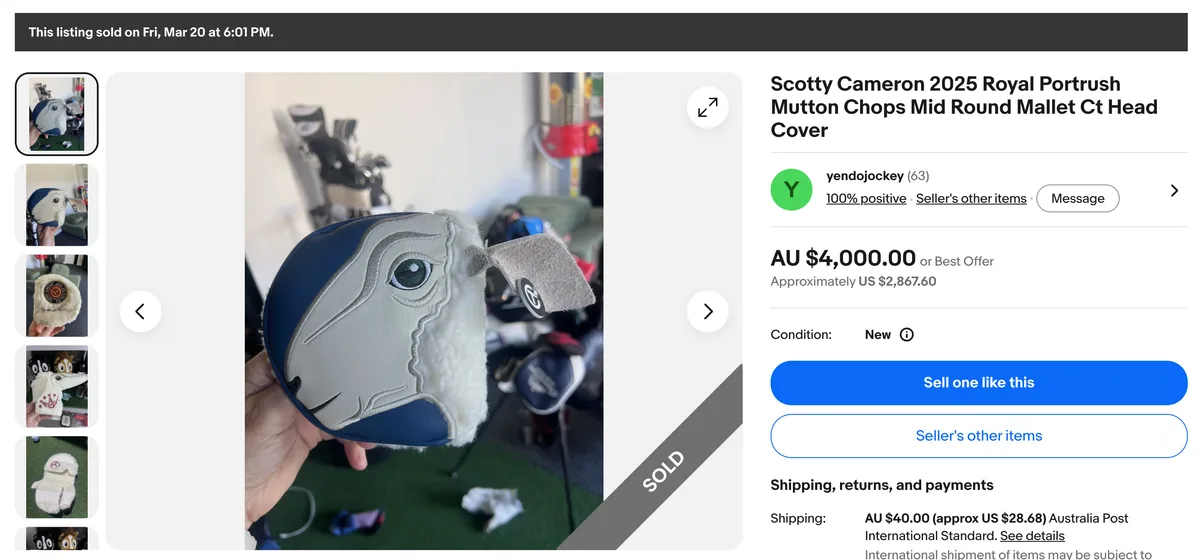
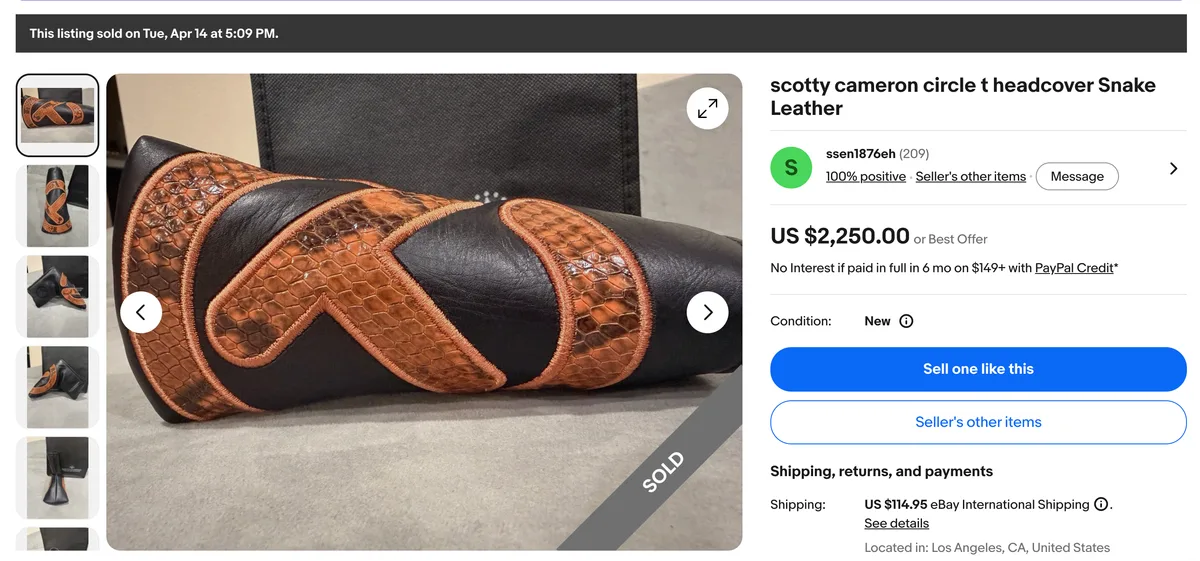
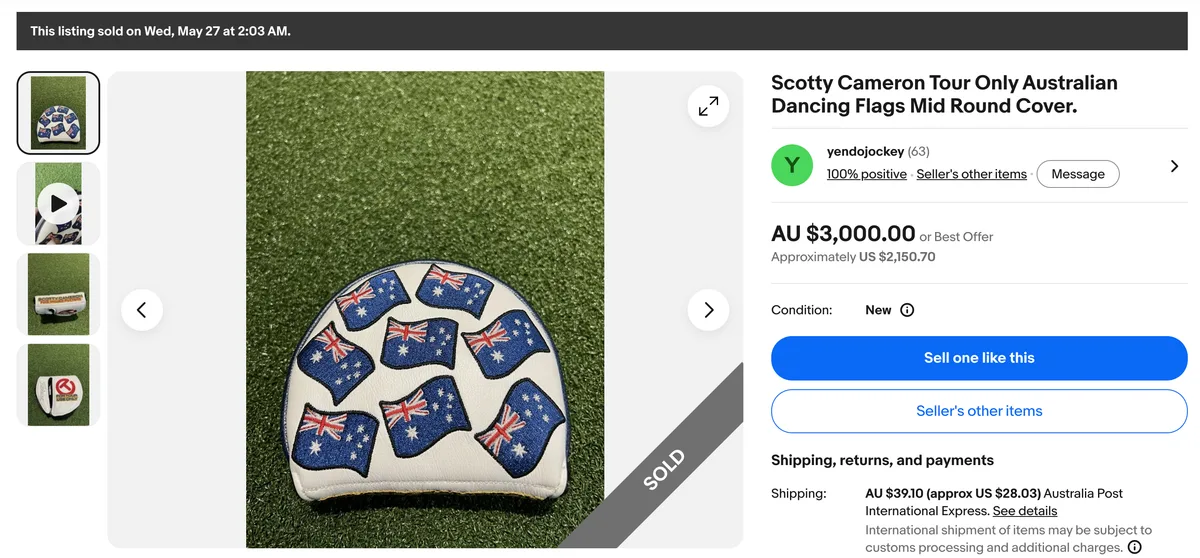
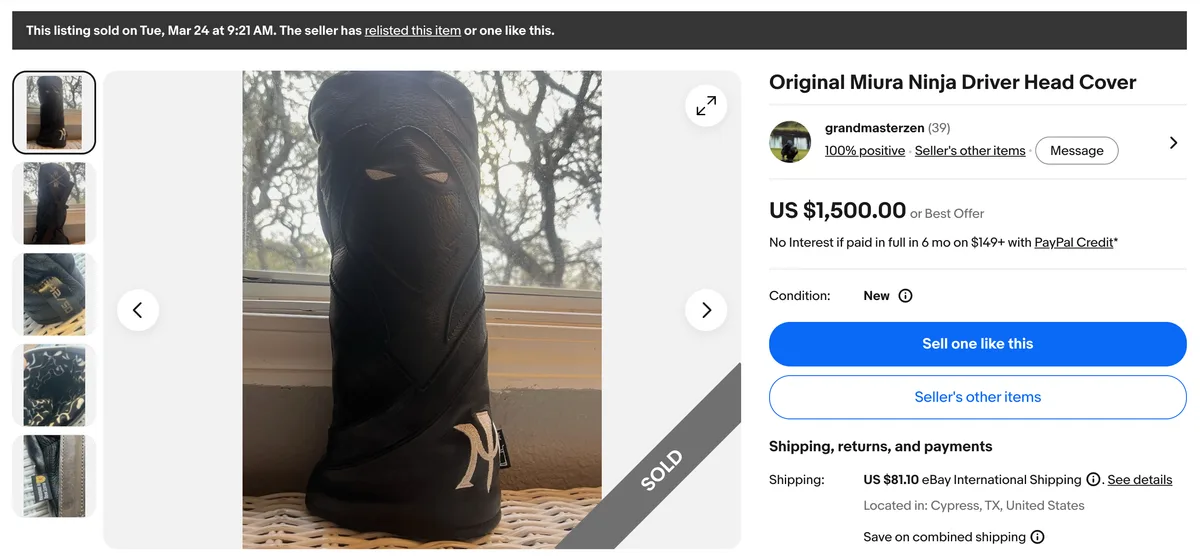
Read top to bottom and the hierarchy is clear. Exotic-material and tour-only Scotty Cameron covers occupy the four-figure-and-up tier. Limited themed drops from Swag and cult-brand pieces like the Miura Ninja cluster around $1,500. Luxury and streetwear collabs land lower, in the hundreds, because supply is wider even when the names are bigger. Every factor compounds.
Are Golf Headcovers a Good Investment?
Honestly, no, not as a financial play. The people moving covers at these prices are collectors, not arbitrageurs. They buy because they want the object, and the resale value is what lets the hobby fund itself rather than a way to make money. The time spent acquiring, photographing, listing, packing, and shipping eats the spread for anyone treating it as side income.
What headcovers are genuinely good at is holding value. A Scotty Cameron tour-only cover from a few years ago typically trades well above what it cost new today, which is a far better curve than the driver or putter it was protecting. If you are going to spend on golf accessories, headcovers are the category that holds up best.
Where Do Golf Headcovers Resell?
eBay is the dominant venue for tour-only and rare Scotty Cameron covers. Sold listings are public, so price discovery is reliable, and international sales are common.
StockX handles the streetwear and luxury collaborations (Kith, Louis Vuitton, the more retail-distributed branded covers). Authentication is built in, which matters for that buyer pool, though the rarest tour-only material rarely lists there.
Instagram and private collector groups handle the top end, including most tour-used covers and the rarest gallery exclusives, usually at a premium to eBay comps because the buyers are vetted.
If you are new to this, the honest starting point is eBay sold listings. Search the cover, filter to sold, and read the prices actually realized over the last 30 days. Active buy-it-now prices are aspirational. Sold prices are the market.
A personal aside: the one cover I have actively tried to pry loose from someone is the Kith x TaylorMade driver cover that golf media personality Dan Rapaport keeps talking up. He has made it clear it is not leaving his bag, which, in the logic of this entire market, is exactly why it is worth chasing. The covers people refuse to sell are the ones worth owning.
Which Golf Headcovers Could Appreciate Next?
The covers most likely to appreciate over the next year are the ones dropping right now at tour events that get no coverage. The Australian Dancing Flags cover that sold for around $2,151 was distributed at the Australian Open in late 2024; it took roughly eighteen months for the resale market to price it in. Today's quiet tour-only releases will follow the same curve.
For retail buyers without tour access, the watchlist is short: Scotty Cameron's gallery monthly drops, Swag Golf's numbered themed runs, and any collaboration between a luxury or streetwear brand and an equipment maker. Those categories produce the most reliable appreciation in a market otherwise built on access most golfers will never have.
The covers that hold value are not the ones you can walk into a pro shop and buy. They never were. The headcover market is small, specific, and built on scarcity, and understanding that is the whole game.
What Do Collectors Ask About Golf Headcover Resale?
Why are Scotty Cameron headcovers expensive?
Scotty Cameron headcovers carry a premium because the brand produces many of its covers in limited or tour-only runs, has a two-decade collecting history, and commands the most liquid secondary market in golf. Rare and exotic-material examples regularly sell for four figures, while tour-only releases that never reached retail can sell for several multiples of a comparable gallery cover.
What golf headcovers hold their value?
Tour-only and limited-run covers from Scotty Cameron hold value best, followed by numbered themed drops from Swag Golf, cult pieces from brands like Miura, and luxury or streetwear collaborations. Standard retail covers from any brand generally do not appreciate.
Are golf headcovers collectible?
Yes. A genuine collector market exists, concentrated around Scotty Cameron and a handful of other brands, where covers are bought, sold, and traded as collectible objects rather than functional accessories. Pattern designs, exotic leathers, and event-specific releases are the most sought after.
What is a tour-only golf headcover?
A tour-only headcover is a cover distributed to touring professionals and a small circle of insiders at events, never offered at retail. Because supply is tiny, often under fifty units, tour-only covers command the largest resale premiums in the market.
Where can you sell golf headcovers?
eBay is the main venue for rare and tour-only covers, with public sold listings that make pricing transparent. StockX handles streetwear and luxury collaborations with built-in authentication. The highest-end and tour-used pieces often trade privately through Instagram and collector groups.
Do used golf headcovers lose value?
Most do. Standard branded covers lose value with use like any accessory. The exception is rare and tour-only covers, where a verifiable tour-used provenance can actually increase value, though new-in-bag condition is the safe standard for everything else.
What is the rarest Scotty Cameron headcover?
The rarest are one-off and exotic-material tour pieces, alligator and snakeskin covers, prototype gallery releases, and event-specific tour-only covers made in very small numbers. These are the examples that reach the top of the four-figure-and-up range.
More on golf brand momentum and culture at the DORMIED Index. For the brands shaping how the modern bag looks, see our coverage of Scotty Cameron, Swag Golf, Dormie Workshop, Miura, TaylorMade, and Malbon Golf.
Related reading: What Is Random Golf Club?