Golf bag companies do not usually make documentaries. Sun Mountain just commissioned seven of them.
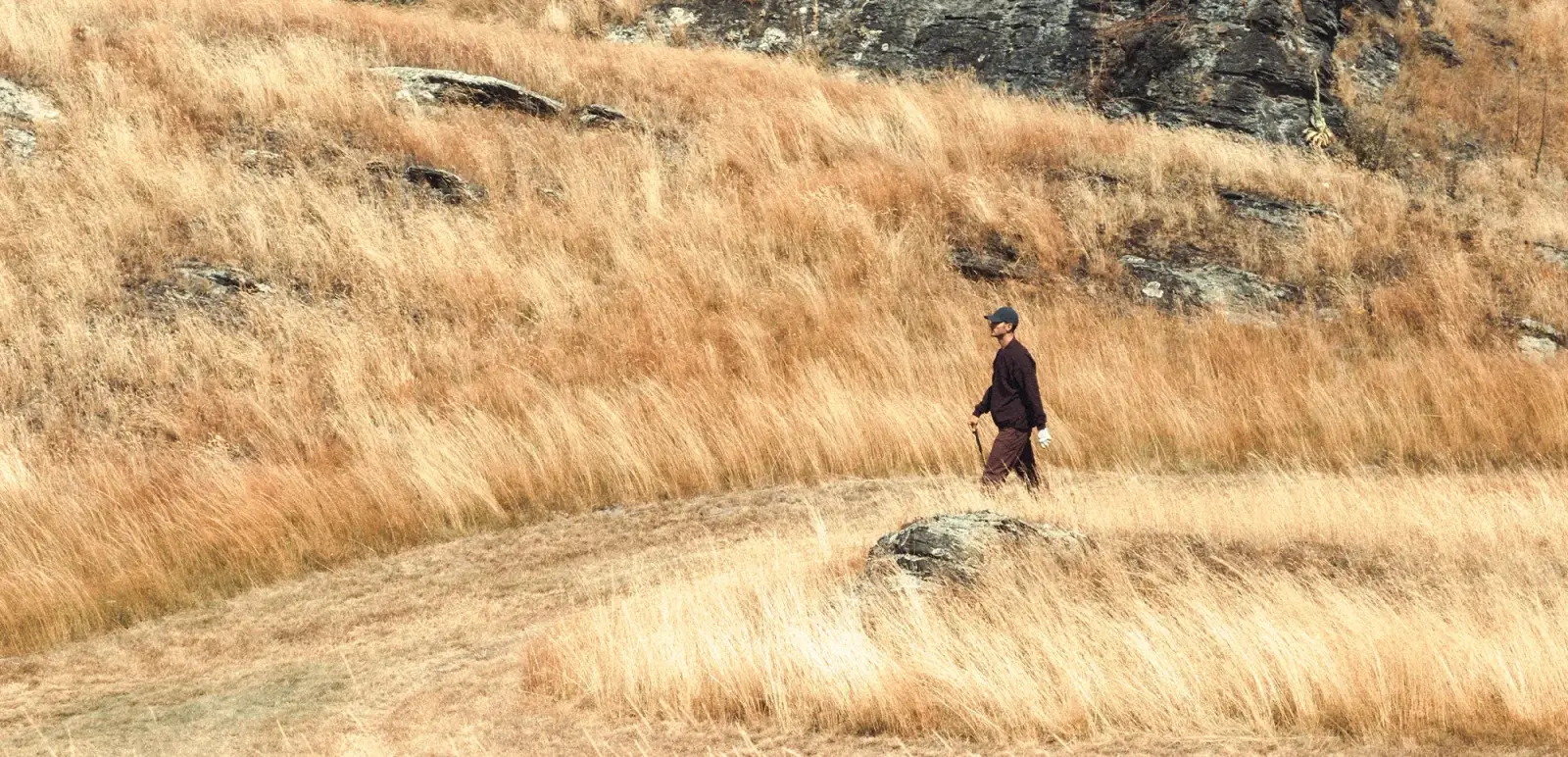
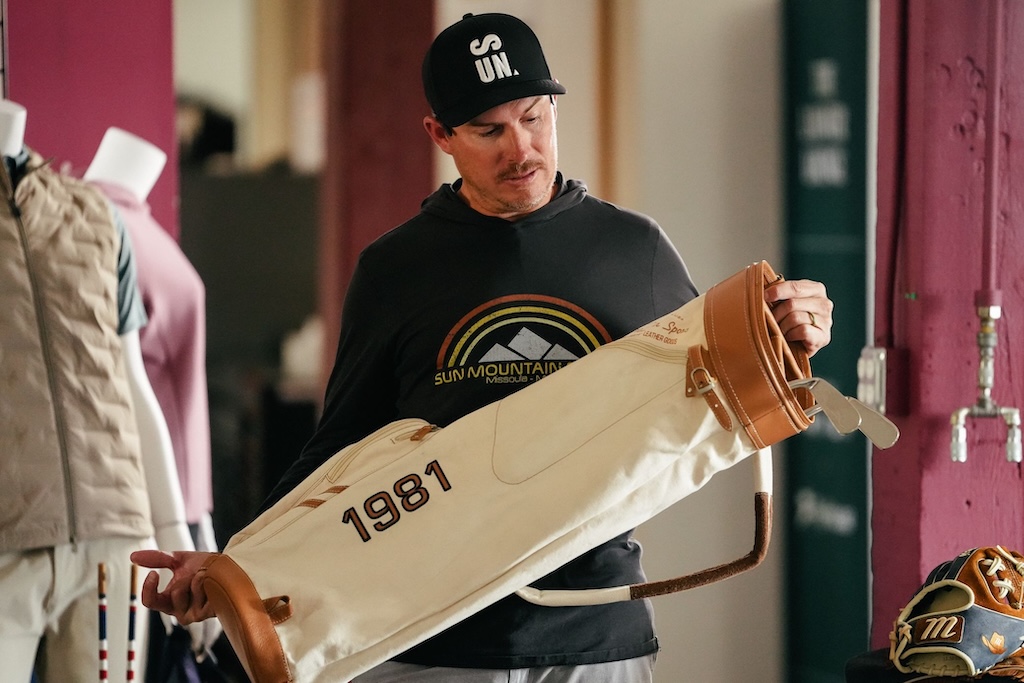
On August 5, the Missoula company premieres "Golf State of Mind: Inside Sun Mountain," a six-episode short-form series capped by a full film on September 16, with Joel Dahmen as the on-camera guide and DP World Tour winner Ryggs Johnston, a Libby, Montana native, along for the week. Golf Space Collective and Golden Film Co. shot it at and around the company's Montana headquarters in June. Episodes roll out weekly across Sun Mountain's own channels, which is the tell: this is owned media, not a media buy. Nobody is licensing this to a network.
Why Is Marketing So Hard for Golf Bag Brands?
The reason it exists is structural. Bags and accessories is the hardest category in golf to build a narrative around, because the purchase cycle is glacial and the product is invisible on broadcast except as a logo behind a player's left shoulder. There is no launch monitor data to argue about, no forum thread comparing dispersion. Vessel solved that problem with design language and a price point that signaled taste. Jones solved it with heritage and a canvas silhouette that looked good in a photograph. Sun Mountain, which has spent forty years being the most technically credible name in the category, has never had a comparable cultural handle. A docuseries is an attempt to manufacture one.
What makes it defensible is the setting. Sun Mountain effectively invented the modern dual-strap stand bag, then watched every competitor on earth adopt the geometry without paying for the privilege. ClubGlider, with its retractable wheel legs, was the same story: a genuinely clever piece of engineering that got absorbed into the category baseline. The company's compensation for inventing the standard was becoming the standard. The one asset that cannot be copied is Missoula. Golf's supply chain runs through Vietnam, Cambodia and coastal China, and a brand with a Montana facility and forty years of institutional memory can put a camera inside a building that its competitors do not have. That is the actual product of this series, not Dahmen's charm.
Why Sign Joel Dahmen as a Brand Ambassador?
Dahmen is the right hire for a specific reason, and it isn't his win count. He is a "Full Swing" character, which in 2026 is a distinct asset class: recognized by people who do not follow leaderboards, cheap relative to his awareness, and available because he is not signing an eight-figure full-bag deal with an OEM. Bag brands operate in the most efficient corner of the tour endorsement market. The ask is a single piece of equipment and a travel bag, and the athlete keeps every other category open. Johnston, meanwhile, is the more interesting long play: an Australian Open winner in his second DP World Tour start, from a town of 2,700 people ninety minutes from the factory. If the Montana story is the brand's differentiator, he is the ambassador who proves it rather than narrates it.
The honest read on the timing is that Sun Mountain has been sitting still. Ranked 57th of 215 brands with a flat month-over-month trend line, the company holds the kind of position that reflects a business quietly doing fine and a brand nobody is talking about. Push carts and stand bags do not generate conversation. Content is the cheapest available lever, and Sun Mountain is pulling it with a production partner that understands golf-adjacent film rather than a general agency that would have made a factory tour look like a recruitment video.
What Would Make the Sun Mountain Series Work?
The test is whether episode six holds anyone who watched episode one, and whether the Dahmen Family Foundation product tie-in he alluded to arrives with a real drop behind it. A docuseries that ends without a purchasable object is a brand film. A docuseries that ends with a limited bag people actually want is a marketing engine that Sun Mountain can run every summer. The company has the factory, the tour presence and forty years of receipts. What it has never had is a reason for anyone under 35 to care. This is the first serious attempt to build one.