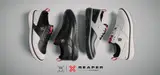
The spikeless revolution has a Shinnecock problem. The U.S. Open champion won wearing FootJoy shoes fitted with Softspikes ProStinger cleats, and 45 of the top 52 finishers made the same call.
Why Do Tour Pros Still Wear Replaceable Cleats?
That is not a marketing stat dressed up to look like one. That is a leaderboard reading the wind and the fescue and deciding tennis-style outsoles were not the move. Softspikes, manufactured by PrideSports out of Brentwood, has now been worn by the winner of 24 consecutive PGA Tour weeks and every men's and women's major contested in 2026, after sweeping all four men's majors in 2025. At some point a streak stops being a streak and starts being a category verdict.
The broader context is what makes this interesting. FootJoy, Adidas, Nike, and Puma have spent the better part of a decade pushing spikeless as the default. Retail floor space tilted that direction. The Pro SLX, the Codechaos, the Ignite Pwradapt Caged, every flagship release was building a future where the replaceable cleat looked like a relic from the persimmon era. Amateurs bought in. Tour pros, quietly, did not. When the test gets hard, when the rough is ankle-deep and the fairways tilt, the guys playing for the trophy are still threading ProStingers into their outsoles on Sunday morning.
How Do Spikeless vs Spiked Golf Shoes Differ?
The construction argument matters here. A replaceable cleat lets a player tune traction to conditions: longer, more aggressive teeth for wet links turf, shorter and flatter for firm Bermuda. A spikeless outsole is a fixed compromise. It looks cleaner walking into the clubhouse and travels better through airport security, which is exactly why it sells to the weekend player. The tour pro does not care about either. He cares about whether his trail foot slides an eighth of an inch through impact on a downhill lie in 18 mph crosswind. That is the entire ballgame, and Softspikes has been quietly winning it.
For FootJoy, which is sliding on the DORMIED Index this month after a soft May, the Shinnecock result is a reminder of where the brand's actual moat sits. Apparel is a knife fight. Spikeless is increasingly commoditized. But tour footwear with replaceable traction is a category FootJoy has owned for thirty years, and the press release coming out of Brentwood is essentially free co-marketing for the Pro SLX line. The same goes for the rest of the spike-compatible roster: G/Fore's MG4+, Ecco's Biom H4, the few remaining holdouts in a market that has been steadily de-spiking itself at retail.
Who Actually Buys Spiked FootJoy Shoes Now?
The interesting question is whether any of this trickles down. Most weekend players will keep buying spikeless because they want one pair of shoes that works for the round and the post-round beer. But the serious amateur, the guy who reads WITBs and replaces his grips every spring, is the customer who notices when 45 of the top 52 at a U.S. Open made the same choice. That customer is exactly who Softspikes is talking to with the line about replacing cleats every 15 rounds. It is a small market, but it is the one that drives pro shop reorders and influences the next guy in the foursome.
Watch the fall release calendar. If FootJoy and the rest of the spiked footwear holdouts lean into Shinnecock in their Q4 marketing, the spikeless narrative gets its first real pushback in years. The tour proof is there. The question is whether the brands have the conviction to actually use it.