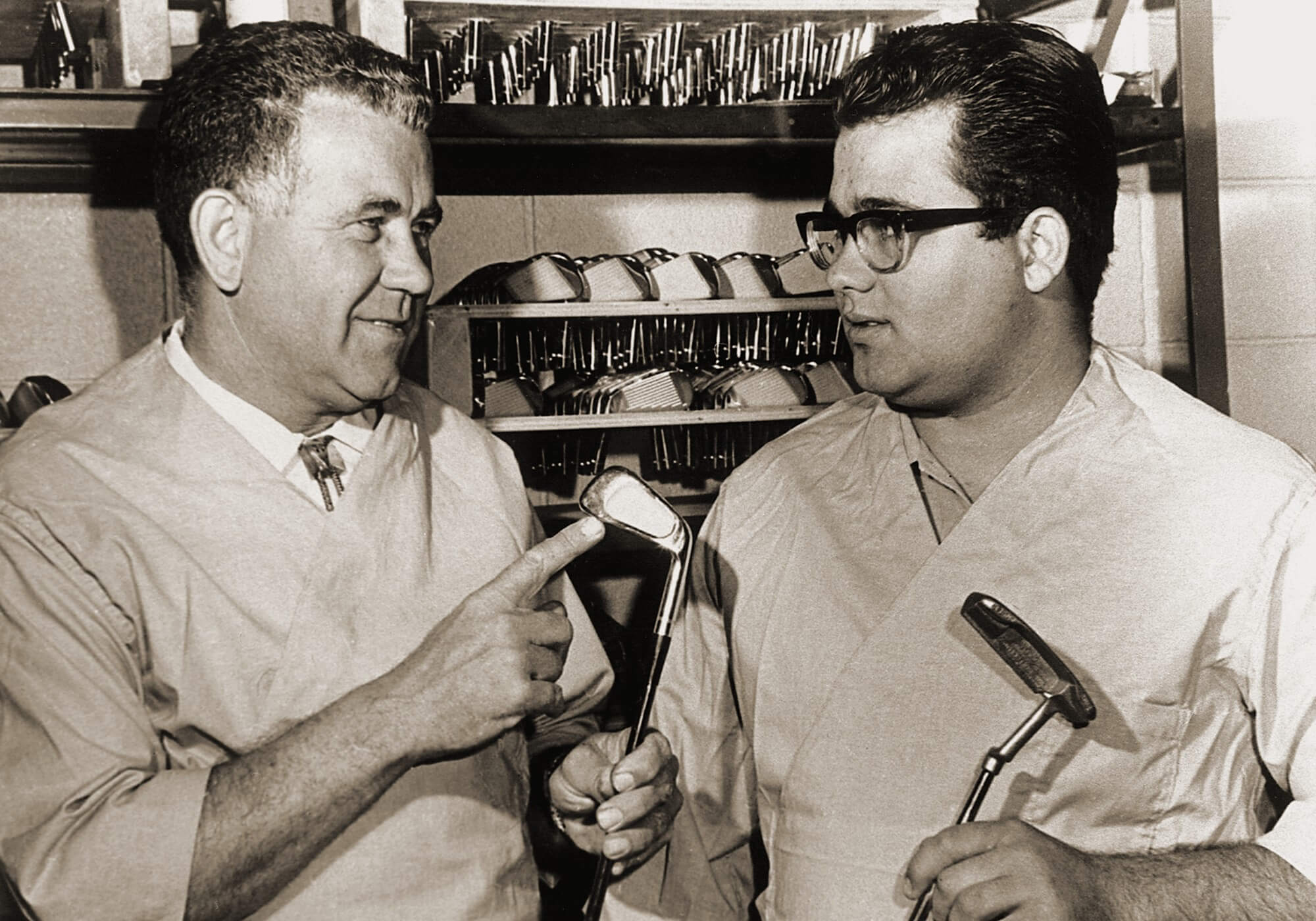
Roughly 30 percent of family businesses survive into the second generation. Twelve percent make it to the third. PING is now 66 years into the third Solheim running the company, with a fourth generation already working in Tour operations, golf sciences, and software engineering. That statistical outlier status is the actual story behind the recent MyGolfSpy sit-down with John A. and John K. Solheim.
How Did John K Solheim Take Over PING?
The interview walked through the mechanics of the 2017 transition from John A. to John K., the three-year Japan assignment that preceded it, and the deliberate contrast with the 1995 handoff from Karsten to John A., which by John A.'s own admission was abrupt and, quote, wasn't great for the business overall. That's a candid admission about a period that also happened to coincide with the PING Eye 2 grooves fight against the USGA and PGA Tour, which is the kind of existential regulatory battle that would have killed a publicly-traded competitor.
The structural point buried in the conversation is the one worth pulling out. Every major competitor PING sells against has, at some point in the last 15 years, taken outside capital. Callaway is public. TaylorMade has cycled through Adidas, KPS Capital, and now Centroid. Titleist parent Acushnet is public. Cobra sits inside Puma inside Artemis. Mizuno is public in Tokyo. PXG is Bob Parsons' private money but structured around eventual liquidity. PING is the only top-tier OEM with no debt, no outside shareholders, and no exit clock. That is a genuinely rare position in this category, and it shows up in the product cadence. PING refreshes irons on a roughly two-year cycle when competitors are on 12 to 18 months. The G430 stayed in market longer than any comparable driver line. That patience is a capital structure decision, not a marketing decision.
How Does Being a Family-Owned Golf Company Affect PING?
It also shows up in employee tenure. Average PING tenure is 12.5 years against a US average around five. More than 250 employees past the 20-year mark. Anyone who has walked the Phoenix facility knows the culture is real, not a talking point. The Wounded Warrior Project support John A. references has been running quietly for over a decade with no co-branded product SKU attached, which is the tell that it isn't marketing.
The forward question is whether the model scales into a category that is increasingly won on speed. AI-driven face design, rapid-prototype MIM wedges, and DTC fitting infrastructure all favor operators who can move capital fast. John K.'s aside about knowing more AI than his father was a joke with a real edge to it. The 18.2 percent month-over-month drop in DORMIED Index visibility for May reflects a quiet product cycle, not a structural problem, but it does illustrate the trade-off. Family-owned patience buys long-horizon decision-making and costs share of voice in months when the competition is launching.
Who Is the Fourth Generation of the Solheim Family?
The fourth generation is already inside the building. Sutherland Solheim just finished at St Andrews. Ten cousins' kids are on payroll across Tour, engineering, and software. Whoever eventually succeeds John K. will inherit a company whose primary competitive advantage is the one thing no competitor can buy: 66 years of not having to answer to anyone but the next Solheim. In a category where every other major OEM is one board vote away from a strategic pivot, that is the moat. Watch the 2027 driver launch for the first real test of whether the fourth generation gets a meaningful engineering voice while John K. is still running the show.