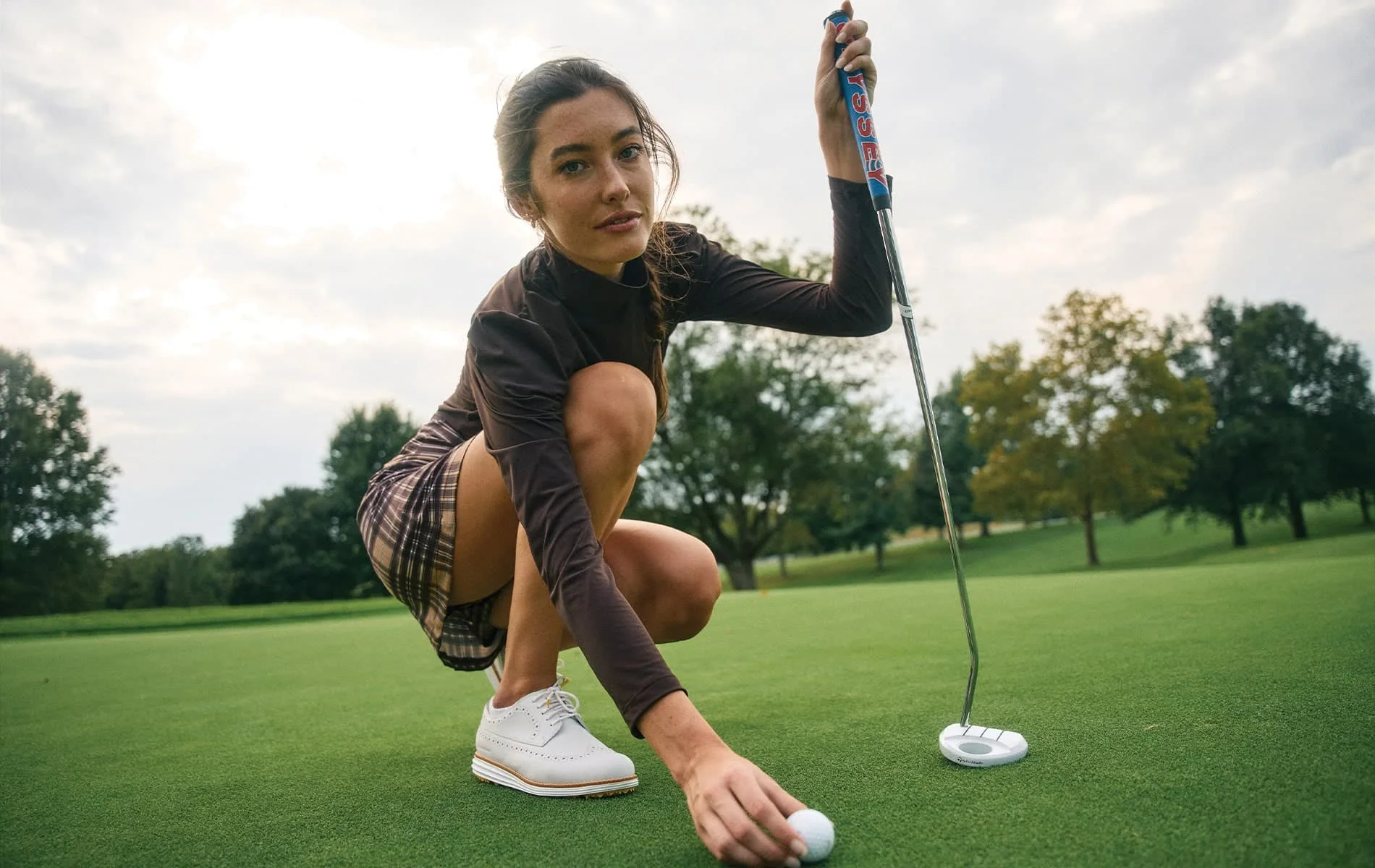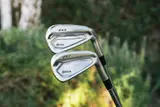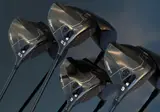

No other equipment company in golf has its founder's surname attached to a biennial international team competition. That is not a marketing win anyone signed off on in a budget meeting. It is an accident of 1990 that PING has spent 36 years compounding, and at Bernardus this month it compounded again.
The 20th Solheim Cup, held 11 to 13 September in Noord-Brabant, ended with Team Europe reclaiming the trophy 15-13 in front of roughly 80,000 spectators from 40 countries. It was the first Solheim Cup staged in the Netherlands and, more relevant to the equipment business, the first time the PING Junior Solheim Cup and the Solheim Cup have been played on the same golf course.
Why Does PING Sponsor the Junior Solheim Cup?
Karsten Solheim put up the money for the first Solheim Cup in 1990, which is why the trophy carries his name and not a sponsor's. Every OEM in the category has spent the decades since paying for tournament title rights that evaporate the moment the check stops clearing. PING has a competition named after its founding family in perpetuity, at no ongoing cost, broadcast globally every two years. Titleist can buy a lot of things. It cannot buy that.
The junior event, which PING has titled since 2002, is the part the industry tends to overlook. It is a two-day, 12-a-side match-play competition contested by players who will, in most cases, turn up on a senior Solheim Cup team inside a decade. For a brand whose entire commercial model runs through custom fitting rather than mass-market shelf presence, getting a fitting cart and a logo in front of the best 24 junior girls in Europe and the United States is a talent pipeline dressed as a sponsorship. It costs a fraction of a single tour staff contract.
What Did Staging Both Events at Bernardus Change for PING?
Historically the junior match has been played at a course near the main venue, on its own schedule, with its own signage, its own small crowd and almost no broadcast overlap. Same week, different postcode. Consolidating both onto Kyle Phillips' championship course at Bernardus put the PING name inside the main event's infrastructure: the same grandstands, the same fan village, the same media compound, the same 80,000 people who came for the senior matches. The week also produced the competition's first dedicated live radio service, covering every match across both events, which is the kind of detail that sounds like a hospitality flourish and functions as additional inventory for a title sponsor.
That is a meaningful upgrade in exposure achieved without a meaningful increase in spend. Bernardus, a venue that only opened in 2018 and built its résumé on three KLM Opens between 2021 and 2023, had an obvious incentive to bundle both competitions onto its one championship layout. PING was the beneficiary of a venue logistics decision.
Can Any Other Equipment Brand Replicate This?
Not really, and that is the structural point. Callaway has the Solheim-adjacent roster. TaylorMade has the louder tour presence. Neither owns an event. The closest analogue in the category is Titleist's long-running junior and amateur programming, which builds relationships but does not put the brand's name on a trophy that gets handed over on live television.
What the numbers will not show is any of this. PING sits 21st globally in the DORMIED Index and moved 0.0 percent month over month, which is roughly what happens when a brand's central equity asset is 36 years old and behaves like infrastructure rather than news. Legacy does not spike. It holds.
The question for 2028 is whether the same-course model repeats or whether Bernardus was a one-off shaped by a compact Dutch site. If the LPGA and LET treat it as the new default, PING quietly doubles the reach of its cheapest and most durable piece of brand real estate every two years, without issuing a press release about it. That has always been how this company works.