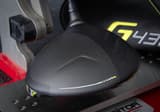

The Tour AD DI has been in Graphite Design's catalog since 2010, back when Ping was selling the G15 and nobody had heard of Ventus. Last week a DI-95 X in a Ping G440 23-degree hybrid won the Omega European Masters on the fourth playoff hole. The head has been through roughly eight generations since the shaft launched. The shaft has been through none.
That win came in the same seven-day window as two others announced by Pro's Choice Golf Shafts, Graphite Design's exclusive distributor across the US, Canada, Mexico, Europe, the UAE, South Africa, South America and Australia. The Staysure Legends Tour winner in Ballymena had a Tour AD GC-6 X in a Titleist GTS-3 driver, his third win in three weeks. The JLPGA Golf5 Ladies winner in Gifu carried three Tour AD UB-6 S wood shafts and a Tour AD HY-75 S in the hybrid. Three tours, three continents, one supplier.
The interesting part is not the win count. Graphite Design logged 44 global victories in 2025 and more than 580 since inception, and tour counts in the aftermarket shaft business are a currency that inflates on its own. The interesting part is the DI. Most shaft companies retire a profile inside four years because the retail model requires it, the same way head OEMs need a new face material story every eighteen months. Fujikura has moved from Speeder to Pro to Ventus to Ventus Blue Velocore+ in the time Graphite Design has kept selling the same DI bend profile with a new paint job at most. Mitsubishi has cycled Diamana through more color generations than most players can name in order. Graphite Design's catalog currently runs DI, IZ, XC, UB, CQ, VF, FI, GC, the aG33-3, and a 2027 Tour AD EK already in the distributor's list. Nothing gets killed. It just accumulates.
That is a fitting-bench strategy, not a marketing strategy. A fitter with a 20-year-old profile still in stock can match a player who has been in DI since 2013 without telling him his shaft is dead, and the used market on Tour AD shafts holds value in a way almost nothing else in golf does. The cost of that approach is SKU sprawl. The GC alone spans 40g through 80g across R2, R1, SR, S, X and TX. Nobody carries that inventory except a specialist, which is precisely the point.
The hybrid detail deserves its own note. A 95-gram X-flex hybrid shaft is closer to an iron shaft in weight than to anything in the 23-degree hybrids sold off the rack, most of which ship around 75 to 85 grams in stiff. Hybrids are the least-fitted club in the bag for amateurs and one of the most obsessively fitted for tour players, which is why aftermarket hybrid shafts remain a real business while aftermarket iron shafts outside KBS and Nippon largely are not. Graphite Design sells DI, IZ, VF and HY in hybrid. That is four profiles in a category most shaft brands treat as an afterthought.
Where the marketing gets thinner is the GC copy. AD SHIELD plies combined with Toray M40X in the handle and T1100G in the tip is a real materials spec, and T1100G is genuinely expensive prepreg, not a sticker. "Unrivaled shaft stability" is not a spec, it is a sentence written to fill a paragraph. Graphite Design does not need it. The company's argument has always been that fitters and tour vans keep reaching for the same profiles, and that argument is self-evident to anyone who has looked in a caddie bag on a Wednesday.
The brand sits 84th of 215 in DORMIED's global rankings and moved zero points month over month, which is what happens when a Japanese manufacturer lets a Carlsbad distributor's VP of Sales be its only public voice in eight territories. Graphite Design does not have a demand problem. It has a narration problem, and the 2027 EK launch is the moment to find out whether anyone in Chichibu thinks that is worth fixing.