
Every footwear brand wants a hero shoe, the one silhouette that carries the line and gets stamped on the tour truck. Adidas Golf just put three LPGA athletes in front of a reporter and let them disagree about what a golf shoe should even do.
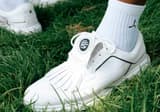
The conversation, conducted with Linn Grant, Patty Tavatanakit and Grace Kim during an athlete gathering in California, produced no consensus and appears not to have been designed to. Grant plays the spikeless Adizero ZG and ranks her priorities as performance, comfort and looks, in that order, with weight as the deciding factor. Tavatanakit also wears the ZG and rotates in the S2G, and she talks about wanting to sit low to the ground. Kim wears the TOUR360 because she uses the ground aggressively and wants the planted feel of traditional traction. Same sponsor, same tour, three different answers.
That is a more interesting piece of brand strategy than it looks. Golf footwear has spent a decade being sold as a technology story, with each generation pitched as the resolution of the spiked versus spikeless argument. Adidas is doing something closer to what running brands figured out years ago: stop nominating a winner and sell the fitting logic instead. Grant naming traction as her top performance concern while playing a spikeless outsole quietly kills the category's oldest shorthand. Her reasoning is the useful part. The problem with a shoe you might slip in is not the slip, it is the swing you make while worrying about it.
The detail buried in the middle of this is the one worth pricing out. Tavatanakit said she gets into a fresh pair roughly every three tournaments. Kim replaces hers around monthly. Nobody is suggesting a club golfer follow that schedule, and sponsored athletes have an obvious reason not to nurse an old pair. But apparel and footwear categories do not grow by adding SKUs, they grow by shortening the replacement cycle, and a brand that gets consumers to look at their outsole, check whether the heel still holds and notice that the cushioning has gone dead is a brand doing revenue work disguised as service journalism. FootJoy has run this playbook for years with fitting. Adidas is running it through tour voices.
The throwaway line about Grant switching into golf versions of the Samba, Gazelle and Stan Smith for casual practice is not a throwaway. That archive is the structural advantage Adidas has over every dedicated golf shoe brand, and the terrace silhouettes have spent the last three years as the most culturally load-bearing sneakers in the world. A tour player casually saying she hits balls at home in golf Sambas does more for that business than a paid campaign, because it frames the crossover product as functional rather than costume. Nike can match the lifestyle depth and does not currently match the golf line breadth. Nobody else can do either.
The timing is worth flagging. Adidas Golf sits 26th of 215 brands in this month's DORMIED Index with a score of 11.0, down 18.1 percent month over month, which is what happens when a brand goes quiet between product cycles in a category where Malbon, Lululemon and a dozen founder-led labels are generating noise weekly. Athlete-led education content is a cheap way to hold share of voice without a launch attached to it.
What to watch is whether the three-model logic survives contact with retail. A shop can merchandise one hero shoe. Explaining to a walk-in why the ZG, the S2G and the TOUR360 exist requires staff time most green grass accounts do not have. If Adidas backs this positioning with fitting tools, an in-store decision tree, anything that turns three answers into a process, it has a real category story. If it stays a media conversation, it is three players describing their preferences and a customer still buying whatever is white and on sale.