
The winning iron in MyGolfSpy's 2026 player's distance test finished first in both accuracy and forgiveness, gave up 1.59 yards of carry to the Titleist T250, and still did not get put in the bag by the tester who compared them. That result is more instructive about how irons actually get sold than any of the numbers that produced it.
Why Did Wilson DYNAPWR Forged Beat the Titleist T250?
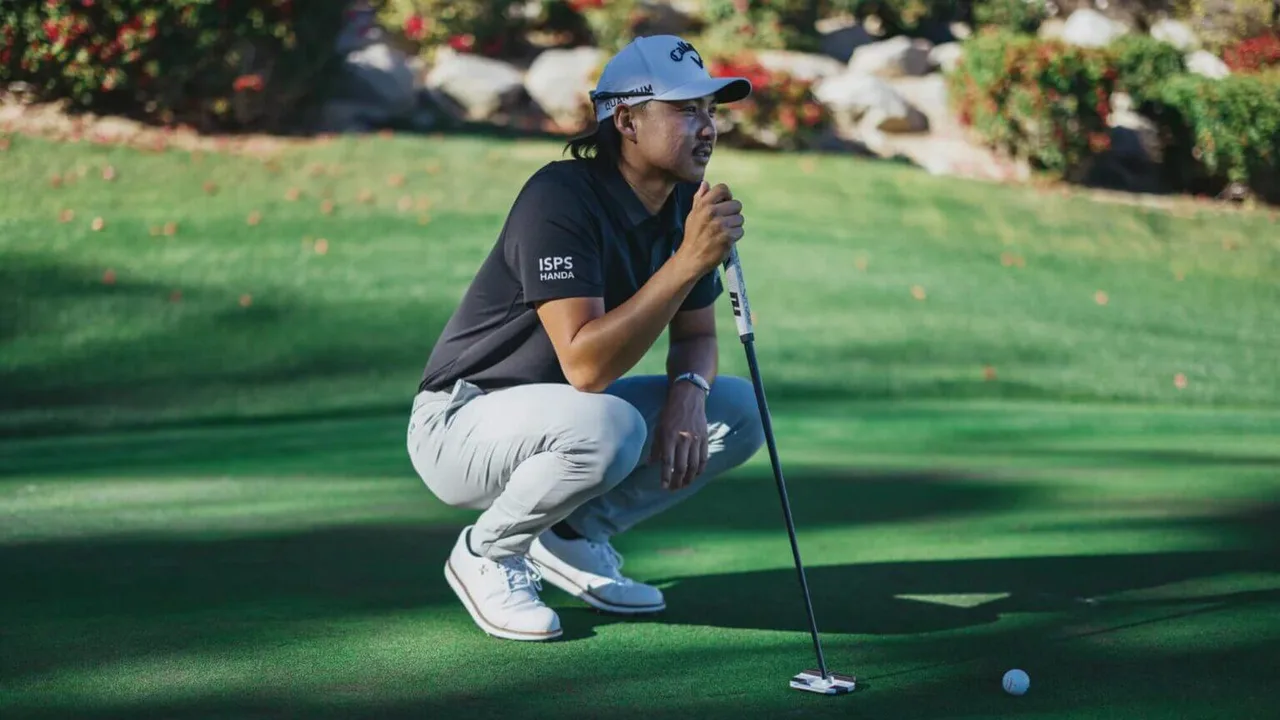
The test itself went to Wilson's DYNAPWR Forged, and the follow-up came from a MyGolfSpy staffer who games T250s and went looking for a reason to be wrong. He found several. The DYNAPWR produced a smaller overall shot area and tighter carry variation than his T250, was noticeably more forgiving in the 6-iron, and felt softer at impact than its slightly bulkier top line suggested it would. His conclusion was that he now understands why Wilson won, that he would give the brand more consideration than before, and that he is keeping the Titleists.
This is the shape of the Wilson problem, and it has been the shape of it for a decade. Wilson has been winning independent iron testing since well before the D7 Forged, and it has been converting those wins into market share at a rate that does not match. The company's 2016 turn on Golf Channel with Driver vs. Driver bought it more airtime than its ad budget should have allowed and produced the Cortex, a driver almost nobody remembers carrying. DYNAPWR is itself a revived nameplate pulled out of Wilson's own back catalog, which tells you what the most valuable asset in the building is. Test data has never been Wilson's constraint. Being in the bay when a golfer decides is.
How Does the Titleist T350 Combo Set Keep Golfers?
The most revealing detail in the comparison has nothing to do with Wilson. The tester never put a T250 5-iron in his bag in the first place. He found it too demanding and slotted a T350 5-iron in instead, which is exactly the combo-set architecture Titleist built the T-series to enable. A golfer who hits a wall with forgiveness at the top of the set does not leave Titleist to solve it. He moves one model down the ladder and stays. That is a retention mechanism disguised as a product line, and Wilson's lineup does not present the same visible off-ramp inside its own brand. Winning a category test matters less when the competitor's answer to your strongest argument is another SKU in its own fitting cart.
The wider read here is about what testing wins actually buy. They move consideration, not carts. The staffer's honest takeaway, that he would look at Wilson next time, is the real prize and it is a smaller prize than a first-place finish sounds like. Irons get bought at address, in a fitting bay, from whichever brands the fitter has racked. Titleist's national fitting footprint, tour seeding and Titleist Thursday infrastructure exist to make sure it is one of those brands everywhere. Wilson's product is competing on merit. Its distribution is competing against a machine.
What Risk Does Titleist Face Before the Next T-Series?
Titleist sits at the top of the DORMIED Index at 100 out of 100 and moved 0.0 percent month over month, which is the only direction available when there is no headroom. The risk in that position is not losing a test. It is losing the assumption that runs underneath the test, that a player's distance iron from Titleist is the default and everything else is the alternative. The T-series has run on a roughly two-year cadence, which puts the next refresh in 2027. If the T250's successor does not close the forgiveness gap that this comparison exposed in the long irons, more testers will run the same experiment, and eventually one of them will come away switching.